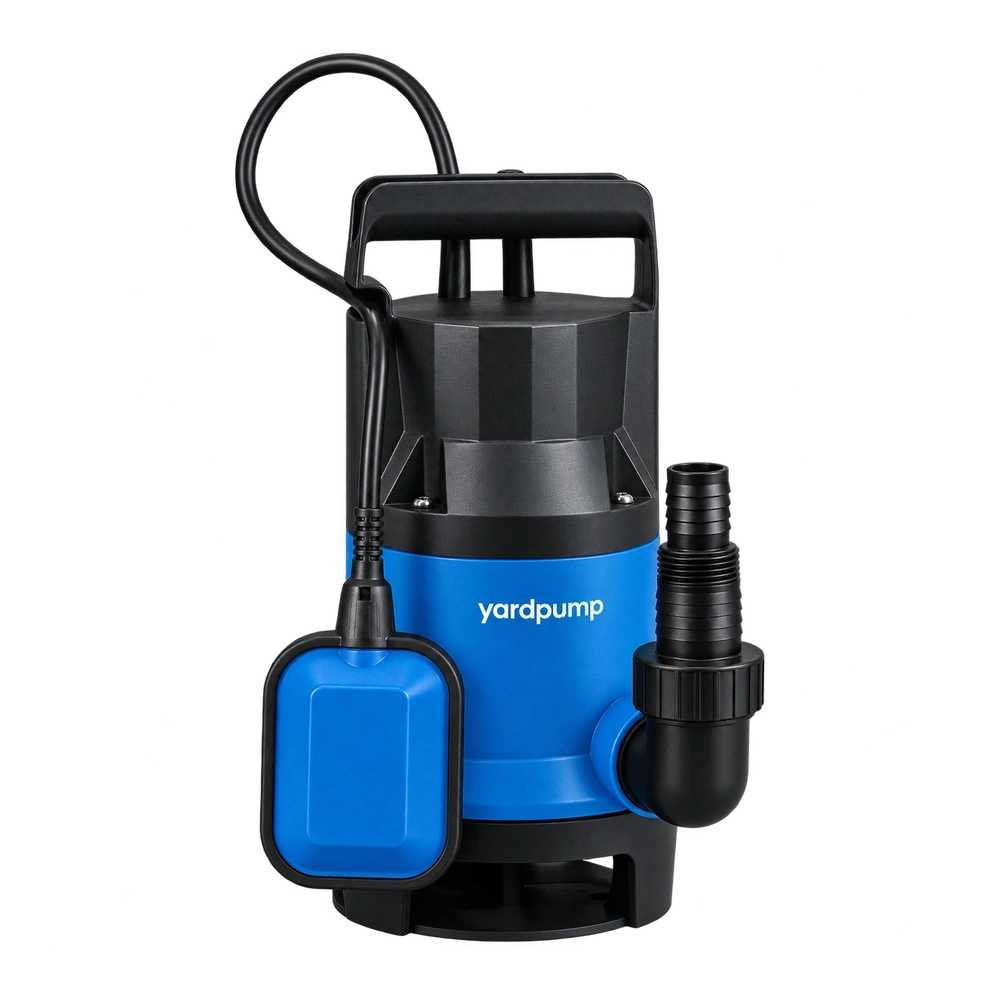
Suppose an importer receives a quote for a clean-and-dirty-water submersible pump. The sample listing mentions both clear water and water containing solids. The buyer needs to know whether the shipped unit can do both jobs. Ask whether the claims apply to one fixed configuration, one configuration that may be changed as documented or two separate versions within a family. The category name does not settle this. Compare the actual parts in the carton, the application limits and performance in each job rather than relying on one family description or solids figure.
Write the two duties separately
A clear-water job may mean moving water from a rain barrel or removing a shallow layer from a floor. Transfer depends on delivery at the required head. Final cleanup depends more on starting and stopping depth, residual water and water cleanliness. For water containing solids, specify whether it contains small particles, sand, leaves, long fibres or sludge. Passing one specified particle does not establish suitability for the others. A pump allowed in both water conditions can still have different performance and residual depth across the two jobs.
Ask the supplier to identify the model, base or screen, impeller and approved attachments for each duty. Confirm flow and head, the stated solids conditions and the operating limits for the delivered configuration. The buyer does not need confidential design details, but the quote, approved sample and packing list should identify the same version. If a duty requires an optional part, record whether it is included, whether tools are needed, whether the manufacturer allows users to change it and what protection or cleaning is required. Do not turn an unapproved removal of a screen into an advertised mode.
Two passing tests can describe two different products
Consider an illustrative comparison. A clear-water sample reaches the agreed shallow drainage target with its original pickup base. A report for water containing solids uses a larger inlet assembly. Both results can be valid. They do not establish that the first boxed configuration meets both duties. Get evidence for the actual shipped arrangement or identify, supply and accept the configurations separately. If the manufacturer permits conversion, verify the supplied parts, instructions, way of identifying each state and results after the change. Users should not have to guess which part belongs where.
Sometimes the same fixed setup is approved for both water conditions. There is then no need to invent a second attachment. Review each duty using the same configuration: whether the clear-water target is met, whether the pump handles the agreed solids condition and whether it can be cleaned as required before returning to clear-water use. A broad clean-and-dirty-water description is not permission to return equipment to a sensitive water source after an unsuitable liquid.
Align the delivery description with the service decision
Open a sample from the actual shipment and compare the model, inlet, attachments and instructions. Test the intended duties under the approved method and record delivery, control operation and cleaning conditions. Have qualified staff handle tests that involve water and electricity. Do not remove guards or alter electrical protection. A distributor listing can describe two verified duties with their individual limits. If only a clear-water curve for one configuration is available, use that verified scope rather than promising large solids, a low residual level or instant conversion.
If a customer says the pump was sold for dirty water but clogs, ask for the model marking, a photo of the inlet setup, the type of debris, hose and operating conditions. Confirm the delivered version, then investigate the duty. That separates missing parts and unsuitable use from a product fault. A buyer should know what the customer can actually do with the pump as delivered.
Frequently asked questions
Does every clean-and-dirty-water pump come with two bases?
No. It may use one fixed configuration or an approved change kit. Check the exact model documentation and carton.
Does passing a particle test prove it can remove a shallow layer of clear water?
No. Solids passage, starting depth, stopping and residual water are separate acceptance items.
Can I use a solids test from another model?
Verify whether the tested sample covers the purchased configuration. Shared housing or family name alone is not enough.