How do I choose a submersible pump for the actual job?
Start with the liquid and solids, required flow at working head, lift and pipe losses, installation space, control method and minimum water level; then compare the model curve and limits.
PUMP GUIDES
Understand water conditions, flow, head and installation. Our guides connect everyday pump questions with the factors that shape a good selection.
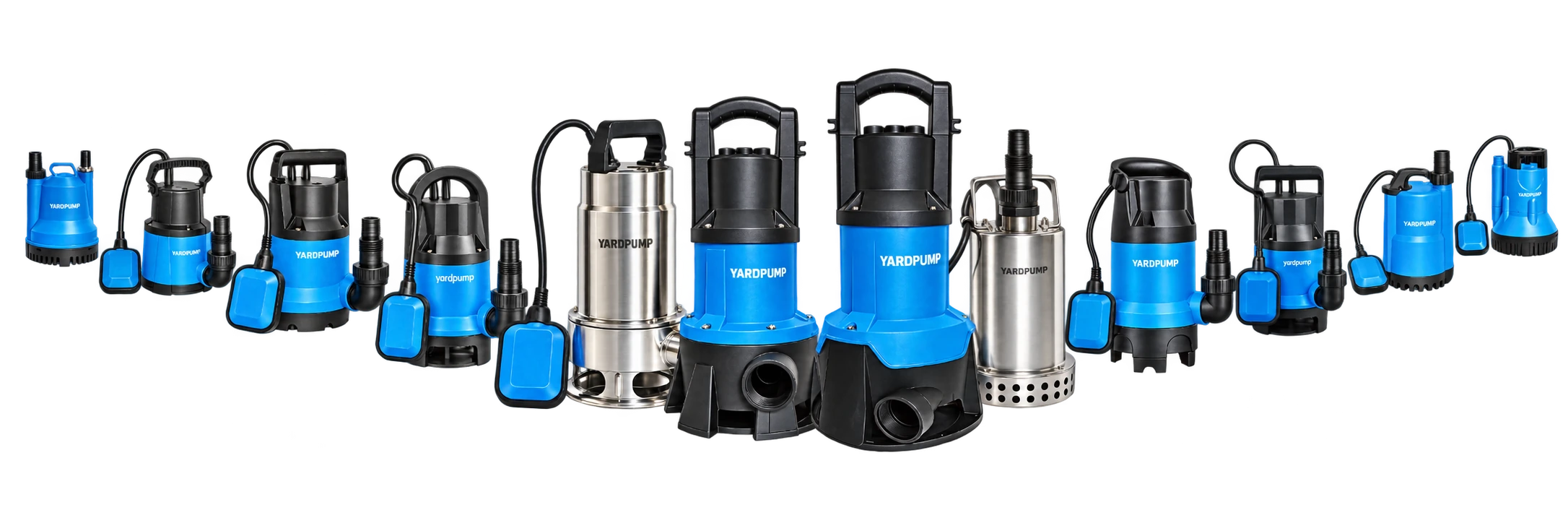
Browse by Topic
Pump Guide
Start with the job and liquid, then decide which performance and control compromises are acceptable.
A submersible pump for occasional drainage is not automatically suitable for continuous fountain or pond circulation. Compare duty, flow and water conditions.
Read Selection Guide ↗Pump GuideA solids-passage rating does not establish resistance to abrasive sand or fibrous debris. Check particle shape, concentration, viscosity, inlet screens and flow passages.
Read Selection Guide ↗Pump GuideGreywater is not automatically suitable for a clean-water pump. Verify detergent compatibility, peak temperature, foam and fibres against the complete pump specification.
Read Selection Guide ↗Pump GuideLow residual water, solids passage, head and automatic control involve different compromises. Rank the actual tasks before deciding whether one pump can cover them.
Read Selection Guide ↗Pump GuideUse well recovery, usable stored water and peak demand to assess intermittent pumping or a storage tank instead of simply buying a larger pump.
Read Selection Guide ↗Pump GuideSize tank transfer for changing source and receiving levels. Estimate complete transfer time and verify low-water and full-tank control at the final duty.
Read Selection Guide ↗Pump GuideA pump that delivers water on its side is not necessarily approved for that position. Check orientation, cooling, bearings, air entry and float clearance.
Read Selection Guide ↗Pump GuideCompare outlet clearance, hose bends, float movement and service access before selecting a top- or side-outlet submersible pump.
Read Selection Guide ↗Pump GuideAn inlet hose does not approve external operation. Check priming, cooling, sealing and restarting before changing a submerged installation.
Read Selection Guide ↗Pump GuidePossible fuel contamination changes pump selection. Ingress protection does not establish suitability for flammable liquids or hazardous atmospheres.
Read Selection Guide ↗Pump GuideStarting depth, automatic switching levels and residual water describe different limits. Confirm each condition before selecting a low-level pump.
Read Selection Guide ↗Pump GuideAssess alkalinity, fines, intake conditions and the receiving route before using an ordinary drainage pump for concrete washwater.
Read Selection Guide ↗Pump GuideMatch regeneration-stage liquid conditions and peak inflow to the pump, usable storage and approved drainage arrangement.
Read Selection Guide ↗Pump GuideTop-off overshoot can involve flow, stopping delay, line water and siphoning. Verify the complete installed system rather than choosing by pump size alone.
Read Selection Guide ↗Pump GuideMatch trough refill flow and usable storage to peak withdrawal, the actual inlet valve and source capacity rather than daily volume alone.
Read Selection Guide ↗Pump GuideFor aquarium water changes, start with controllable flow, intake protection and a cleaning plan. Match the pump to whether livestock stays in the tank.
Read Selection Guide ↗Pump GuidePlace a temporary creek intake above sediment and below the lowest water level. Check screen access, anchoring and site-specific water-use restrictions.
Read Selection Guide ↗Pump GuideCheck the pickup layer for grit, oil and detergent after settling. Confirm liquid compatibility and the permitted discharge route.
Read Selection Guide ↗Pump GuideUse the bladder's approved withdrawal method and distinguish normal collapse from a blocked outlet or collapsing hose.
Read Selection Guide ↗Pump GuideChoose transfer equipment around species, water temperature and quarantine practice, with a defined cleaning process and effluent route.
Read Selection Guide ↗Pump GuideStart with the root-zone device's acceptable flow, then check how the pump behaves at low demand and how zones will rotate.
Read Selection Guide ↗Pump GuideWarm water, falling level and hose restriction can reduce cooling while changing load; rated flow is not permission for continuous duty. Includes checks, an example and decision limits.
Read Selection Guide ↗Pump GuideGreywater varies by source; fibres, food particles and grease may exceed clean-water pump capability, and local collection rules come before pump Includes checks, an example and decision limits.
Read Selection Guide ↗Pump GuideCompare actual transfer inflow with safe overflow capacity, including shared drains and gravity head. Check the high-level shutdown before handover.
Read Selection Guide ↗Pump GuideIdentify the chamber, solids beyond the screen and the downstream dosing duty before specifying a septic effluent pump. Clarity is not a selection criterion.
Read Selection Guide ↗Pump GuideCompare scattered puddles with sustained inflow. Estimate how much water can collect at the intake, then choose a pump, a wet vacuum or both.
Read Selection Guide ↗Pump GuideSplit a long lift into two independent duties and size intermediate storage for mismatched flow, controls and safe overflow.
Read Selection Guide ↗Pump GuideSeparate storage underwater, continuous operation and unattended use. Check the exact pump's instructions, liquid limits and the consequences of a failure.
Read Selection Guide ↗Pump GuideCheck the far sprinkler's inlet pressure with the whole zone running. Separate low supply pressure from a blocked nozzle or a regulator fault.
Read Selection Guide ↗Pump GuideMeasure the pump, outlet fitting and hose together before choosing a compact low-level pump for a space with limited headroom.
Read Selection Guide ↗Pump GuideSeparate foam height from liquid depth and verify switch action, solids and compatibility with the actual wash-water process.
Read Selection Guide ↗Pump GuideLinked pits can share a pump only if the connecting pipe transfers incoming water within the allowed level range. Check both levels before choosing.
Read Selection Guide ↗Pump GuideMeasure the volume between the actual start and stop levels in a tapered sump, then use inflow and installed delivery to estimate the pump cycle.
Read Selection Guide ↗Pump GuideA fully open valve can still leave a narrow passage. Verify the valve assembly loss and sprinkler pressure before replacing a garden pump.
Read Selection Guide ↗Pump GuideCalculate lift from the source water surface rather than the pump base. See what changes when a pump is lowered, including pipe friction and immersion limits.
Read Selection Guide ↗Pump GuideSolids passage is not grinding capability. Match the waste stream, cutting function, pressure duty and control system before replacing a sewage pumping unit.
Read Selection Guide ↗Pump GuideConfirm Class I or Class II from the approved complete pump. Plastic casing, two visible pins and an RCD do not authorize removal of required protective earth.
Read Selection Guide ↗Pump GuideA reducer may be usable when the exact pump and connection permit it, but the smaller effective bore raises resistance and moves the operating point.
Read Selection Guide ↗Pump GuideChoose from the largest and most troublesome material actually present, then decide whether pre-screening makes a lower-level clean-water stage possible.
Read Selection Guide ↗Pump GuideA geometric passage value does not establish abrasion resistance, acceptable concentration or suitability for hard gravel.
Read Selection Guide ↗Pump Guide
Compare real drainage situations by access, debris, residual water and the route to a safe discharge.
Separate the hose crest needed at startup from the running elevation difference. Choose a roof drainage pump around residual water, membrane protection and safe access.
Read Selection Guide ↗Pump GuideCheck the water source and existing drainage first. Then compare portable and fixed pumps by supervision, pit space, float clearance and the discharge route.
Read Selection Guide ↗Pump GuideCrawlspace drainage depends on the liquid, access, hose route and electrical conditions. Have unsafe access assessed before planning pump placement or removal.
Read Selection Guide ↗Pump GuideProtect the pool cover from pump weight, hose movement and pulling loads. Check support, inlet access and operating water levels before selecting capacity.
Read Selection Guide ↗Pump GuideChanging pond water is different from removing bottom sludge. Plan fish protection and the remaining water level, then check sediment, discharge and emptying time.
Read Selection Guide ↗Pump GuideSand concentration, particle size and settling affect trench pump selection. Where suitable, settle the silt and pump clearer water; dense slurry needs matched equipment.
Read Selection Guide ↗Pump GuideWhy flood cleanup may need a dirty-water pump for bulk removal and a low-level clean-water pump for final drainage. Compare debris, residual level and safety.
Read Selection Guide ↗Pump GuideCombine pump curves at equal head and intersect the system curve to assess parallel flow, branch losses and one-pump operation.
Read Selection Guide ↗Pump GuideAssess pump support, wave troughs, hose forces and debris protection at a changing shoreline. Validate the installation through its lowest operating water level.
Read Selection Guide ↗Pump GuideBalance stormwater inflow against installed discharge and usable pit storage. Assess buffering time, starting response and discharge return before changing pump size.
Read Selection Guide ↗Pump GuideChoose a greenhouse floor drainage pump by water depth, soil and plant debris, outlet route, electrical protection and the true start/stop level.
Read Selection Guide ↗Pump GuideCheck the pool’s emptying instructions before choosing a pump. Learn how wall support, liner movement, inlet protection and residual water affect drainage.
Read Selection Guide ↗Pump GuideAn indoor pump can lose delivery when its outdoor discharge freezes. Check trapped water, slope, outlets and valves without forcing the pump against a blockage.
Read Selection Guide ↗Pump GuideInvestigate external recirculation when discharged water returns to a sump, including outlet location, receiving capacity and revised pipe losses.
Read Selection Guide ↗Pump GuideAssess loading-dock floodwater for contamination, inflow, pump head, solids and safe discharge before choosing a temporary submersible pump.
Read Selection Guide ↗Pump GuideSeparate pond water transfer from oxygen transfer. Assess dissolved oxygen, duty and water quality before treating a high-flow pump as an aerator.
Read Selection Guide ↗Pump GuideCan a drainage pump empty a hydroponic nutrient reservoir? Check solution chemistry, wetted materials, solids, working head and temporary-duty limits.
Read Selection Guide ↗Pump GuideMatch chemistry, temperature, storage, discharge duty and appliance controls before replacing a boiler condensate unit with a utility pump.
Read Selection Guide ↗Pump GuideInspect the complete condensate path, verify capacity after cleaning and confirm the intended high-level response.
Read Selection Guide ↗Pump GuideAssess changing collection points, restraint and discharge without treating saltwater materials as complete marine qualification.
Read Selection Guide ↗Pump GuideFine-slurry recirculation needs more than a solids-passage figure. Match the cutting machine's water requirement, actual liquid and maintenance conditions.
Read Selection Guide ↗Pump GuideA nearby rainwater downpipe is not automatically a suitable pumped outlet. Check combined inflow, downstream conditions, backpressure and connection authority.
Read Selection Guide ↗Pump GuideSize downstream pool-backwash transfer for peak inflow, usable collection volume, actual head and liquid composition without altering the filter circuit.
Read Selection Guide ↗Pump GuideElevator-pit drainage starts with site authorization and equipment isolation. Then choose a pump around access, solids and the discharge route.
Read Selection Guide ↗Pump GuideFor hot-tub drainage, check liquid temperature and treatment chemicals, protect the soft floor from suction and plan the final shallow-water stage.
Read Selection Guide ↗Pump GuideSet the winter waterline from the pool and cover instructions, then check float travel, drawdown volume and where the water will go.
Read Selection Guide ↗Pump GuideSize for the receiving water at high tide and check backflow, valve loss and suitability for brackish or salt water.
Read Selection Guide ↗Pump GuideMap elevations and inflow along the trench, then use maintainable collection points rather than expecting one inlet to drain every low spot.
Read Selection Guide ↗Pump GuideSeparate the clear-water drawdown from sludge handling, then match solids and disposal requirements to each stage.
Read Selection Guide ↗Pump GuideA low-level pump still needs local water depth; a squeegee concentrates the film and reduces air ingestion, dry running and repeated repositionin Includes checks, an example and decision limits.
Read Selection Guide ↗Pump GuideCalculate usable surge volume between actual levels, then check make-up water, drainback and overflow before changing a pool balance-tank pump.
Read Selection Guide ↗Pump GuideCoir fibres can form a mat across a pump intake. Compare bench interception, a removable basket and basin layout, including safe overflow during blockage.
Read Selection Guide ↗Pump GuideCheck where runoff crosses a sloped driveway, how much the trench grate intercepts and whether the sump actually receives it.
Read Selection Guide ↗Pump GuideTrace the filter chamber’s feed and return, check isolation and drainback, and choose a pump for the dirty chamber water.
Read Selection Guide ↗Pump GuideCheck available storage, infiltration after rain and the discharge outlet. A pump can move water faster than a dry well can accept it.
Read Selection Guide ↗Pump GuideCompare short roof inflow, spare storage and installed pump flow. Plan an independent overflow path for outages, blockages and a full receiving tank.
Read Selection Guide ↗Pump GuideCheck the source of the meltwater, dissolved salts, grit, temperature and discharge location before using a portable low-level pump.
Read Selection Guide ↗Pump GuideCompare the hose's delivered flow with the receiving drain's sustained capacity before choosing a new outlet or changing the pumping arrangement.
Read Selection Guide ↗Pump GuideCheck vehicle loading, routing and actual delivery after protection to distinguish a crushed hose from an undersized portable drainage pump.
Read Selection Guide ↗Pump GuideGroundwater outside a lined pond can lift the liner during drawdown. Verify outside water conditions and agree on a stop level before pumping.
Read Selection Guide ↗Pump GuideTrack the wet spot, sump level and pump operation together to decide whether water is bypassing collection or the installed pump cannot keep up.
Read Selection Guide ↗Pump GuideWatch water at the grate, trench and sump before choosing between better surface capture and more installed pumping capacity.
Read Selection Guide ↗Pump GuideMatch a recurring leak to the hose’s contact point, distinguish rub damage from a kink or a fitting leak, then check the revised route with the hose full.
Read Selection Guide ↗Pump GuideA leaf mat can cover an intake screen under flow and release at shutdown. Compare the discharge, debris position and results after safe cleanup.
Read Selection Guide ↗Pump GuideA sump can receive water after several dry days. Compare the refill pattern, discharge and events to separate continued inflow, backflow and control problems.
Read Selection Guide ↗Pump GuideUnderstand why outside groundwater can make rapid basement pump-out unsafe. Separate structural clearance, staged water-level observations and pump selection.
Read Selection Guide ↗Pump GuideTrack the cover puddle and pool level separately to determine whether a cover tear is feeding the pump or the pool is losing water elsewhere.
Read Selection Guide ↗Pump GuideA flexible liner can lift toward a low-level inlet and block flow. Separate it with a stable approved support without puncturing the liner.
Read Selection Guide ↗Pump GuideSize the pump from total head at the required flow: static level difference plus route losses, with the discharge arrangement assessed as a complete system.
Read Selection Guide ↗Pump GuideUnderstand why floor grooves can retain isolated water after low-level pumping, then check drainage paths, floor geometry and the realistic cleanup boundary.
Read Selection Guide ↗Pump GuideCheck the exact pump’s liquid-temperature, chemistry and duty-cycle limits before draining warm wastewater; housing touch temperature is not approval.
Read Selection Guide ↗Pump GuideTest the same hose route and outlet height with the passage clear. Learn when a window sash or sill, rather than lift, is cutting pump delivery.
Read Selection Guide ↗Pump GuideFind out why sediment collects in a pump discharge bag, how to compare flow with a fresh bag, and when the job needs a different treatment plan.
Read Selection Guide ↗Pump GuideUse the timing and volume of returning water to distinguish a draining hose from a cover leak and review approved outlet routing and check valves.
Read Selection Guide ↗Pump Guide
Match stored water to hoses, drip lines and sprinklers using the flow and pressure needed at the outlet.
Choose between a rain barrel submersible pump and a surface garden pump by water source, hose losses, outlet pressure and the actual watering job.
Read Selection Guide ↗Pump GuideEstimate garden watering needs from planting area, water depth and usable rain barrel storage, then assess how long pumping may take.
Read Selection Guide ↗Pump GuideLow-level pumping leaves less water but can draw in settled sand. Choose intake height around the sediment layer, water-use task and cleaning access.
Read Selection Guide ↗Pump GuideAdd simultaneous branch flows and calculate the pressure required by the more demanding route. Use a duty point rather than maximum head alone.
Read Selection Guide ↗Pump GuideUneven drippers can indicate low pressure, an unsuitable regulator or clogging. Check tank level, pump duty, filter loss and each irrigation branch.
Read Selection Guide ↗Pump GuideSprinkler reach depends on pressure at the nozzle. Add nozzle pressure, elevation and pipe losses before changing zones, hose size or pump capacity.
Read Selection Guide ↗Pump GuideChoose a pump for drip irrigation or sprinklers from a rainwater tank by nozzle pressure, flow at working head, filtration and controls—not maximum flow alone.
Read Selection Guide ↗Pump GuideChoose a garden pump location by checking suction lift, pipe losses, air tightness and service access before extending the suction or discharge line.
Read Selection Guide ↗Pump GuideRecheck garden pump suction lift at altitude using local atmospheric pressure, water temperature, low source level and suction-line losses.
Read Selection Guide ↗Pump GuideCompare a balance pipe with active transfer between rain barrels, including level differences, restrictions, overflow and low-water control.
Read Selection Guide ↗Pump GuideA tank can restrict pumping when replacement air cannot enter. Check the approved vent, screens and overflow arrangement before increasing pump power.
Read Selection Guide ↗Pump GuideCalibrate timed garden watering against actual delivery. Account for tank level, filters, pipe filling and outlet distribution before choosing volume-based control.
Read Selection Guide ↗Pump GuideA refilled tank does not always reset dry-running protection. Separate manual reset, automatic retries, priming and sensing before attempting a restart.
Read Selection Guide ↗Pump GuideCompare minimum water-level difference, pipe losses and outlet needs. A simple pressure example helps decide whether gravity supply needs an approved booster.
Read Selection Guide ↗Pump GuideSize a garden waterfall by visible spillway flow and total dynamic head, then confirm whether a drainage pump is rated for continuous circulation.
Read Selection Guide ↗Pump GuideReview source separation, air gaps, fault levels and overflow capacity before adding mains top-up to a rainwater tank.
Read Selection Guide ↗Pump GuideCheck inlet and outlet conditions, driving flow, suction losses and remaining irrigation pressure when a Venturi injector will not draw.
Read Selection Guide ↗Pump GuideMatch a transfer pump to a pressure washer's inlet flow, pressure and shutdown behaviour rather than comparing maximum flow figures alone.
Read Selection Guide ↗Pump GuideDistinguish suction protection from downstream fine filtration, accounting for clean and dirty pressure loss and the pump's installation requirements.
Read Selection Guide ↗Pump GuideDistinguish first-flush diversion, screening and tank intake, including volume assumptions, reset, maintenance and limits on water-quality claims.
Read Selection Guide ↗Pump GuideMatch suction capability, temperature and bend requirements while investigating valves, strainers and inlet restriction.
Read Selection Guide ↗Pump GuideDripping nozzles do not automatically need more flow. Identify nozzle pressure and match it to available pump head, system losses and filtration.
Read Selection Guide ↗Pump GuideDefine the hydroponic return duty, formulation, root debris and cleaning exposure. Check actual delivery and assess oxygen management separately.
Read Selection Guide ↗Pump GuideChoose an ebb-and-flow bench pump around fill volume, installed delivery, drainage routes and reservoir space for the planned return cycle.
Read Selection Guide ↗Pump GuideCoiled hose still counts toward total flow resistance. Check the reel fittings, bends and nozzle pressure with the garden pump actually running.
Read Selection Guide ↗Pump GuideA small micro-spray zone can make a pump cycle. Compare actual zone flow with the controller range before changing the zones or adding storage.
Read Selection Guide ↗Pump GuideMeasure pressure at the top and bottom of a drip zone before blaming the pump. Elevation can also drive drain-down after shutdown.
Read Selection Guide ↗Pump GuideCompare water levels with the fountain off and running. Check the spray footprint and return paths before changing the pump.
Read Selection Guide ↗Pump GuideCompare tank level, emitter height and post-stop flow direction to separate siphoning from ordinary line drainback before changing the pump.
Read Selection Guide ↗Pump GuideMeasure bag capacity and connector loss with the intended number of outlets open instead of dividing the pump's maximum-flow label.
Read Selection Guide ↗Pump GuideA Venturi injector needs differential pressure; bypass ratio, filtration and emitter pressure move the installed duty point together. Includes checks, an example and decision limits.
Read Selection Guide ↗Pump GuideA check valve can reduce reverse flow but is not automatically a sanitary separation; confirm an air gap and overflow route under local requireme Includes checks, an example and decision limits.
Read Selection Guide ↗Pump GuideNozzle demand rises with count, while filter loss and partial blockage reduce terminal pressure; measure dynamic pressure at the nozzle header. Includes checks, an example and decision limits.
Read Selection Guide ↗Pump GuideThe upper zone adds static head; opening both zones can shift duty toward high flow and low pressure, while sequencing gives each zone a workable Includes checks, an example and decision limits.
Read Selection Guide ↗Pump GuideNozzle height follows pressure, but system volume also depends on wind drift, basin capture, evaporation and bleed; reaching height does not guar Includes checks, an example and decision limits.
Read Selection Guide ↗Pump GuideTest mixing time and emitter delivery separately. Learn when a shared greenhouse pump can switch duties and when a separate mixer is warranted.
Read Selection Guide ↗Pump GuideCompare pressure on both sides of the filter at the same zone flow. Distinguish filter loading from weak pump supply or blocked emitters.
Read Selection Guide ↗Pump GuideMeasure discharge from open drip-line ends and choose a flushing group size that preserves useful flow at the most distant line.
Read Selection Guide ↗Pump GuideUse the reservoir’s working volume, overflow elevation and pump shutoff lag to refill a wicking bed without flooding the root zone.
Read Selection Guide ↗Pump GuideCompare the actual valve closure and pump stop times. Find closed discharge intervals at zone changes and at the end of a watering program.
Read Selection Guide ↗Pump GuideCompare water delivery near and far from the inlet. Check pressure, elevation, kinks and blocked pores before changing a clear-water submersible pump.
Read Selection Guide ↗Pump GuideCompare refill and settled conditions at similar levels to find out whether incoming water carries air to a submersible pump intake.
Read Selection Guide ↗Pump GuideUse inlet elevation and the actual stop level to find the usable layer between floating pollen and bottom sediment in a rain barrel.
Read Selection Guide ↗Pump GuideSeparate source-water filtration from vacuum-related soil entry at buried emitters by tracing elevation, drain-down and air admission.
Read Selection Guide ↗Pump GuideShort trigger bursts can make a rainwater pump cycle repeatedly. Check open-wand flow, pauses and the control response before choosing a system.
Read Selection Guide ↗Pump GuideCompare time to first drip and total water per cycle at near and far emitters before changing a rainwater pump timer or irrigation zone.
Read Selection Guide ↗Pump GuideMap where water lands before deciding whether dry areas need a sprinkler adjustment, a supply check or a different pump.
Read Selection Guide ↗Pump GuideCompare real bore, inner wall and pressure loss before choosing between ribbed hoses for the same submersible pump and route.
Read Selection Guide ↗Pump GuideEstimate water left below a gravity outlet and check depth and water quality before adding a low-level pump for the final drawdown.
Read Selection Guide ↗Pump GuideCheck irrigation, filter cleaning and simultaneous operation separately before changing a garden pump or rearranging the watering schedule.
Read Selection Guide ↗Pump GuideA cool tank can feed a hose full of heated water. Estimate the retained volume, direct the first discharge safely and check temperature before using the spray.
Read Selection Guide ↗Pump GuideIf a regular hose works and an expandable one stays short, check the pressure available with the outlet open, the actual lift and the end fittings.
Read Selection Guide ↗Pump GuideIf a hose flows but buried heads stay down, check riser movement and starting pressure separately from pressure during continuous spraying.
Read Selection Guide ↗Pump GuideLight, warmth and stagnant rainwater can grow biofilm in clear hose. Compare pressure loss and condition before changing the pump.
Read Selection Guide ↗Pump GuideA tank can empty slowly while a leaking submerged hose recirculates water. Learn what a net water balance proves and how a controlled hose comparison helps.
Read Selection Guide ↗Pump GuideFind why hose pull, changing buoyancy and an uneven tank floor can tip a rainwater pump, then approve a stable base and supported hose route.
Read Selection Guide ↗Pump GuideA hose can flow freely while a pilot valve fails to open. Check the valve’s opening conditions and the pressure left at the sprinklers at working flow.
Read Selection Guide ↗Pump GuideCompare hose first draw, stable delivery and water near the pump intake. A simple hose-volume estimate helps locate discolouration before you replace anything.
Read Selection Guide ↗Pump GuideTrace a no-flow fault past the valve handle. Separate an internal valve problem from pressure, hose blockage and source-water problems.
Read Selection Guide ↗Pump GuideCompare independent timed volumes with the inline water meter before changing a rainwater pump, hose adapter or sprinkler.
Read Selection Guide ↗Pump Guide
Check pit clearance, float movement, start and stop levels, backup arrangements and unattended operation.
A pump's 7 mm residual-water claim is not its automatic starting level. Learn how residual, minimum starting and automatic stop levels differ before choosing a low-level drainage pump.
Read Selection Guide ↗Pump GuideA practical guide to choosing a pump for a narrow sump pit. Check float travel, start-stop levels, cycle volume and installation clearance.
Read Selection Guide ↗Pump GuideAutomatic starting is only one part of protection. Check main-pump capacity, backup power, alarm levels and discharge paths through a complete water-level cycle.
Read Selection Guide ↗Pump GuideA float switch controls starting and stopping, provided it can move freely. Check operating levels, cable snagging, motor load and the response to a switch failure.
Read Selection Guide ↗Pump GuideIdentify forward siphon flow after shutdown by checking outlet elevation, a water-filled hose and air-entry conditions, then review safe prevention.
Read Selection Guide ↗Pump GuideSeparate empty-line starting from full-pipe operation when a discharge hose crosses a crest. Check endpoint levels, air management, losses and restart conditions.
Read Selection Guide ↗Pump GuideInvestigate garden pump cycling through leaks, tank precharge and usable drawdown. Record pressures and cycle times before selecting a larger pressure tank.
Read Selection Guide ↗Pump GuideLow pressure does not rule out outlet damage. Check hose weight, bending, torsion and independent supports before blaming the plastic connection alone.
Read Selection Guide ↗Pump GuideSmall drip demand may fall below a controller’s flow threshold. Calculate total demand and check pressure and control logic before treating the pump as faulty.
Read Selection Guide ↗Pump GuideCheck deployment, inflation, kinks and connections when a pump runs but delivers little water through a layflat discharge hose.
Read Selection Guide ↗Pump GuideSeparate remote switching from automatic drainage, with checks for motor loads, network loss, restart behaviour and local protection.
Read Selection Guide ↗Pump GuideA pump can remain within its current rating while a cable reel overheats. Check wound ratings, shared loads, connections and safe installation.
Read Selection Guide ↗Pump GuideMatch cistern inlet requirements, low-flow stopping, actual head and source separation throughout the complete rainwater refill cycle.
Read Selection Guide ↗Pump GuideAssess foot-valve load paths, hose connections, sediment clearance and maintenance access rather than choosing by weight.
Read Selection Guide ↗Pump GuideStream and pipe drainback can raise the stopped reservoir level. Calculate returning water and verify usable storage across the full start-stop cycle.
Read Selection Guide ↗Pump GuidePlan doorway access, crossings, support and cable protection before sizing temporary drainage delivery through the final hose route.
Read Selection Guide ↗Pump GuideAn AC sump pump needs a compatible inverter or a separate DC backup. Size startup capacity, usable energy and alarms for the installed duty.
Read Selection Guide ↗Pump GuideGive the source and destination their own stop conditions, then check refill hysteresis, post-stop flow and the overflow route.
Read Selection Guide ↗Pump GuideCheck that the coupler halves match, the poppet opens fully and pressure loss stays acceptable at the intended flow.
Read Selection Guide ↗Pump GuideMatch continuous condensate inflow and usable storage to the pump's start-stop levels, alarm and permitted discharge route.
Read Selection Guide ↗Pump GuideBalance each branch from a recorded baseline and recheck total flow at normal basin level; every valve change moves the shared operating point.
Read Selection Guide ↗Pump GuidePressure-washer inlets need stable flooded supply or a verified self-priming allowance; pump headline flow alone does not prevent cycling, air en Includes checks, an example and decision limits.
Read Selection Guide ↗Pump GuideTotal head includes hose friction, velocity and fittings; a long narrow hose, kinks and an unsecured outlet reduce delivery and create hazards. Includes checks, an example and decision limits.
Read Selection Guide ↗Pump GuideCheck the actual hatch, fittings and lifting path before choosing a catch basin pump. Verify removal with a mock-up and an accessible discharge connection.
Read Selection Guide ↗Pump GuideCheck local intake depth rather than total tank volume. Compare parking slope, baffle openings and low-level shutdown without road testing.
Read Selection Guide ↗Pump GuideVerify drainage recovery at the water level that exists when supply returns. Check controller delay, alarm status and reserve volume before flow begins.
Read Selection Guide ↗Pump GuideCompare pond and chamber levels while the pump is running. Check the floating weir, loaded basket and protection setting before changing the pump.
Read Selection Guide ↗Pump GuideRun two complete fill cycles to verify alternation, then test the high level and alarm separately. Confirm that each sump pump delivers water.
Read Selection Guide ↗Pump GuideA charged discharge hose can turn the pump and steal float clearance. Check the installed layout, the entire float travel and actual start and stop levels.
Read Selection Guide ↗Pump GuideSeparate the valve that shuts off water from the control that stops the pump. Check flow as the valve closes and verify high-level shutdown.
Read Selection Guide ↗Pump GuideCompare the basin inlet invert, switch points and maximum water level so a replacement pump does not let water rise into the incoming drain before it starts.
Read Selection Guide ↗Pump GuideBefore isolating a sump pump, verify which supplies feed the sensor, local warning and remote alert, and confirm that the warning still reaches its recipient.
Read Selection Guide ↗Pump GuideVerify manufacturer approval, simultaneous electrical load, charging and shared failure points before combining the battery supply for two sump backup systems.
Read Selection Guide ↗Pump GuideA stilling tube can calm splash but delay a real alarm. Verify the water level outside the tube, sensor response and remaining storage.
Read Selection Guide ↗Pump GuidePlan the disconnect, service clearance, retained water and pipe support together so the pump can be removed after proper isolation.
Read Selection Guide ↗Pump GuideUse a fixed basin datum to compare the real start, stop and alarm levels before approving a raised sump pump stand.
Read Selection Guide ↗Pump GuideA submerged utility pump normally draws through its original inlet. Learn when a foot valve is useful and when a discharge check valve answers a different problem.
Read Selection Guide ↗Pump GuideTight fittings do not keep the free end of a hose still. Check the outlet, bends and support before starting a portable drainage pump.
Read Selection Guide ↗Pump GuideSeparate an immobilized float from a frozen discharge line by recording the water level and operating sequence. Restore an approved, freeze-protected arrangement.
Read Selection Guide ↗Pump GuideWhen two pumps share a pit, compare one-pump and two-pump operation at matching water levels to separate intake interference from discharge restrictions.
Read Selection Guide ↗Pump GuideStaggered motor starts can reduce overlapping demand. Verify that available storage, incoming water and real pump delivery allow the second unit to wait.
Read Selection Guide ↗Pump GuideTrace the alarm-to-phone path through its sensor, gateway, router and power supplies. Verify outage alerts and recovery without disabling drainage protection.
Read Selection Guide ↗Pump GuideCompare relay status, motor current, water-level trends and discharge sensing. Specify what a sump monitor must prove before declaring drainage successful.
Read Selection Guide ↗Pump GuideCheck how a hydrostatic level probe references atmospheric pressure. Separate vent blockage, moisture and configuration errors before changing pump switching levels.
Read Selection Guide ↗Pump GuideCheck the highest water surface against an ultrasonic sensor's blind zone, beam and mounting limits. Specify loss-of-echo behaviour before replacing a float.
Read Selection Guide ↗Pump GuideA manual float movement checks only part of a sump system. Verify natural rising and falling levels, actual discharge, drain-back and readiness after the test.
Read Selection Guide ↗Pump GuideTrace water to a factory opening, a pipe penetration, or a damaged basin wall. Use water-level and sediment observations to decide when to call the installer.
Read Selection Guide ↗Pump GuideLoose sand, mud and gravel can migrate toward a pump inlet or tip the unit. Use a stable approved support and preserve inlet clearance.
Read Selection Guide ↗Pump GuideWall contact can amplify vibration and reduce float clearance. Check the pump base, pipe support and a complete water-level cycle.
Read Selection Guide ↗Pump GuideVerify an automatic submersible pump’s retained mode, water level, reset conditions and complete start-stop cycle after a power cut before handover.
Read Selection Guide ↗Pump GuideCheck how a directed inlet stream changes float movement. Compare gentle filling with real inflow and verify the final pump, cable and cover arrangement.
Read Selection Guide ↗Pump GuideSeparate pipe connections from approved support. Trace weight, hose loads and movement before choosing a suspended mounting or a stable pump stand.
Read Selection Guide ↗Pump GuideSelect a stable sump-pump support for an uneven pit bottom while preserving inlet, float, pipe and service clearances through repeated wet cycles.
Read Selection Guide ↗Pump GuideCompare vertical and tethered float switches by clearance, switching levels, cycle volume, mounting and debris exposure before a sump-pump retrofit.
Read Selection Guide ↗Pump GuideChoose a sump-pump check-valve location from trapped-water load, air management, pipe support, union access and a safe pump-removal sequence.
Read Selection Guide ↗Pump GuideTest an auto-stop garden-hose connector as a hydraulic restriction by checking engagement, minimum bore and timed delivery with the installed pump.
Read Selection Guide ↗Pump GuideCompare both water levels and float travel to find whether a sump debris basket is restricting supply, blocking the switch or masking insufficient delivery.
Read Selection Guide ↗Pump GuideCheck live level and sensor status before clearing a sump alarm. Separate a latched alarm or silence setting from a float still indicating high water.
Read Selection Guide ↗Pump GuideCheck manufacturer-approved pump orientation, intake clearance, cooling and switch travel before fitting a utility pump into a low tank.
Read Selection Guide ↗Pump Guide
Measure what the installed pump delivers and recognise symptoms that call for isolation or qualified inspection.
Debris, bearings, low voltage or a capacitor fault can stop rotation. Isolate power, preserve the condition and avoid repeated starts while investigating.
Read Selection Guide ↗Pump GuideRestarting after cooling can indicate protection operation. Record voltage, current, water level, liquid temperature and timing before assigning the underlying cause.
Read Selection Guide ↗Pump GuideSeparate overnight drainback from running air ingress when a garden pump repeatedly needs priming. Check retained water, the foot valve and suction joints.
Read Selection Guide ↗Pump GuideMatch an off-grid pump supply using running VA, starting demand and duration, waveform, battery capability and the required electrical protection.
Read Selection Guide ↗Pump GuideInvestigate failures after pump retrieval by checking the lifting point, cable entry and hose loads. Include safe handling and access in sample acceptance.
Read Selection Guide ↗Pump GuideA dropped pump can have hidden damage despite an intact appearance. Preserve impact evidence and arrange appropriate sealing and electrical checks before reuse.
Read Selection Guide ↗Pump GuideAssess exposure history, accessories and approved cleaning before moving a pump from dirty-water work to a different application.
Read Selection Guide ↗Pump GuideCheck the rotating target, pulses per revolution, units and loaded test conditions before interpreting an unusual optical pump-speed reading.
Read Selection Guide ↗Pump GuideCheck outlet velocity, receiving capacity, erosion, restraints and shutdown behaviour so temporary dewatering controls the full discharge route.
Read Selection Guide ↗Pump GuidePlan flushing, drainage, storage and restart checks for a pump already approved for its saltwater duty.
Read Selection Guide ↗Pump GuideCheck floor ridges and collection paths before interpreting separate puddles as a failure of low-level performance.
Read Selection Guide ↗Pump GuideStopping a pump does not empty or depressurise its hose. Estimate retained water and plan isolation, drainage destination and safe handling.
Read Selection Guide ↗Pump GuideKeep clean-water filling separate from spray-mixture and concentrate handling. Review contact duty, backflow separation and installed fill performance.
Read Selection Guide ↗Pump GuideCatch hair before it reaches a pet wash pump. Choose a cleanable flow path and verify temperature, detergent compatibility and foaming under real drainage.
Read Selection Guide ↗Pump GuideCalculate water per layer, measure delivery through the actual hose and nozzle, and plan to drain the line before it freezes.
Read Selection Guide ↗Pump GuideUse a marked container to separate delivered water, continuing inflow and drain-back when measuring a pump cycle.
Read Selection Guide ↗Pump GuideWinterize the barrel, pump, filter, valves and hoses as one system, then keep a restart checklist for spring.
Read Selection Guide ↗Pump GuidePlot the source level, hose crest and outlet, then observe filling and venting to distinguish head shortage from a kink or trapped air.
Read Selection Guide ↗Pump GuideCheck weir level, distribution and installed flow when a pond waterfall sheets unevenly. Use a split collection test before upsizing the pump.
Read Selection Guide ↗Pump GuideTrack levels after rainfall and inspect the inlet, surface, overflow and downstream outlet before adding a pump to a rain garden.
Read Selection Guide ↗Pump GuideUse a horizontal tank's level-to-volume chart when the outlet cannot fill a test bucket. Separate net tank drawdown from actual pump flow.
Read Selection Guide ↗Pump GuideFollow the first wet edge and the rate of return to distinguish leftover shallow water, moisture released from nearby materials, and an ongoing inflow.
Read Selection Guide ↗Pump GuideEstimate the volume of the dry hose and compare it with actual delivery. An unexplained delay calls for isolation and inspection, not indefinite running.
Read Selection Guide ↗Pump GuideUse samples from the actual intake level, before and during normal disturbance, to decide whether to clean the tank, move the pickup or change the pump.
Read Selection Guide ↗Pump GuideFind contact points and compare stable delivery before treating a hose that makes the floor hum as a failing drainage pump.
Read Selection Guide ↗Pump GuideA running sump pump can lose delivery at the outside outlet. Inspect the accessible guard and receiving conditions before opening the pump.
Read Selection Guide ↗Pump GuideA rising collection level can change outlet pressure before the bucket is full. Keep the discharge free and the water levels comparable for a useful flow check.
Read Selection Guide ↗Pump GuideCheck for grit, incomplete travel or damaged retention when a clean and dirty water pump will not switch its base. Verify the approved position before operating.
Read Selection Guide ↗Pump GuideSeparate pumpable water from moisture inside floors and walls. Plan the handover from low-level drainage to cleaning, moisture assessment and drying.
Read Selection Guide ↗Pump GuideWhen the pump and roof runoff share a buried drain, inspect the common pipe and its outlet before replacing the pump or adding another check valve.
Read Selection Guide ↗Pump GuideMoisture under a sealed sump lid may be condensation, vent-hole splash or a joint leak. Trace when and where it first appears before resealing.
Read Selection Guide ↗Pump GuideStorm inflow can deposit silt around the pump base and progressively reduce inlet area. Track sediment, cycle time and removed material.
Read Selection Guide ↗Pump GuideDistinguish incoming particles, iron precipitation and component damage. Preserve source samples and decide between water analysis, cleaning and pump inspection.
Read Selection Guide ↗Pump GuideA smooth large-radius coil may add only its length-related loss, while a tight coil can ovalise or kink flexible hose and create a severe local restriction.
Read Selection Guide ↗Pump GuideTrace the hose’s orientation while it is drained and look for a twist locked between fixed ends. Separate a restart kink from a crushed hose or liner failure.
Read Selection Guide ↗Pump GuideCheck the hose bore, reinforcement and barb dimensions before forcing a tight pump connection. Learn when the hose or adapter should be exchanged.
Read Selection Guide ↗Pump GuideFind out whether an idle pump is diverting water from a shared discharge hose. Compare plumbing layouts before changing or adding a check valve.
Read Selection Guide ↗New Pump Guides
Two original guides for practical field questions.
A simple field test that turns “the flow seems weak” into a repeatable number.
Read Guide ↗YARDPUMP · Pump GuideWhat to check safely, what the trip does—and when to stop using the pump.
Read Guide ↗Start Here
Start with the main selection principles, then use the selected model’s specifications and performance curve.
Understand clean-water, dirty-water, sewage, sump and low-level pump categories, and the specifications that define their actual use.
Read Guide“I have three pumps with similar power and price. Which one is the right one?”5 min readWork through five practical checks: water condition, flow and head, installation, controls and operating limits.
Read GuidePractical Guides
Explore hose size, drainage levels, float controls, debris and real-world flow.
Drainage pump selection · 6 min read
Choose a home drainage pump by water type, hose route, flow, remaining water level and controls—not wattage alone.
Read Guide02Dirty water & materials · 4 min read
Particle size is only part of pump selection. Learn how soft debris, fibers, abrasive sand and dense mud create different demands.
Read GuideStart with the liquid and solids, required flow at working head, lift and pipe losses, installation space, control method and minimum water level; then compare the model curve and limits.
Usually not. Maximum flow is generally near the low-head end of the curve, while maximum head is near zero flow. Select the pump at the required duty point.
No. Residual water, minimum starting level and automatic stop level are different specifications. Confirm the exact model and control design before promising a low-level result.
More Questions on Pump Selection and Installation
Start with the actual water, operating head and controls. Check linked model specifications before choosing.
Start with the emitter or sprinkler's required pressure and simultaneous flow, add elevation and pipe/filter losses, then check the pump curve at that working point.
Sprinklers need pressure and flow simultaneously at the nozzle. The maximum-flow claim usually comes from a low-head test; hose loss, height, filters and multiple heads can push the real duty point beyond a drainage pump's curve.
Only if its performance curve meets the combined required flow at the pressure both zones need. Zone valves and filters change the system curve. A float switch is not a constant-pressure controller.
Check emitter pressure and flow, filter fineness, sediment, water level, pipe length and switching control. A pump inlet screen alone may not provide the filtration required by a drip system.
A dirty-water pump may remove bulk water within its documented solids limits; a low-level clean-water pump may finish only after remaining water and the inlet are confirmed suitable and clean.
The inlet geometry, minimum operating level and control-stop point limit how far it can drain. A dirty-water pump designed to pass soft debris is not necessarily designed for floor-level suction. Consider a separate low-level clean-water finishing stage only when the remaining water is suitable.
No. Residual water, minimum safe starting level and float-switch actuation level are distinct. QDX-PH and QDX-PT have different control arrangements, so check the exact model manual rather than inferring automation from residual level.
Do not assume it can. Compare the model's particle-size and liquid restrictions with actual sediment, including its abrasiveness and fibre content. A stated soft-solids size does not establish suitability for hard sand, slurry or sewage.
No. Ingress protection does not demonstrate chemical or salt resistance. Match all wetted metals, polymers, elastomers, bearings and electrical details with the liquid's salinity, treatment chemicals and duty.
Only if the exact model and configuration are approved for the intended continuous duty. Confirm the required flow at the installed total head, minimum water level and cooling conditions, water chemistry, controls and permitted runtime. A short drainage test does not prove suitability for permanent circulation.
Define the desired flow at the spillway, calculate static lift plus hose and fitting losses, then read the pump curve at that duty point. Do not substitute the pump's zero-head maximum-flow figure for installed flow, and confirm continuous-duty approval separately.
Next Step
Use the product pages to check the selected version’s curve, water limits and controls.