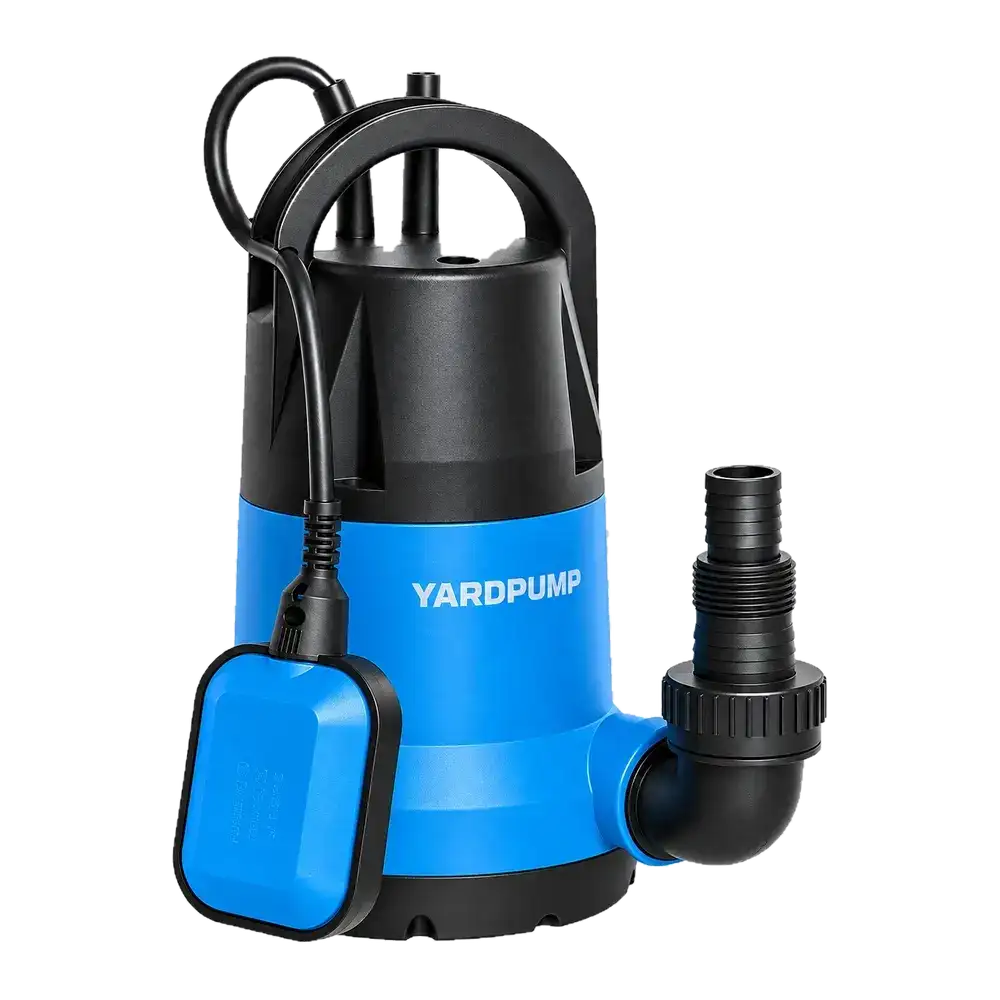
Suppose an importer wants similar looking pumps for two electrical markets. Both are needed for the same drainage task, but the quotation offers one performance curve. Can the order promise one duty point for the 50 and 60 Hz variants? It can state one minimum job. Each supplied variant still needs evidence that it meets that job at its own declared supply, configuration and test conditions. Same appearance or shared packaging does not make two performance files interchangeable.
Share the job while identifying each variant
Start with the liquid, permitted levels, discharge route, elevation, fittings and required delivery. Translate that work into a flow at the required total head. Maximum head and maximum flow describe different ends of a curve. Neither establishes the working point. Where the installation has several expected water levels or accessories, specify the conditions that need separate checks. A wattage marking does not specify those flows.
The curve for each configuration should identify the motor and wet-end versions, supply conditions and test boundaries. Frequency can affect speed, load, efficiency and motor temperature. Estimates that relate speed to hydraulic performance can help plan engineering work, but do not turn them into a contractual guarantee for a different assembly. If power is part of the purchase, define whether the value is electrical input, shaft output or energy per delivered volume. Keep guaranteed values distinct from indications. Apply the same version label to the quotation, test report, packing and parts information so the warehouse does not turn two different items into one anonymous SKU.
Ask each report to answer the same acceptance question
As an illustrative example, require at least sixty litres per minute at four metres of total head. One sample tested at 50 Hz delivers sixty-four; one tested at 60 Hz delivers fifty-seven. Those figures are not product data. Passing on the first sample does not offset the second result. Check the latter report for the exact voltage and frequency, the approved sample identity, the specified outlet parts and a suitable measuring range. For a borderline result use the tolerance, uncertainty treatment and retest rules agreed before inspecting the lot. Do not adjust the standard after discovering which variant missed it.
Define the relationship between sample approval and production verification. An approved sample identifies a specific assembly, while repeatable lot evidence documents what is shipped. If the winding, impeller, hose adapter or another influential component changes, examine the effect before reusing old evidence. A useful report retains measured supply conditions, liquid and level, flow, head, stabilization and the fixture used. Electrical tests on operating pumps belong with qualified personnel in an approved setup. Do not try an unknown frequency version by changing a supply at the installation to see what happens. A performance record does not substitute for any separately required evidence about the electrical version or market.
Resolve a shortfall before combining prices
If both rows meet the requirement, compare actual cost, lead time and parts as two versions of one commercial offer. If one is not supported, mark the specific guarantee pending and request matching evidence or a revised configuration. The buyer might keep one duty table and two test schedules. Either format works if every promise can be followed back to a real shipped unit. Ask for named curves and replayable test records, so later receiving or after-sales can assess a discrepancy without trying to identify the motor by its shape.
Frequently asked questions
Is a higher electrical input enough to establish the required flow?
No. Verify the required hydraulic duty under the agreed operating conditions.
Can both variants appear on the same curve sheet?
Yes if each applicable trace and its conditions are identified and verified. A generic line with no variant identification cannot support both.
What if only one electrical version has been tested?
Keep the other version's guarantee pending until matched evidence exists. Do not apply the tested version's result to it.