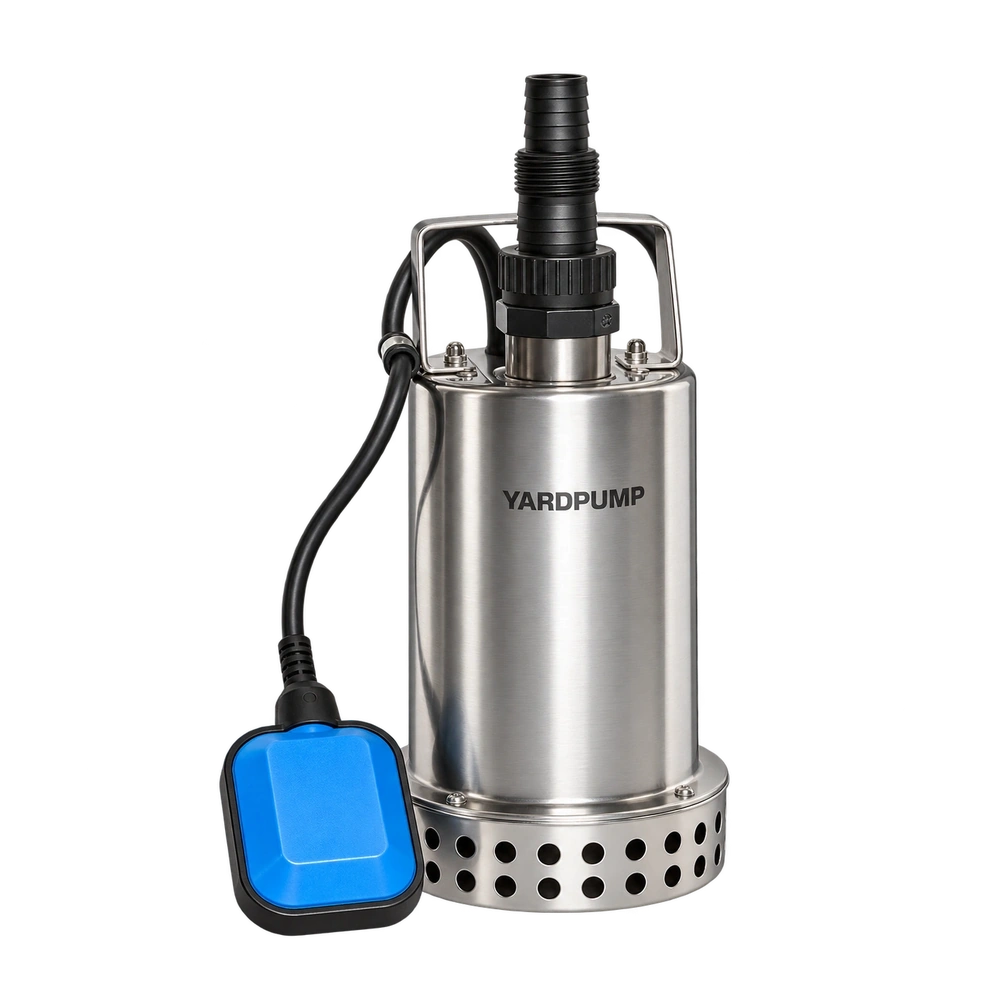
Short answer. Putting an importer’s or distributor’s own brand on a pump can change its legal responsibilities. Under applicable EU product legislation, a company that markets equipment under its own name or trademark may be treated as the manufacturer, even when a factory abroad builds the pump. The commercial phrase “OEM supplier” does not decide the regulatory role. Resolve the product’s legal classification and responsible operator before approving the nameplate, declaration, instructions and carton.
Consider a European retailer buying a compact submersible pump from a Chinese contract factory. The pump body, motor and packaging may be identical to a factory-branded model, yet the retailer wants its own logo and model code. The buyer must determine which legal entity is named as manufacturer for the specific EU product, who holds the conformity evidence and how later electrical or component changes will be controlled.
Start with the legal product and the brand owner
Do not assume that every water pump follows one identical directive. Classification, intended use, voltage, controls and the complete assembly determine which EU rules apply. For machinery within its scope, the Machinery Directive framework is relevant in 2026; the Machinery Regulation (EU) 2023/1230 applies from 20 January 2027. Other electrical, electromagnetic-compatibility, hazardous-substance and product obligations may also need assessment. The Low Voltage Directive has its own scope and rules; it is not a universal substitute for machinery conformity.
The principle is nevertheless important: where the relevant legislation treats an operator placing equipment on the market under its own name or trademark as the manufacturer, that operator cannot solve the issue merely by printing a foreign factory’s test-report number on the box. The factory can provide engineering and testing services, but the legal manufacturer needs a defensible conformity process and access to the evidence required for its responsibilities.
| Decision | Buyer must establish | Evidence to retain |
|---|---|---|
| Brand identity | Whose name or trademark markets the exact pump? | Artwork, nameplate and supply contract |
| Product classification | Which EU rules and standards apply to this assembly? | Documented regulatory assessment |
| Technical documentation | Who maintains drawings, risk analysis and test evidence? | Controlled file index and revision |
| EU declaration and marking | Which entity signs, and which approved SKU is covered? | Signed declaration, model mapping and label |
| After-sales change control | Who evaluates a revised motor, cable or float? | BOM revision, approval and affected lots |
Make the paperwork follow the actual electrical SKU
A 230 V / 50 Hz pump with a particular plug, cord, float switch and motor is not automatically represented by a report for a visually similar 120 V / 60 Hz variant. The buyer should ask for the model-identification logic, applicable test reports, technical documentation, declaration wording, nameplate and instructions for each intended market version. The existence of a CE mark on a sample is not a substitute for checking this mapping.
Agree in writing which party can approve substitutions. A cable supplier change, altered sealing system or motor winding revision may affect the evidence even when the retail product name stays the same. Record the golden sample, BOM revision, drawings, production lot and the date each change becomes effective. If the factory supplies a technical-file package, define how the legal manufacturer can obtain updated records for the required retention period.
Separate environmental and channel duties from the pump’s technical conformity. WEEE registration, packaging obligations and marketplace seller information depend on destination and supply chain. A declaration of conformity does not automatically discharge those other duties. The buyer should obtain jurisdiction-specific advice where classification or economic-operator roles are uncertain.
Five checks before approving the private-label carton
First, map every retail SKU to the factory model, electrical configuration and revision. Second, approve the exact nameplate and contact information of the responsible economic operators. Third, confirm the destination-language safety instructions and warning illustrations against the real pump and plug. Fourth, obtain the controlled declaration and evidence index, including how changes are reported. Fifth, retain a lot-to-SKU traceability record so a later field complaint can be matched to the correct technical version.
Ask the supplier to demonstrate how one order line becomes one production instruction and one packed carton. A mixed order can contain different voltage, frequency, cord and plug variants that look nearly identical. Scan the label and compare it with the tested configuration, not merely with the marketing name.
For adjacent procurement checks, see the EU importer checklist and the multi-market electrical SKU release guide. These explain different parts of the decision; neither replaces a product-specific conformity assessment.
What to put in the RFQ and OEM agreement
An effective RFQ requests the intended sales countries, brand owner, product classification assessment, model/version table, safety-instruction languages, testing and document scope, label approvals, record-retention access and change-notification procedure. Specify who pays for variant testing and how a failed document review delays production release. A low FOB unit price is not comparable if one quotation omits the evidence and artwork work needed to put the product legally on sale.
Keep the final approval traceable: approved artwork ID, technical-file revision, declaration version, sample ID, production date and batch range. A clear responsibility matrix protects both parties better than a sentence saying “factory supplies CE” without defining the actual product and duties.
Questions brand buyers ask
Can a private-label brand simply reuse the factory’s CE certificate? Not automatically. Confirm the applicable conformity route, the exact covered product and the entity responsible for the declaration and documentation.
Does changing only the logo leave the compliance responsibilities unchanged? Not necessarily. Marketing under the buyer’s name or trademark may change who is legally treated as manufacturer under the applicable act.
Can a factory keep the technical file? The factory may maintain records under contract, but the responsible operator must still be able to meet its legal documentation and access obligations.
Is this the same as WEEE or packaging registration? No. Those obligations are separate and depend on the destination market and supply chain.