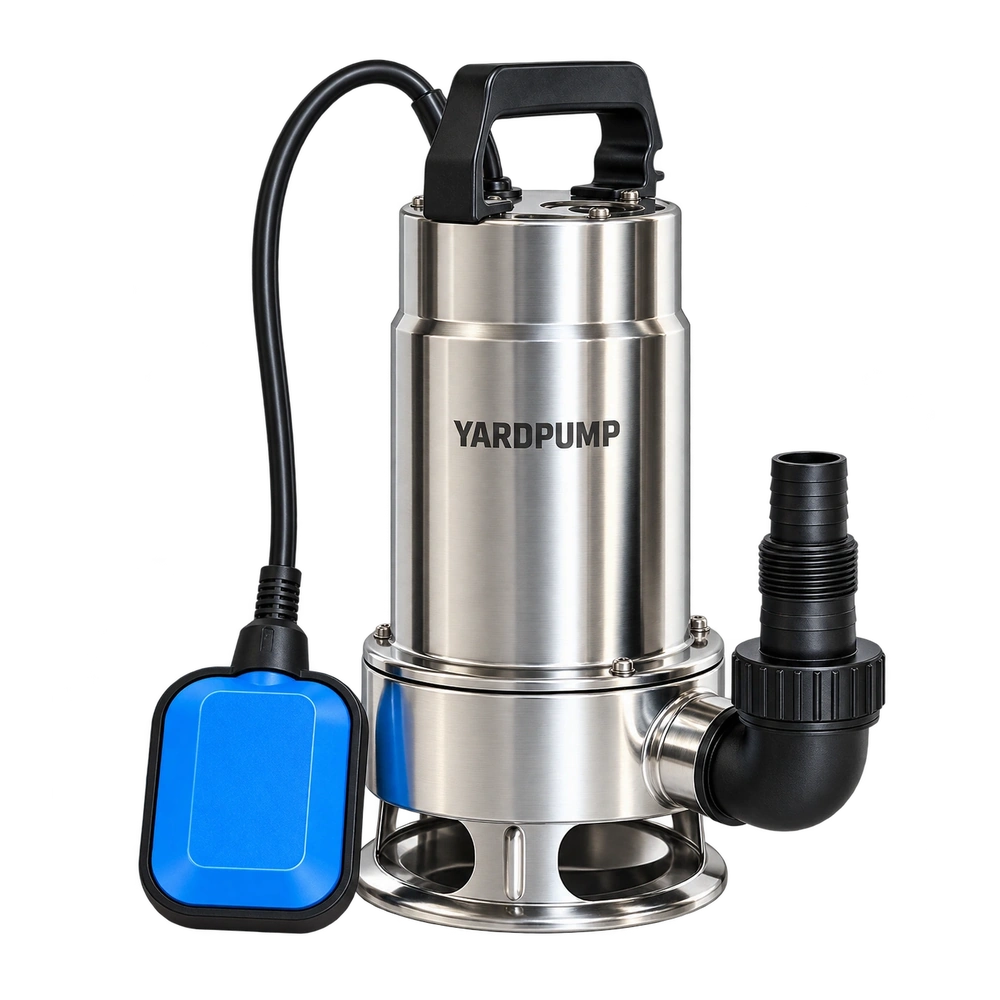
Suppose new outlet fittings arrive packed with small submersible pumps. The threads engage and the fitting feels tight, but water drips beside the gasket. Do not increase torque before checking the geometry. On a straight-thread connection designed to seal against a face gasket, the threads draw the faces together. If the fitting nose or thread runout hits a stop first, the resistance is not evidence of gasket compression. The acceptance question is how much axial travel remains between first gasket contact and that stop.
Confirm which surfaces are supposed to seal
Use the drawing to identify the sealing interface. Some fittings use a flat washer or supported face seal. Others use an O-ring arrangement or a tapered thread system. Do not interchange those methods. For a face-sealed joint, identify the pump seat, the adapter’s compression face, the approved gasket’s initial thickness and working compression, and the first feature that can limit engagement. The stop may be the nose contacting the bottom, the end of the available thread or a hard shoulder hitting the port. A thread gauge on each component does not check the distances between those surfaces.
Confirm that the water actually comes from the joint. It can track down from a hose connection, clamp or seam above it. After isolation and depressurization, inspect the seat for debris, burrs, distortion, uneven marks or a missing part. Photograph the original combination. Cross-threading or damage can also create an early rise in resistance. The feel of a wrench alone cannot establish a geometric stop.
Measure the travel from one axial datum
Have inspection identify first gasket contact and the hard stop from an approved drawing, fixture or specimen. Use the same reference and direction for both locations, and include drawing tolerances rather than relying on one average specimen. Suppose in an illustrative geometry the gasket first touches after 7.0 mm of travel and the hard stop occurs at 7.2 mm. At most 0.2 mm remains for compression. If the design requires at least 0.6 mm, more torque cannot make up the missing travel. These are example values. The actual compression, thread engagement, torque and permitted deformation come from the approved design.
Use unpressurized dimensional inspection, a suitable gauge or an approved sectioned sample. Verify a hard stop on a permitted fixture or specimen without forcing production parts against it. A mark on one side of a washer can indicate poor alignment. Little compression around the whole washer plus matching contact at the stop makes the dimensional explanation stronger. Record the pump port, adapter and gasket revisions and lots. Components can meet individual drawings yet fail the assembled stack if the drawings do not control that relationship. Compare the seated assembly on the drawing; a thinner gasket in one lot and a longer nose in another can both reduce the compression margin.
Hold combinations that do not fit as designed
If there is insufficient travel, hold the affected configuration. Ask whether the purchase documents control the seat, adapter length, gasket and stop together. Obtain matched parts or approve a documented design change. Do not substitute a stacked washer, tape, a cut-down fitting or excess torque. With the geometry corrected, have qualified staff verify assembly, sealing and intended orientation using the approved setup. Handle pressurized testing in the appropriate fixture and isolate and depressurize before removal. Dimensions do not replace the final assembly check, and one dry trial does not relax dimensional limits.
Frequently asked questions
Do matching straight-thread sizes use the same washer?
Not necessarily. Check the seat, useful engagement, available compression travel and gasket geometry rather than buying by size alone.
Can I identify first contact by feel?
Thread friction and cross-threading can change the feel. Use the approved drawing, gauge or sample to verify where contact occurs.
Why not fit a gasket 0.4 mm thicker to make up the difference?
A thicker gasket changes support, compression and available thread engagement. Reassess the complete combination instead of adding the missing distance in the field.