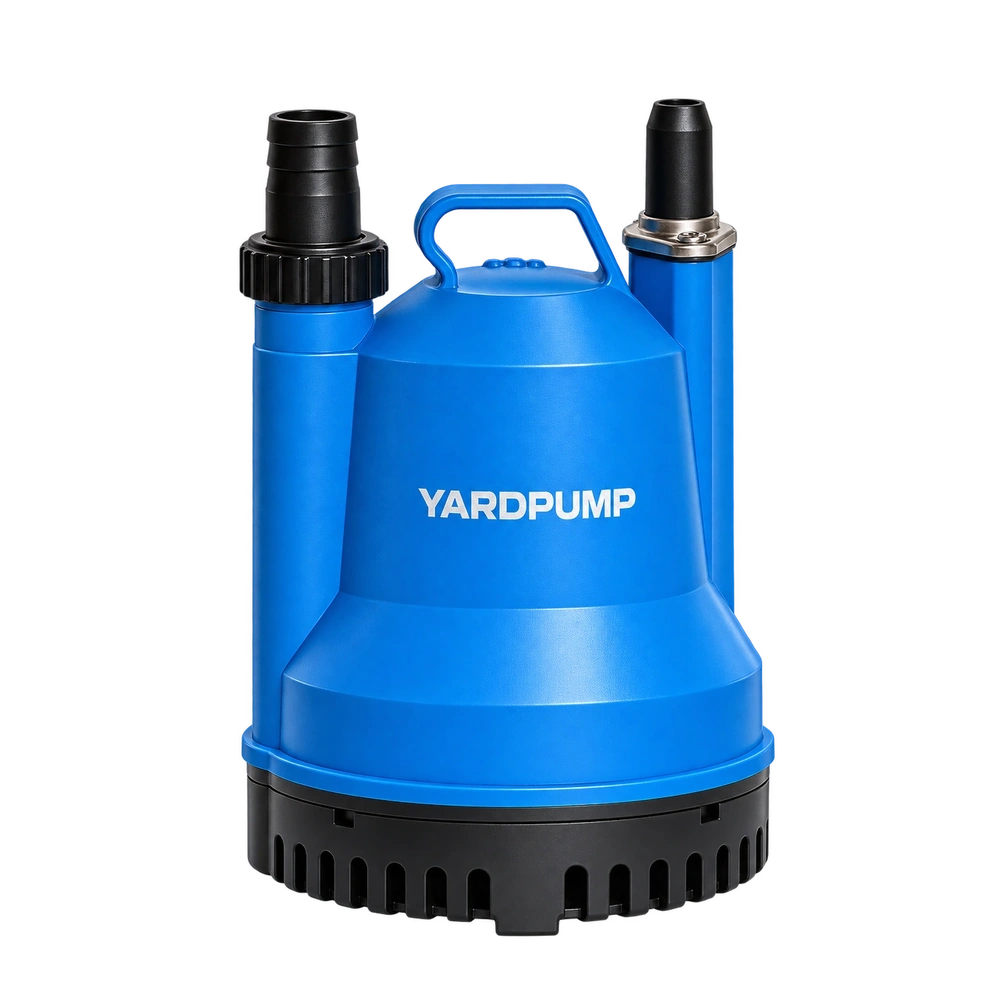
Suppose a distributor gets three complaints about drainage pumps that stopped delivering shortly after installation. One crew installed all three, and all three came from one production lot. That is not enough to assign responsibility to either the installer or the factory. Look for the same lot under another installation and the same installation setup using another lot. Until the two factors are separated, the repeated symptoms identify a combination to investigate.
Describe the installation as well as the crew
One installer may repeat the same narrow hose, fitting, float position or outlet elevation across jobs. Different installers may also follow the same incorrect drawing. Record model and production lot, actual hose bore and length, check valve, switch clearance, control settings, water conditions and dates in service. Separate the symptoms. Loss of delivery at low water, thermal stop followed by recovery, a motor running with no flow and a protective electrical trip call for different checks.
Keep records of working equipment as well. A unit in stock has not had the same field exposure; one running for a day is not automatically comparable to another running for months. If there is suspected electrical ingress, shock or another safety issue, stop use and handle it through the appropriate service process. Do not have someone keep operating suspect equipment to add observations.
Cross the two factors in the record
Use rows for the installation method or crew and columns for the production lot. In each cell show the number of installed units with comparable exposure, the number reported affected and the specific symptoms. Look for the same lot under different setups and the same setup using a different lot. Compare like symptoms and service periods. A site that has not called yet does not automatically count as tested.
In an illustrative case, Crew A installed only Lot A and has three complaints. Crew B installed only Lot B and has none. Crew and lot overlap completely, so neither can be identified from that table. Suppose Lot A units are later verified working in another approved setup and another lot hangs its floats in the same narrow pit used by Crew A. Clearance becomes a useful hypothesis to test. If the same component issue appears in one lot across several independently documented setups, manufacturing records for that lot deserve priority. Either pattern is evidence for an investigation, not proof of cause by itself.
Ask for a check that can change the conclusion
Have qualified site staff verify a suspected installation variable under approved conditions. Preserve original fittings and field evidence where a return needs examination, then match bench checks to the correct serials. Do not swap equipment between locations with unresolved electrical faults. Record what changed when the symptom stopped, when it returns and which units remain unresolved. The service response should state the hold scope, action taken and what cause was actually verified.
Use the finding to decide what happens next. A confirmed clearance problem can change the installation check for subsequent jobs; a confirmed component issue can narrow the supplier's lot investigation. When the comparisons are still missing, keep the causes open and state exactly what observations would separate them. That leaves a useful service record instead of an argument over a photo.
Check the power version and control type before counting units in the same comparison. A float model and a manual version can share a housing while producing different symptoms in the field.
Frequently asked questions
Do three returns from one lot prove the whole lot is defective?
No. Compare the symptoms, exposure and installation, then apply the appropriate hold and inspection rules.
Is another lot without complaints a good comparison?
Only if comparable units have actually been installed and their operation is known. Absence of a complaint is not a test.
Should we investigate the batch or the installation first?
Handle immediate safety and water risks, then look for a comparison that separates the two. The work can proceed in parallel.