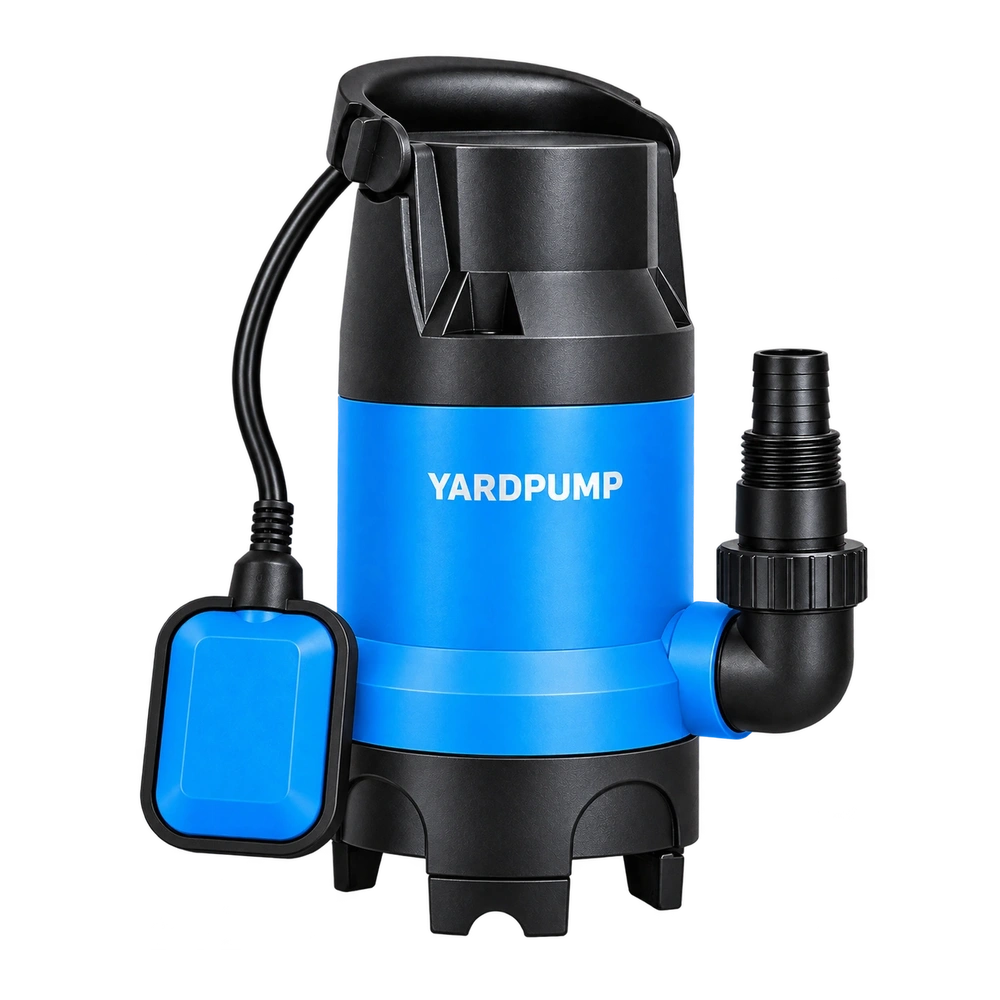
“The line produces two thousand pumps a day, so twenty thousand units will take ten days.” Suppose an OEM buyer receives that capacity statement. Dividing quantity by output is not enough to set a shipping date. Establish whether the number describes components, assembled units or conforming complete pumps that have passed the agreed tests and packing process. Also establish whether that capacity is actually available to the order. The fastest machine is not the factory's deliverable output.
Work backwards from a releasable pump
A production route may include moulding, winding and motor assembly, sealing, final assembly, testing, drying and packing. The exact route depends on the design and may include purchased or subcontracted operations. Identify which stages fall within the quoted lead time and which rely on existing inventory.
Housing output cannot be converted directly into finished-pump capacity. A pump requires a complete set of parts. Shared tools, material or colour changes and the availability of purchased components affect how many complete configurations can be delivered. Check the actual order configuration rather than a convenient component count.
Calculate the test bottleneck separately
Consider an illustrative required test occupying a station for thirty seconds per pump. With 360 net available minutes in a day, one station has an ideal upper limit of 720 units. Two identical stations offer 1,440 units before handling, retesting and abnormal interruptions are considered.
If the assembly line claims two thousand units but every unit requires that test, adding assemblers alone does not remove the constraint. Nor should an agreed duration or necessary test be shortened to satisfy the schedule. The promised route and the capacity of its test equipment must describe the same product and requirements.
Keep different capacity numbers separate
| Reported number | Clarification the buyer needs |
|---|---|
| Theoretical machine cycle | Does it include loading, unloading and changeovers? |
| Shift duration | Which losses are deducted to obtain available time? |
| Daily completed quantity | Is this a station count or final conforming output? |
| Total factory capacity | What product mix and time are allocated to this order? |
If the supplier provides measured conforming output, do not automatically multiply it by yield again and deduct the same losses twice. Where an overall equipment-effectiveness figure is used, establish its denominator, period and included losses. Numbers with different boundaries should not be combined as though they were equivalent.
Use a representative run to test the plan
Follow the same BOM, colour, accessories and inspection requirements as the order. Observe the complete production route and record output, accumulating work in progress, interruptions, rework and packing completeness. A run using previously prepared subassemblies has not demonstrated all upstream capacity; state that boundary explicitly.
Where practical, include an actual changeover or representative handover rather than only the smoothest interval. A one-hour peak does not prove repeatable output on every future working day. The purpose is to identify stable constraints and the ability to manage exceptions, not to create an impressive extrapolation.
Capacity needs material and scheduling commitments
Confirm arrival dates for critical parts, available test fixtures, planned maintenance and competing order allocations. For subcontracted work, include transport, receiving inspection and the handling of rejected parts. A large factory can still lack enough available production time in the requested delivery window.
Allow for configuration confirmation, artwork approval, final inspection and shipment preparation. Assembly completion and readiness to dispatch are different milestones. Each should have an identifiable record and responsible person. A vessel departure is a further logistics event, not something established by a favourable assembly rate.
Adjust the constraint without changing acceptance
Possible responses include agreed partial shipments, earlier material confirmation, additional validated test stations or an adjusted production schedule. Evaluate staffing, fixtures and quality controls at the same time. An unverified temporary station or subcontractor is not automatically acceptable because it increases the reported quantity.
Keep performance, safety and configuration acceptance unchanged while dealing with scheduling risk. A credible capacity statement explains which configuration follows which process, during which available period, to provide how many conforming deliverable pumps. That is a useful basis for purchasing; an isolated machine-speed figure is not.
Frequently Asked Questions
Does a warehouse full of pumps prove capacity for this order?
No. Check configuration, batch, release status and existing allocations. Inventory also does not demonstrate repeatable manufacturing capability.
Do two assembly lines necessarily double output?
Only if shared materials, testing, packing and other constraints can support the additional throughput.
Does output below theoretical speed establish supplier dishonesty?
Not by itself. First align definitions of available time, conforming units and losses, then compare the commitment with the evidence.