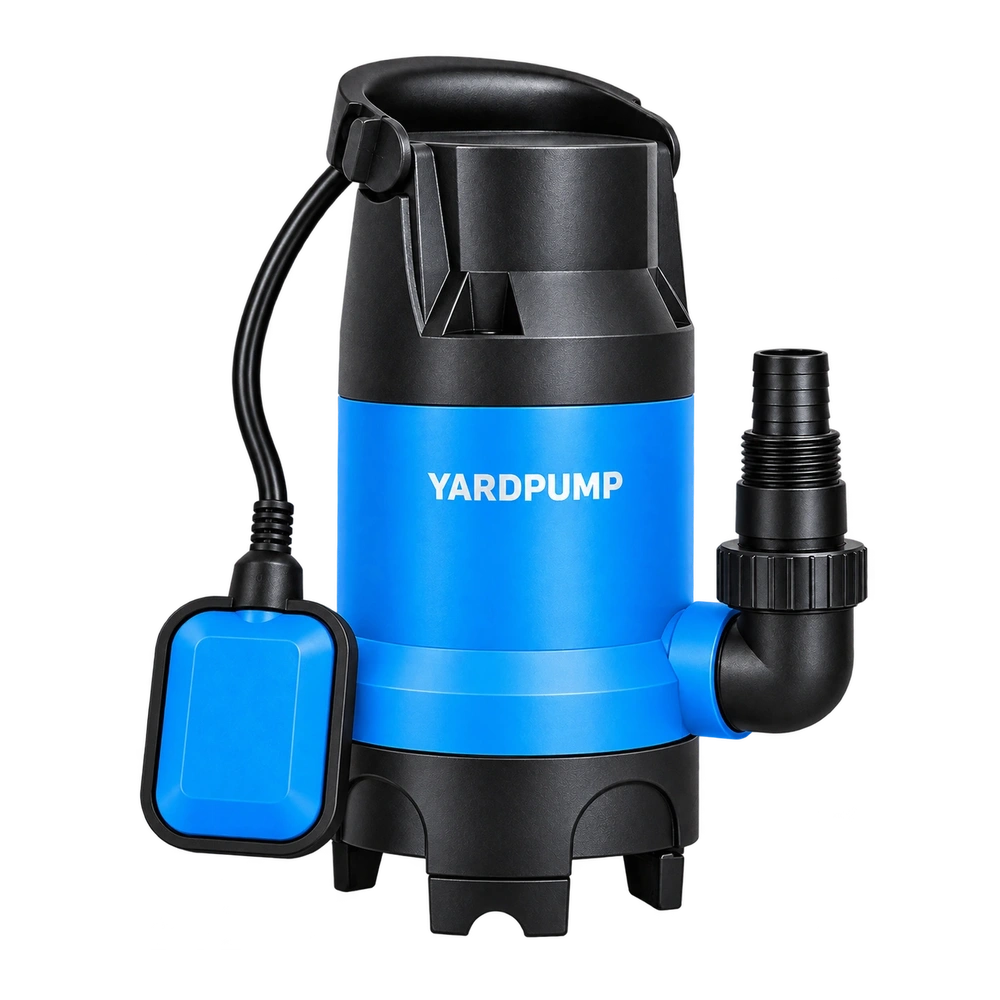
An outlet gasket has the correct outside diameter and seals without visible dripping, but the pump delivers less water after the accessory is fitted. Inspect its inner opening and assembled position. A gasket that fits around the outside can project into the passage, shift off-centre or deform inward under compression. Leak-tightness and an unobstructed flow path are separate acceptance requirements.
Inspect the assembled bore
The loose gasket's nominal inside diameter is only a starting point. Check the receiving recess, locating shoulder and mating adapter. A soft ring without positive location may move during tightening. Excessive squeeze, an incorrect profile or incompatible dimensions can push material into the opening. Looking at the unused gasket beside the fitting will miss that assembled condition.
For a dirty-water application, compare the entire accessory passage with the intended solids requirement as well as flow. A step that catches debris can matter even where the reduction in free area seems modest. A pump's particle statement does not automatically extend through an arbitrary adapter and gasket selected by the buyer.
Understand what a smaller opening changes
An intrusion raises local velocity and adds a contraction and expansion to the water path. It may increase loss or collect fibres. The resulting flow depends on the pump curve and the rest of the installation, so it should not be predicted from area reduction alone. A broad hose downstream does not remove a narrow opening immediately at the outlet.
For illustration, a circular bore reduced from 32 to 26 millimetres has about 66 percent of the original area. That calculation describes geometry only. It does not mean delivery must fall by 34 percent, nor establish an acceptable gasket size. The useful question is whether the assembled connection preserves the approved hydraulic and debris-clearance conditions.
Put location and compression on the inspection plan
Specify inside diameter, outside diameter, profile, thickness and relevant tolerances with a drawing datum. Identify the material and approved hardness or compound rather than using colour as the definition. Check how the ring is located before and after assembly, including at the extremes of approved fitting tolerances.
Use a safe unpressurized inspection of the assembled passage, appropriate gauges or a representative sectioned sample where the inspection plan requires it. Do not put fingers into an energized pump or a pressurized connection. Record the assembly method and specified tightening condition so suppliers are not comparing differently squeezed parts.
Verify the actual kit
Compare hydraulic performance using the approved accessory and candidate gasket under the same water level, lift and hose arrangement. Include leak assessment and any applicable passage check. A flowing demonstration with an oversized temporary adapter cannot approve the smaller fitting that will actually ship in the carton.
Do not cut a supplied gasket by hand to enlarge its opening. Cutting can damage the sealing width, create fragments or remove its locating feature. Have the responsible supplier correct the drawing or part and repeat the relevant checks. Keep mixed gasket stock segregated while the change is introduced.
For YARDPUMP utility and clean-and-dirty-water orders, confirm the exact outlet kit and model requirements from current approved records. The illustrative dimensions do not describe a particular family. An importer should release a connection that both seals and preserves its intended passage, with a drawing that makes the same result repeatable in production and spare-part supply.
Receiving inspection should also include the gasket after representative tightening, not just a loose-part gauge. A thin ring can remain centred in one recess but move in another approved tolerance combination. If visual inspection is difficult, define a repeatable fixture or representative assembly examination with the supplier. Keep that method connected to the drawing so production does not drift toward accepting only the easiest loose dimensions.
Frequently asked questions
Does a no-leak pressure test prove the opening is correct?
No. It can pass while the gasket partially blocks the flow path.
Can I reject a gasket from its loose inside diameter alone?
Compare it with the specified part and assembled geometry. Compression and location affect the final opening.
Does a larger hose compensate for a projecting gasket?
It may reduce other losses, but the local obstruction and potential debris-catching edge remain.