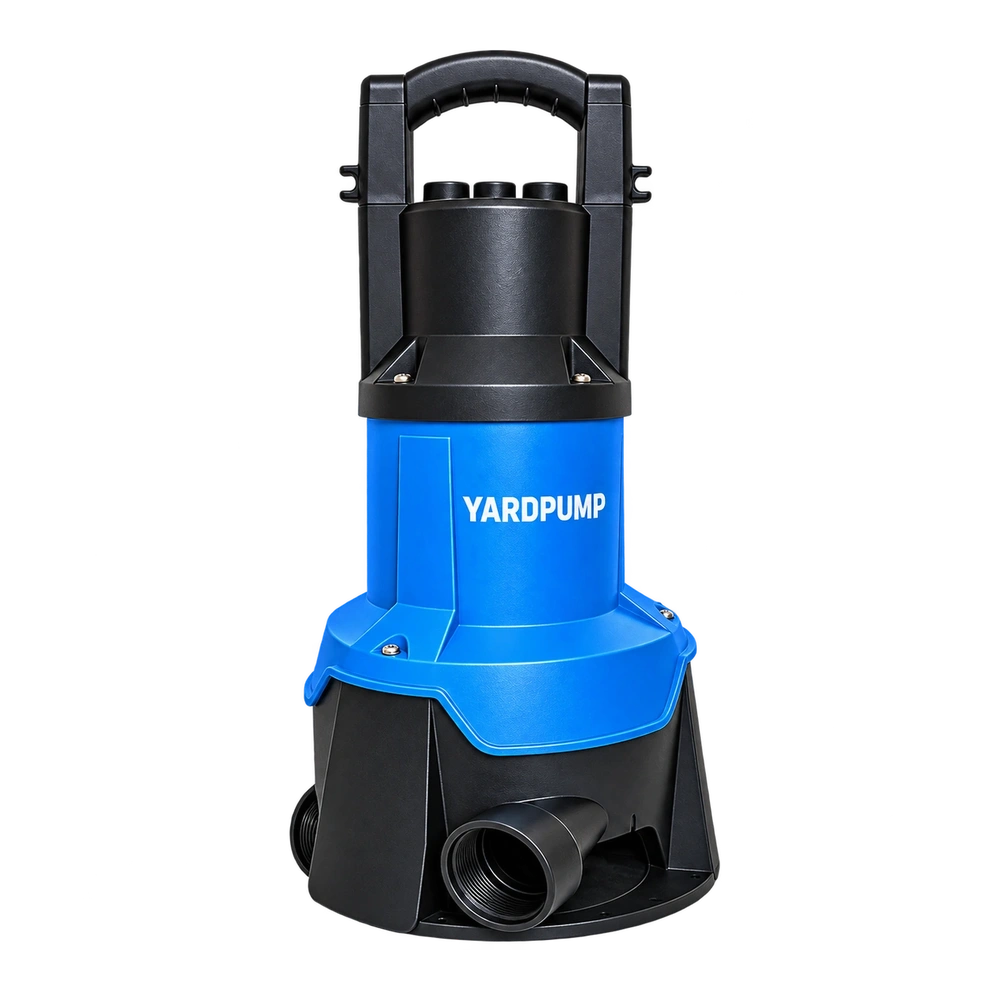
A new submersible pump produces no water on its first installation. Before repeated restarts, check the exact packout. If that version uses an outlet shipping plug, test cap or protective insert, it may still obstruct the water path. Isolate power and compare the supplied parts with the packing instructions. Not every pump has a removable outlet plug, and other plugs on a pump body must not be mistaken for packaging.
Why a blocked outlet can coexist with motor sound
A shipping plug may protect against dust, locate a fitting or close a test connection; it is not necessarily a water-path component. Left in place, it can put the pump near shutoff while the hose looks unobstructed. Caps, internal plugs and pull tabs vary by revision, so colour is not a reliable identifier.
A blocked outlet can coexist with audible motor operation. Sound does not establish that water is moving through the pump. A fitted external adapter may hide an insert farther inside, and a cap can also remain at the far end of the hose. Inspect the route from outlet to discharge destination. Do not conduct prolonged trials against a closed path; permitted operating conditions and protection behaviour depend on the particular pump.
Identify shipping protection from the exact parts diagram
After isolation and depressurization, compare the actual batch with its packing drawing, instructions and first-off sample. Account for every protective part, confirm an open bore, retained gasket and undamaged thread. Never probe an energized outlet or push an unidentified plug into the pump.
Use the exact model, packaging revision and parts diagram to distinguish shipping protection from valves, gaskets and operating adapters. If the document is unclear, obtain an identification drawing from the supplier rather than prying at unfamiliar parts. Cable entries, oil-chamber closures and sealing plugs are not packaging simply because they look removable. Retain an approved shipping piece after removal and photograph its original location to preserve evidence of the installation sequence.
If removal does not restore flow, continue through adequate water coverage, inlet clearance, hose kinks, valve orientation and the allowed working head. Isolate again before moving the pump or changing connections. Finding one cap must not hide a second installation problem. Nor does first-use loss of delivery establish inadequate motor power. Electrical assessment, where needed, belongs to qualified personnel rather than trial connections by the user.
Check the remaining water path after removal
Example: a kit should contain the pump, working adapter, gasket and one red dust plug. The opening sheet records the adapter but the plug remains deep inside it. Review of ten cartons finds one similar unit. These figures illustrate containment, not a universal sampling rule.
An importer's first-piece unboxing check should follow the intended installation sequence. Is the protection identifiable? Does the instruction show its location? Can an operating adapter be fitted over an unremoved insert? Could a necessary gasket be confused with disposable packaging? An independent person can follow the formal instructions in a deenergized assembly exercise and record ambiguous steps. That checks usability; it is not an invitation for untrained live testing or evidence of whole-lot consistency.
Use first-piece unboxing to prevent assembly mistakes
If required protection is missing from a shipment, assess the resulting contamination or thread-damage exposure separately before choosing inspection, cleaning or functional retest. If protection remains in a customer's water path, review the marking and instructions as well as the service response. The delivery objective for a compact clean-water pump is a correctly assembled water path. Do not claim every pump has a shipping plug or classify every packout difference as a defective pump.
Frequently asked questions
Do all new pumps have shipping plugs?
No. Verify the exact model, batch and packing documents.
Can I run it dry after removing the plug?
Do not use dry running as a check; use the approved wet test.
Is a missing dust plug a pump defect?
First investigate packout and exposure; packaging nonconformity and functional risk are separate decisions.