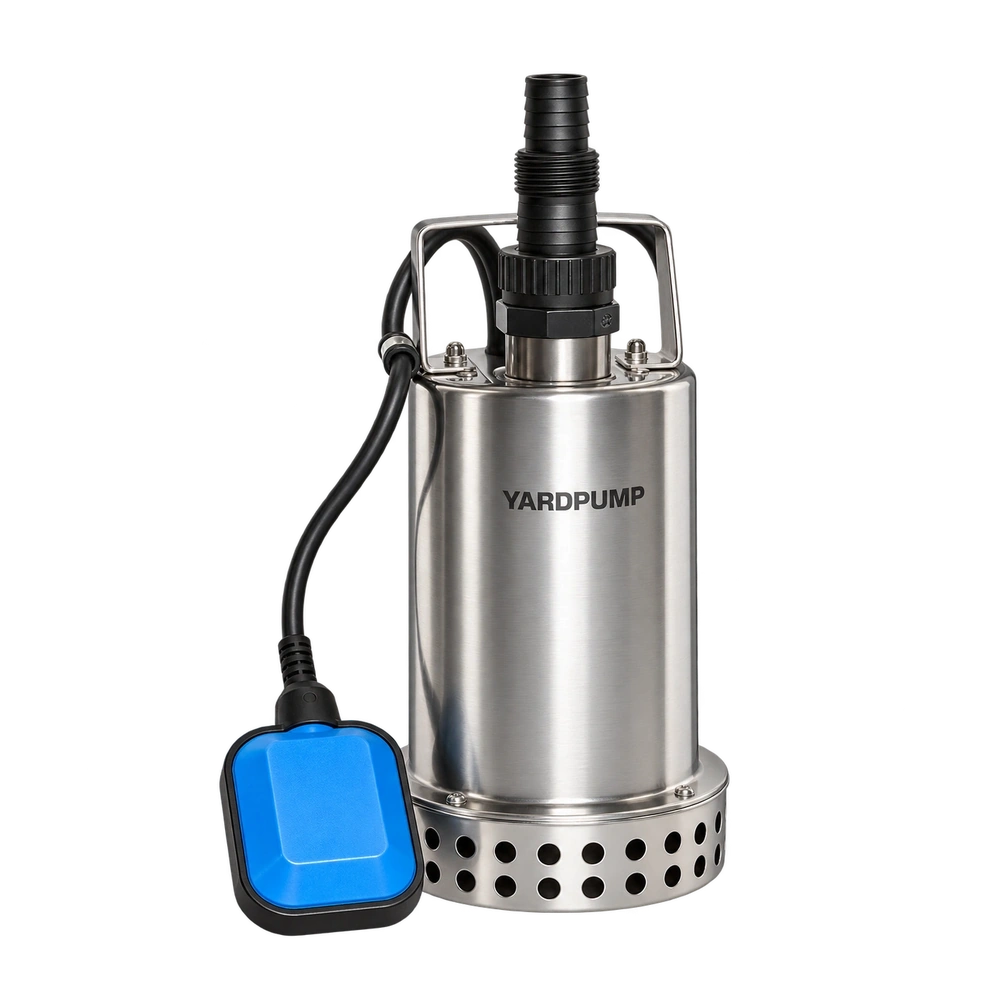
Imagine a service video of a shallow drainage job. A customer films a low-level pump after it stops, then points the camera at a deep-looking puddle several steps away. Does that prove that the pump missed its residual-water claim? The clip can show a symptom, but distinguish the water beside the pump from water in a separate depression. Establish whether the measurement was made at stop or later, how the pump stopped and what surface it stood on. For a warranty measurement, the observation needs to match the version and approved test method.
Establish the datum before judging depth
From a safe position, record pump location, floor material, any nearby drain or seam, the discharge route and the change in water around shutdown. Isolate the equipment under the instructions before placing a scale or handling a pump in a wet area. Define the scale's zero, such as the nearby floor or the test plate specified in the method. Face the camera towards the waterline and keep zero and graduations visible. Perspective, refraction, glare and a tilted scale affect what a viewer can read. A distant clip without a datum shows water remains but does not establish its depth.
Suppose the reading beside the intake at stop is 6 mm, while a depression two metres away contains 18 mm. If the two surfaces no longer communicate, the second value is not the pump's residual depth. The customer may still have a real puddle to deal with. If repeated readings under the approved setup show water above the applicable level around the intake itself, a controlled retest is reasonable. The figures are hypothetical and do not specify any production pump.
Record how and when the pump stopped
Identify whether a float, electronic sensor, operator or another approved control stopped the pump. Note how long after shutdown each frame was recorded. Separate the moment discharge stops from later water returning through a hose or entering across the floor. Do not force additional cycles, hold a switch in position or operate below the approved level to film a preferred number. If the inlet straddles a seam or a support, show their relative heights; a pad is not an assumed test surface.
For the service retest, use the same version, mounting condition and agreed start and stop conditions. Record outlet, inflow and any tilt. Keep a normal control stop distinct from an operator stop. If a scale cannot safely be placed, arrange a suitable measurement or controlled reproduction by qualified personnel rather than asking the customer to enter the pit. Link photos to the timeline so a ruler placed afterwards is not mistaken for evidence of the running condition.
Resolve the puddle as well as the acceptance question
If water at the pump meets the requirement but an isolated depression remains wet, moving the collection point or selecting a suitable finishing method may help more than replacing the pump with the same model. If repeated checks under approved conditions leave excessive water at the intake, investigate the base, inlet, control or another fault. Explain in the service reply what the measurements establish, which water still needs removing and how the next comparison will be made. A residual level is not a promise that every part of a room will be dry.
Identify whether each reading was taken beside the pump, at the bottom of a slope or in a tile joint. Differences between those locations are useful evidence. A reading in the deepest seam does not describe the entire floor.
Frequently asked questions
Can a video alone establish a failure?
Only when its datum, timing, version and conditions are clear enough for the acceptance method. Otherwise it is a lead.
Should the deepest puddle be reported as the residual level?
Record it separately. Check whether it still connects hydraulically to the pump location.
Should the pump be forced to keep running to show the lowest level?
No. Respect its permitted control, stop and immersion conditions.