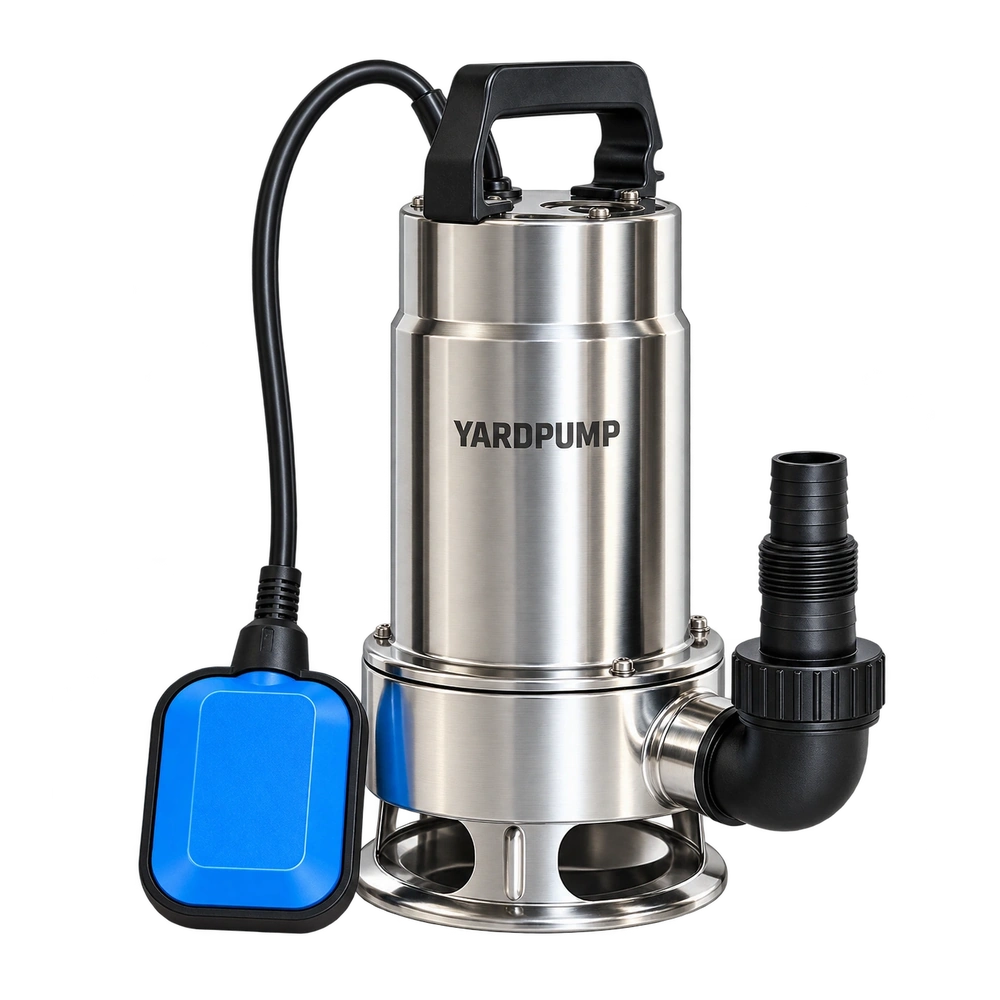
A returned pump appears to need one inexpensive component. Should the distributor repair it? Not automatically. Establish safety, technical feasibility and contractual responsibilities first, then compare the complete service cost. Diagnosis, transport, labour, revalidation and downtime can matter more than the part price. Replacement also has logistics, inventory and investigation costs.
Establish whether repair is an eligible option
Suspected leakage current, water ingress or unknown damage requires stopping use and electrical isolation, followed by qualified assessment. Without an approved repair method, suitable parts and the necessary validation capability, an inexpensive component does not make a repair executable.
Sealing and electrical work particularly require a complete release procedure. A motor that turns or a pump that moves water has not thereby passed all relevant checks.
Confirm product identity, complaint, operating conditions and the applicable commercial responsibilities. Repair-versus-replace economics do not override warranty terms or local legal obligations. Those depend on the actual agreement and jurisdiction; this article creates no universal warranty policy.
Compare equivalent cost boundaries
A repair estimate can include receiving, diagnosis, approved parts, labour, consumables, revalidation, packaging, return freight and a reasonable allowance for further handling. Replacement can include the correct new unit, dispatch, old-unit handling and necessary investigation.
Only deduct recoverable value where there is a defensible basis. Avoid counting costs twice, especially those already incurred and identical under both options.
Consider hypothetical currency units: repair parts cost 8, labour 20, revalidation 12 and packaging with freight 18, totalling 58. Replacement costs 40 for the unit, 18 for logistics and 5 for old-unit handling, totalling 63. Repair looks cheaper, but if the required validation cannot be performed, the 58 option is not eligible. These are illustrative costs, not company prices.
| Cost area | Repair | Replacement |
|---|---|---|
| Technical handling | Diagnosis, parts and labour | Replacement identification and fault investigation |
| Release | Necessary post-repair validation | Correct configuration and conformity of new unit |
| Logistics and stock | Parts delay and return shipment | Replacement inventory and dispatch |
| Follow-up | Repair scope and traceability | Retained evidence and batch linkage |
Make time visible
Waiting for a small part can leave the customer without equipment for an extended period. Immediate replacement may consume critical seasonal stock. Record parts lead time, workshop availability, shipping time and task urgency rather than comparing only items currently on a shelf.
An unapproved substitute is not a legitimate way to shorten the delay. Likewise, a superficially similar replacement may have a different cable, control arrangement or hydraulic duty.
For a critical drainage task, temporary protection may be needed while the return is assessed. Select that response according to the consequences and actual installation. A one-off transfer job, a continuous-duty application and a standby drainage pump do not have identical downtime effects.
Replacement does not remove the need for evidence
Sending a new unit should not mean discarding the old one without identification. Retain nameplate, batch details, symptoms, operating conditions and appropriate photographs. Store returned equipment safely and route possible batch concerns to the responsible technical and quality personnel.
For repaired units, record parts changed, reasons, validation performed and release authority. If the same fault recurs, repeating the same repair may increase expense without addressing the cause.
Revisit supply, installation, medium and application suitability. A site problem should not become an endless sequence of component replacements merely because each individual repair seems cheap.
Use a decision process with a technical escalation route
A distributor can first define the permitted repair scope, then obtain diagnosis and actual costs, and finally select the service option. A fixed price percentage should not overrule a safety or feasibility decision.
Keep the reason for each decision so that later reviews can compare actual cost, repeat handling and restoration time. That creates a more useful policy than assuming either repair or replacement is always the customer-friendly option.
A useful repair offer explains what will be done, how conformity will be checked, the expected restoration time and cost coverage. A replacement offer should identify the actual substitute configuration just as clearly.
Frequently Asked Questions
Is repair worthwhile whenever the part costs less than a new pump?
No. Include labour, logistics, validation, time and technical eligibility.
Can the returned pump be ignored after replacement?
Retain enough evidence to investigate recurring faults and possible batch implications.
Does normal discharge prove a repaired pump is ready to return?
No. Complete the approved checks appropriate to the repair and its effects before release.