A purchase order sets a minimum of 8.0 cubic metres per hour at a specified head. The inspection report prints 8.0. Can the buyer sign? Find out whether that number is the instrument’s original reading, a calculated result, or a one-decimal display of a value held at higher precision. The report format and the precision used to make the decision can be different. The decision rule that applied before anyone saw the sample results controls the comparison. If the documentation is ambiguous, flag the borderline unit for review.
Display rounding does not make a measurement more accurate
For illustration, suppose 7.96 and 8.04 are shown as 8.0 under a specified rounding convention. Both rows look identical. If the contract compares the result before display rounding, one result is below the limit and the other is above it. If the agreed method says to round once to one decimal and then compare, both fall on the boundary in this example. Where half increments matter, make the rounding convention explicit. Do not trim or round an export, then apply the specified rounding again to a result that has already changed.
An original result is not necessarily one number copied off a screen. Define the measurand and how it is calculated, such as the average delivery during an agreed stable interval. Preserve the underlying data, correction and conversion steps, units, instrument resolution, actual test head and measurement conditions. An instrument may transmit more digits than its accuracy supports. Resolving the display problem does not address measurement uncertainty or a guard band. Those questions affect what decision a result supports; formatting cannot make them disappear.
Make a borderline row reproducible
Keep four items separate: the purchase limit, the recorded or calculated result used for the decision, the pass or hold decision, and the value formatted for the report. The summary can use reasonable decimal places, but a borderline entry needs enough supporting detail to explain why its status is what it is. Check whether the instrument has already rounded before transferring data, whether the export passes numbers or display strings, and whether a second reviewer can reproduce the decision from the same files. Where a unit conversion is necessary, retain the original quantity and convert in the agreed order, rather than rebuilding an exact result from a rounded value in a different unit.
What to do after the report has gone out
If a dispute has already started, retrieve the sample identity, stored readings, actual head, water conditions and any approved test corrections. Ask the quality and purchasing teams to reproduce the decision under the agreement that was in force. If the underlying record is unavailable, follow the approved procedure for a borderline retest on the same item at the specified conditions. Picking a different unit that tests better cannot substantiate the original result. Where no decision rule was agreed, resolve the disposition and document a prospective rule instead of selecting the rule that favours one side after the fact.
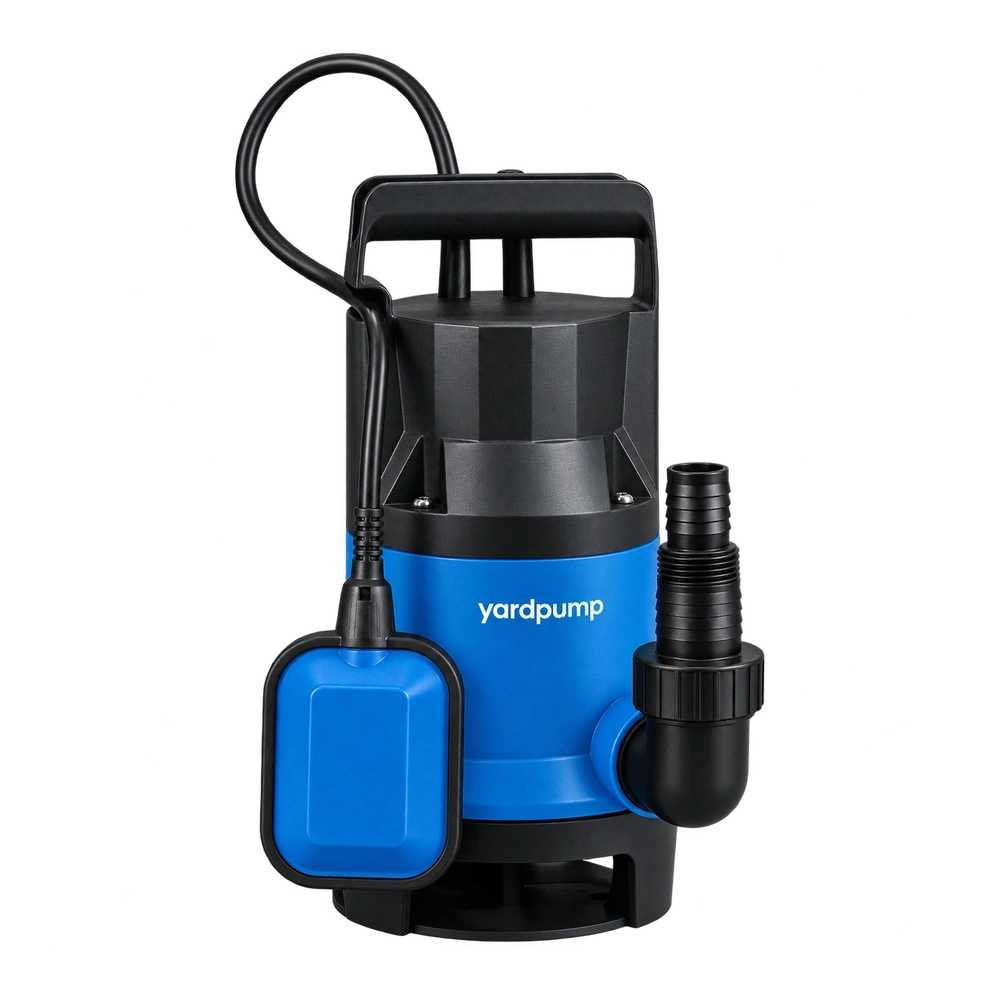
A pump’s public curve can inform your order, but it does not set the contract acceptance procedure. For a clean-and-dirty-water pump bought against measured duty, define the test point, the decision process and the record that travels with the unit before the lot is inspected. A simple way to test the paperwork is to enter two hypothetical inputs just above and below the limit and check the verdicts after export. That catches spreadsheet problems without sacrificing actual product for a trial.
If the original device only recorded one decimal, ask whether a comparison at finer precision is actually possible. Adding a zero to the report cannot reconstruct another measurement digit. Arrange a documented retest when the purchase method and available evidence require one.
Frequently asked questions
The instrument shows only one decimal. Can we judge to two?
No additional information is gained by adding a zero. Review whether the instrument can support the decision and retest with an appropriate method if the procedure permits.
Is comparing the unrounded value always more fair?
Fairness comes from applying a stated decision rule consistently and addressing measurement uncertainty. Selecting the favourable representation after seeing the data does not provide an agreed decision.
The actual head also rounds to the specified number. Is that acceptable?
Review the actual head resolution and permissible test-point deviation. Rounding a result does not make flow measured at a different condition equivalent to flow measured at the agreed duty.