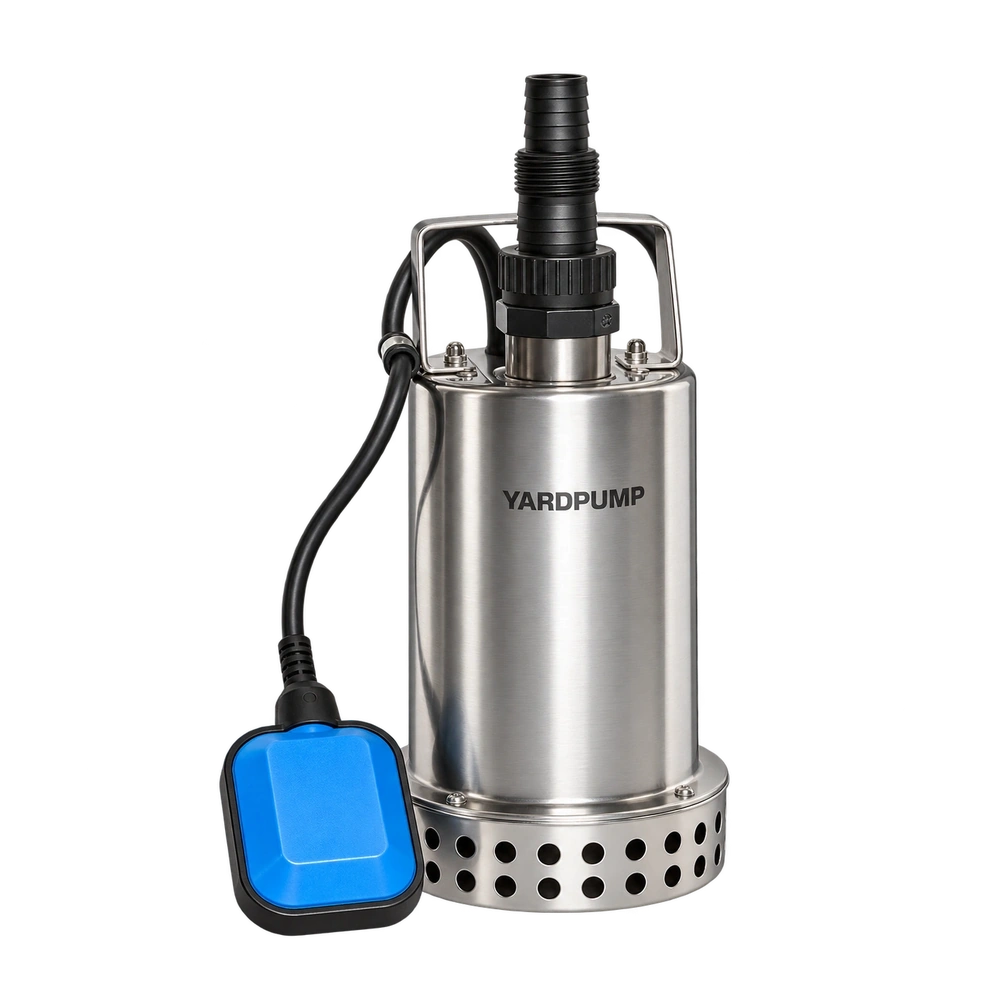
A familiar pump problem often starts with a simple observation: An RFQ describes a seawater version by naming a 304 shaft and FKM elastomers. Those parts matter, but seawater reaches many more interfaces and crevices.
The useful answer is not to choose a larger rating or accept a supplier's single measurement. Create a model-specific wetted-BOM matrix and service boundary. Record material grade, coating, galvanic couples, temperature, salinity, duty and flushing requirements for every relevant part. This keeps the decision tied to the actual liquid, installation, component revision and operating point.
The decision first
Create a model-specific wetted-BOM matrix and service boundary. Record material grade, coating, galvanic couples, temperature, salinity, duty and flushing requirements for every relevant part.
The first step is to freeze what is being compared. Record the pump model or component revision, liquid condition, supply, speed, installation and test method. If two samples are tested under different water levels, temperatures, hose layouts or electrical conditions, the result cannot isolate the feature named in this article.
For a service complaint, preserve photographs, labels, marks, deposits and measured values before cleaning or dismantling. For a purchase change, connect the drawing, BOM, supplier lot, sample and production cut-in. That evidence prevents a plausible explanation from becoming an unsupported conclusion.
Why the symptom can be misleading
Chloride exposure can attack crevices and stressed regions, while dissimilar metals create galvanic currents. Fasteners, springs, seal faces, housings, cable entries and motor-side barriers may determine life before the shaft does. FKM is not universally best for every liquid mixture or low-temperature condition.
The observed symptom is therefore a system response. A dimension can influence hydraulics, mechanics and heat at the same time; a control component can change both operation and the evidence seen by a technician. The correct question is not whether one feature is “good” or “bad,” but what changes at the agreed duty and which limit becomes controlling.
A practical check plan
| Check | What to verify | 中文现场提示 |
|---|---|---|
| Wetted BOM | List every metal, elastomer, seal face and coating | 列出全部金属、橡胶、密封副和涂层 |
| Interfaces | Review crevices, fasteners and galvanic couples | 评审缝隙、紧固件和电偶组合 |
| Duty boundary | Define salinity, temperature, immersion and run pattern | 定义盐度、温度、浸泡及运行方式 |
| Claim evidence | Tie the claim to one approved model and revision | 把声明绑定到一个批准型号与版本 |
Carry out the checks in a sequence that protects evidence. Begin with identity and external conditions, continue with non-destructive measurements, and dismantle only when the earlier results justify it. Use calibrated or otherwise controlled instruments appropriate to the decision. Record raw values as well as the final pass/fail judgment.
When several factors may be involved, change one controlled factor at a time. Keep an approved reference unit where possible. A matched comparison usually explains more than a single result against a broad catalogue tolerance.
Worked example
Example only: list each wetted component, exact material and evidence source, then mark exposure as continuous, splash, trapped or dry-side. Review a claimed WQD-PJ variant against its latest approved source; do not transfer that configuration or any flow/head value to other models.
Write the example assumptions into the report. Show the starting condition, what was changed, and the measured response. If the result depends on an assumed dimension, water level, voltage or material condition, label it as an example rather than presenting it as a YARDPUMP model specification.
How to turn the result into a decision
For selection, confirm that the installed duty remains inside the pump and accessory limits, then document the setup the user must reproduce. For procurement, turn every critical finding into a drawing note, inspection characteristic, approved sample or change-control requirement. For after-sales work, distinguish a confirmed cause from a symptom and an untested possibility.
Acceptance should cover the complete assembly where the interaction occurs. A loose component may pass a dimensional check and still behave differently after clamping, immersion, heating or loading. Conversely, a failed assembly test does not automatically identify which component is defective; it tells the team where a controlled comparison is needed.
Boundaries and safety
Material selection does not create a universal seawater-life guarantee. Water chemistry, oxygen, temperature, cleaning, duty and maintenance still define the boundary.
Industry mechanisms in this article are not specifications for every YARDPUMP model. Use the latest approved drawing, datasheet, manual and compliance file for the exact model and revision. Stop any test that creates unsafe heat, leakage, unstable support or electrical exposure.
Frequently asked questions
Does a 304 stainless shaft make the whole pump seawater-ready?
No. Check all wetted parts, crevices, galvanic combinations and actual seawater duty.
Does a short salt spray test replace immersion validation?
No. Exposure and failure mechanisms differ. Verify the service conditions in the purchase specification.
Should flushing requirements be stated in the quote?
Yes. They affect maintenance and whether the test represents field service.