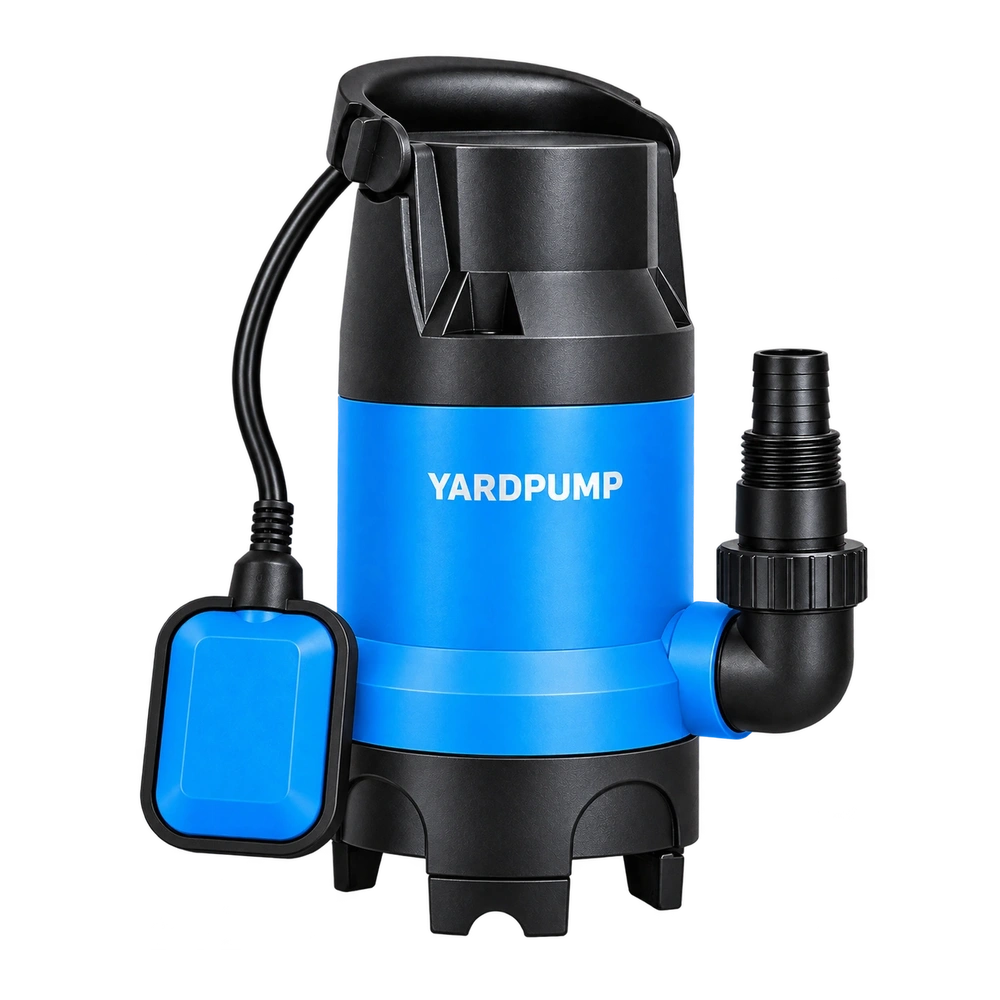
A distributor receives a compact submersible pump with a cut power cord. A repairer offers a connector marked “waterproof.” Is that enough to return the pump to service? No. Isolate the unit and obtain the manufacturer's approved repair route. The decision may be replacement of the complete cable assembly, a specifically approved professional joint, or replacement of the pump when safe repair cannot be established.
The repair has several functions to restore
A cable does more than carry current. Its insulation separates live conductors, its sheath meets the operating environment, and its entry provides sealing and mechanical restraint. Protective-earth continuity must be preserved where the pump requires it. A joint must restore the relevant functions together; a dry resistance check or an attractive sleeve does not prove all of them.
Identify where the cut occurred and whether the remaining cable has also been crushed, stretched or wetted internally. Water can travel along conductor strands. A clean-looking end therefore does not establish that every affected section is dry. Record the pump identity, electrical version, cable type and damage position before trimming or discarding evidence.
Read what “waterproof” actually covers
A connector's protection statement belongs to defined conditions and a specified cable assembly. Check permitted cable diameters, sheath material, conductor range, installation method, immersion conditions and mechanical limitations. A rating for an assembled enclosure does not approve arbitrary cables, resin, tape or a joint assembled without its required tooling.
Also distinguish a connector allowed to remain submerged from one that can be connected while wet or underwater. These are different capabilities. Do not unplug or mate a connector underwater unless the complete system is explicitly designed and approved for that operation. Keep unknown or damaged electrical assemblies de-energized while obtaining competent advice.
Compare repair options at assembly level
Replacing the complete approved cord can avoid an additional submerged joint, but opening the pump may disturb its original cable entry and other seals. It still needs the prescribed reassembly and verification. A professionally approved inline repair can be an option for some equipment, but it adds a component whose environmental and load coverage must be documented.
For an illustrative service comparison, list three costs separately: approved parts, competent labour and required release tests. Add the consequences of insufficient remaining length and any change to handling or immersion instructions. Do not compare a complete cable replacement price with the price of an unvalidated splice sleeve alone. The cheapest item is not necessarily a completed repair.
Release requires more than a running demonstration
The qualified repairer should use the manufacturer's applicable electrical and sealing checks. Their scope may include protective-earth verification where required, insulation assessment, connection integrity, cable restraint and wet operating controls. Test methods and limits must suit the pump and any electronics; indiscriminately applying high-voltage tests can damage parts and does not establish a valid release.
Keep the repair method, parts identity, installer and measured results with the original unit record. State any approved change in usable cord length or operating restrictions. A customer should receive clear instructions and an identifiable repaired unit, not a generic claim that “it ran in a bucket.”
This applies to YARDPUMP compact pump service only through the instructions and parts approved for the exact variant. It does not authorize a do-it-yourself underwater wiring method or imply that every cord is field-repairable. If the approved route or competent verification is unavailable, keep the pump out of service and choose a supported replacement solution.
Ask whether the proposed repair affects the pump warranty and applicable product approval, but do not confuse a warranty exclusion with a technical safety finding. Commercial responsibility and engineering release need separate answers. The service record should name who approved the method and who accepts responsibility for the repaired assembly. This is particularly important when a distributor uses an independent repair shop rather than the original manufacturer’s service channel.
Frequently asked questions
Is a protection rating on the connector sufficient?
No. It must apply to the exact cable, assembly method, environmental conditions and complete repair arrangement.
Can tape and heat-shrink prove a submerged repair is safe?
No. Those materials alone do not establish sealing, insulation, restraint or electrical-release compliance.
Does cutting out the damaged area remove all water?
Not necessarily. Internal wetting and damage extent need professional assessment before the repair route is selected.