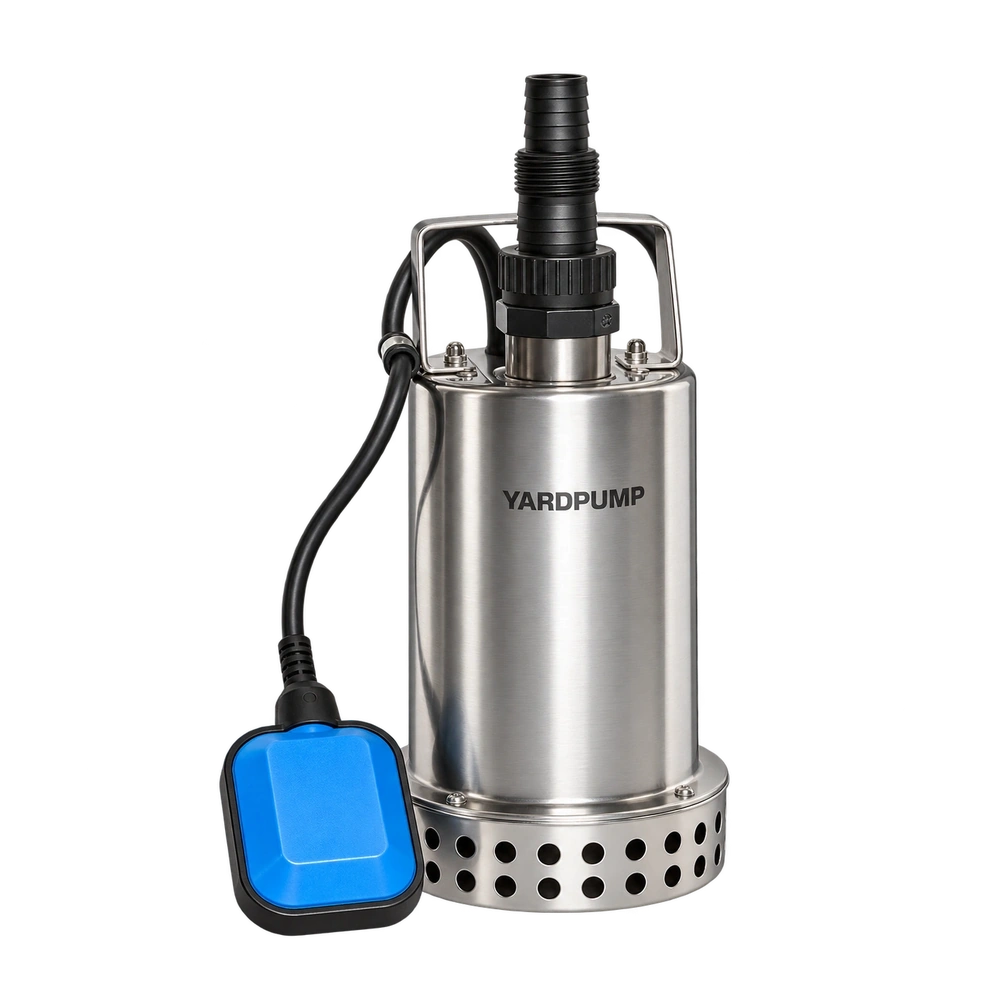
A new automatic sump pump fails to start in its receiving trial. Someone points to a tie near the float and says to cut it. Identify it from the exact model’s packing and operating instructions first. It might be a transit restraint that must be removed. It could instead be a permanent clip that sets the float tether length or keeps a cord out of the switching path. A restrained float can prevent a start. Removing the wrong piece can create a fault in an undamaged pump. Many models do not need a separate shipping restraint at all.
The instructions should identify the device
In some packing arrangements, a transit piece supports a freely moving float during shipment. It can prevent repeated contact with the casing or movement that pulls on the switch assembly. A permanent bracket may set a tether length, secure a rod guide or hold the supply cord in a safe position. These parts can sit beside each other. Colour or apparent looseness does not tell you which one to remove. Establish the answer from the manufacturer’s instructions and approved packing drawing for the exact configuration. Do not pull, cut or open parts at the cord entry or a sealed switch connection.
For the receiving trial, give a first carton and its instructions to an inspector who was not briefed by the assembly operator. Ask them to identify the temporary piece without handling anything electrical. Record its location and marking, the approved removal method, and the parts that must remain in place. If avoiding a mistake requires a technician to explain the difference face to face, revise the unboxing layout or illustrations. Where the trial reveals that removing a temporary piece puts a sharp tool near a cord, ask the supplier to address that. Do not make the receiving staff improvise a one-time solution to a repeatable packing problem.
Follow a clearance check with a wet cycle
With the pump isolated, confirm that the float or guide can move through its permitted range in the actual installation. Look at the relation to the wall, discharge pipe, lid and cords. That is an assembly check, not proof that automatic control works. A qualified operator can then make a supervised wet run in the approved fixture. Record the initial start, whether discharge establishes, the stop level and a second cycle to check reset. Keep the sample, approved switch and supply variant connected in the record. If the pump fails to respond, stop and isolate before approaching it. Do not lift the float by hand in an energized pit or bypass the switch.
Feed an unboxing mistake back into the design
For an illustrative packaging trial, suppose the instructions just say “remove the restraint”. One inspector removes a transit block and retains the cord clip. Another removes both. The first unit completes the prescribed wet cycle. On the second, the float can swing into the basin wall. That is a useful finding about the instructions and the packing layout. It is not an estimate of a shipment’s defect rate. If the same ambiguous restraint appears across a run of cartons, hold the affected configuration while the drawing, marking and instructions are checked.
If different electrical versions share a carton, check both an on-the-line opening and a field unboxing of the shipped bundle. Record a photograph of the exact fixed part, the instruction revision, and the supported models. An unboxing check on a sample without the transport packing can miss the mistake that receiving staff will make. Keep the photos attached to the carton approval so the next packaging change gets checked the same way.
Frequently asked questions
Should the transit piece be kept after it is removed?
The receiving team should retain the inspected sample or a clear photo with its carton identity. For later movement and storage, follow the model’s instructions. Do not put it back for operation.
What if the permanent clip already shifted in transit?
Record the as-received position and have the approved installation checked. If it is corrected, confirm actual wet start and stop. A similar pump’s clip dimension may not be valid.
If the pump is silent as the water rises, is the float definitely restrained?
No. The water may still be below the start point, the float may be obstructed in the installed basin, or the control supply may require troubleshooting. Identify the intended shipping pieces before moving on to a qualified diagnosis.