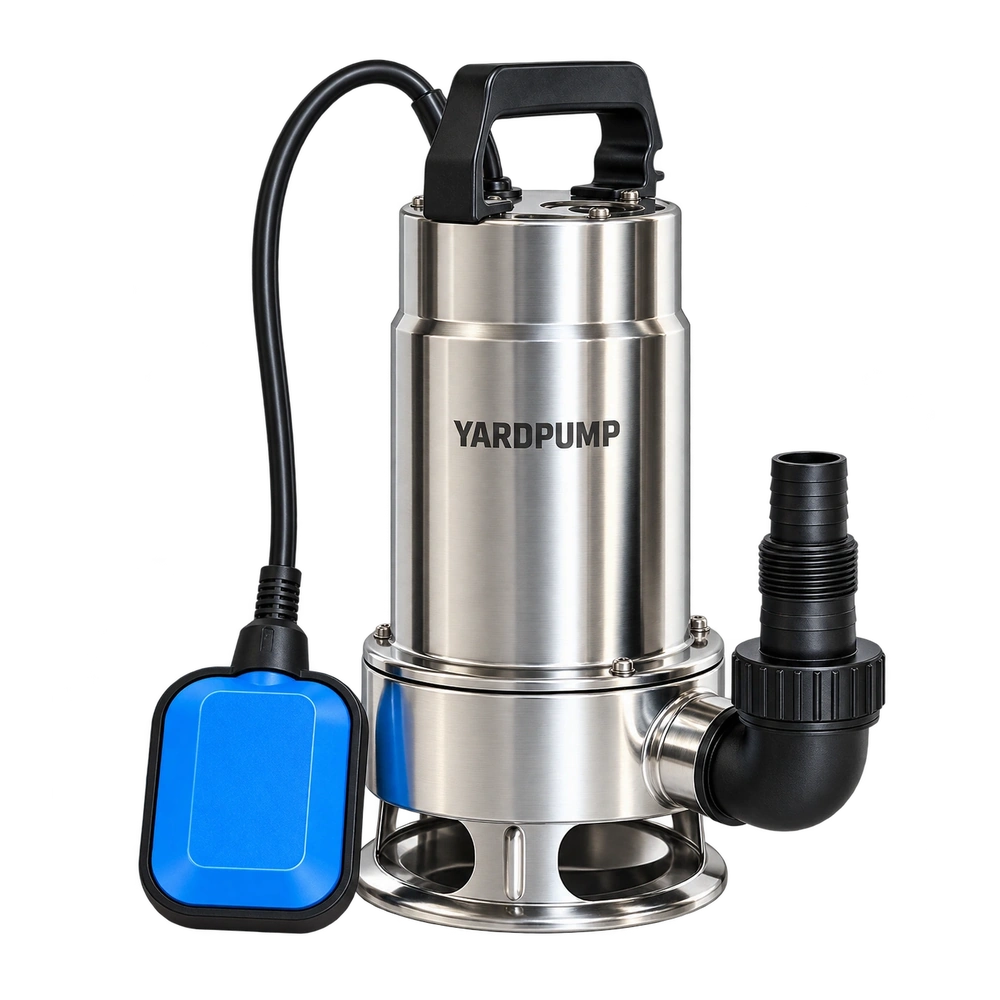
Boiler condensate looks clear and contains no obvious particles. Can an ordinary clean-water submersible pump replace a dedicated condensate unit? Clarity and flow capacity are insufficient. Chemistry, temperature, incoming flow, storage and boiler controls can differ substantially from temporary drainage. Treat the task as an equipment drainage system, rather than simply placing a larger pump on the floor.
Identify the source of condensation
Condensate from an air-conditioning cooling surface and condensate from combustion flue gases are not the same source. The latter can be acidic, depending on fuel, equipment and operating conditions. Experience with one cooling-system drain should not be transferred directly to a boiler. Nor should one dedicated pump's chemical limits be generalised to every condensate pump.
Collect the appliance instructions, actual discharge temperature and liquid requirements, including their variation. Exact model data is more useful than the phrase acid-resistant plastic. Seals, valves, pipework and connectors also need compatibility. A suitable housing material alone cannot establish reliability of the complete liquid path.
Small intermittent inflow needs suitable level control
An ordinary submersible pump may require a minimum starting and cooling depth, with space for a float to move. Condensate may enter a small reservoir gradually. If inflow cannot establish the permitted start level, or the storage and overflow arrangement is unsuitable, a very high maximum pump flow does not solve the problem.
Dedicated units are designed around collection, level control and discharge, but their actual functions still need individual confirmation. A small tank does not prove that high-level alarm, fault output or backup protection is included. Establish whether a fault can stop the source appliance where required, using both pump and appliance control information.
| System interface | Information to confirm |
|---|---|
| Liquid source | Chemistry, temperature and permitted medium |
| Collection reservoir | Usable volume, start level and overflow route |
| Discharge line | Lift, friction and backflow arrangement |
| Appliance control | Actual alarm or interlock capability and compatibility |
Calculate the real discharge duty
The liquid may need to rise beyond the reservoir edge to a drainage connection and overcome resistance in small-bore pipe and valves. Select the available flow at that total head, not the maximum flow at negligible head. Collection volume and inflow timing also affect starting frequency and overflow risk.
As an illustrative task definition, use the appliance's specified maximum liquid production over the relevant period, then compare storage and actual discharge capability. There is no generic condensate-production figure here for every boiler. If data is missing, request it from the equipment supplier rather than replacing worst-case information with a casual observation during mild operation.
Pumping and disposal remain separate
A pump's ability to transfer acidic liquid does not establish that treatment before discharge is unnecessary. Neutralisation, receiving arrangements and local requirements need confirmation by appropriately qualified or competent personnel, together with the appliance instructions. A condition quoted in a manual for another jurisdiction is not automatically a local exemption.
Do not test an ordinary pump's chemical suitability by leaving it in acidic liquid for a few days and checking whether it leaks. Short operation does not demonstrate long-term material compatibility. Electrical faults or overflow require safe isolation and the prescribed maintenance response. Alarms and interlocks should not be bypassed to keep the appliance operating.
Preserve the original system functions
Identify what the existing assembly does before choosing a replacement. The service record should cover pumping, storage, sensing and appliance interfaces rather than only the new motor wattage. If a replacement removes a fault signal, resolve that missing function before commissioning. A working motor is not evidence that the full drainage system has been restored.
For distributors, the useful selection brief links liquid limits, available discharge performance, usable storage and control behaviour. It allows an appropriate condensate solution to be compared with a proposed alternative without assuming that two clear liquids require identical equipment.
Questions about condensate pumps
Why check chemistry if the water is transparent?
Appearance does not establish acidity or material compatibility. Boiler condensate can also have separate disposal requirements.
Is a higher maximum flow a safer choice?
Not necessarily. Starting depth, reservoir, actual head, cycling and appliance interfaces still need matching.
Does every condensate pump include a boiler interlock?
No. Confirm the exact model's functions, contacts and compatibility rather than inferring them from the category name.