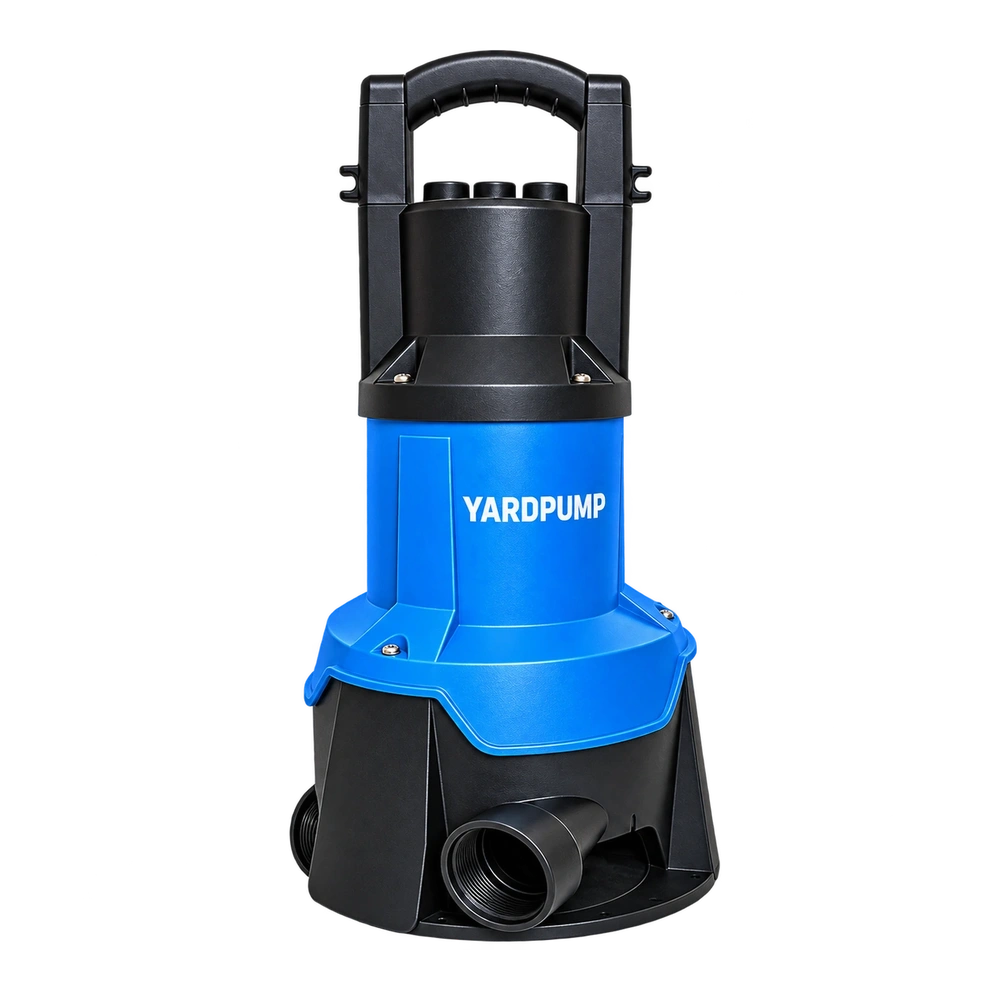
Suppose you use a low-level clear-water pump for patio cleanup and occasional rain barrel watering. Leaving it in the barrel seems easier than taking it out each time. Whether that is suitable depends on the exact model's immersion, installation and maintenance instructions. Being designed to pump while submerged does not on its own answer whether the unit can be stored underwater, run continuously or protect a space unattended. Treat those as three separate questions.
Submersible describes where the pump works
A submersible pump is designed to work in the permitted liquid and depth. When it stops, the surrounding liquid does not go away. The exterior remains exposed to water and its chemistry. Silt can settle at the intake, vegetation can develop in an outdoor tank, and the hose and connections remain subject to wear. A fixed sump pump may be designed to sit in a pit between starts, so it is equally wrong to say that all pumps must come out after each use. The approved installation and maintenance access matter more than the look of the housing.
Also distinguish the motor's duty from its controls. A float model needs room to travel and the intended stop level. A portable model without a float does not become an automatic pump just because it has thermal protection. For example, the published configuration of YARDPUMP's portable clear-water QDX-PT does not have a float switch. Its suitability for a low-level cleanup job does not establish unattended sump duty. If considering another version, use that version's documentation; a similar housing is not evidence of the same control arrangement.
Answer three practical questions before leaving it there
First, what happens to the liquid over time? Clean water at the start may collect leaves, algae or sediment in an uncovered tank. Check that the intake can stay within its required water levels and that you can retrieve it for cleaning without reaching into a hazardous space. Second, what installation does the manual actually allow? Look for portable or fixed use, immersion limits, minimum operating water level, temperature and maintenance. Third, what happens if the pump cannot start? Delaying weekend watering is different from allowing a basement to overflow. A high consequence calls for suitable fixed equipment, a warning plan and any required backup.
The same week underwater, two different decisions
Consider an illustrative comparison. One barrel is used for weekend watering; removing the pump between uses has no flood consequence. Another low area must drain when it rains, including while nobody is there. In the first situation, following the manual to isolate, retrieve by the handle, clean and store the pump makes it easier to inspect the inlet and cord. In the second, select a unit approved for the installed duty and verify the start, stop, power recovery and warning functions under controlled conditions. The one-week period is only a comparison, not an immersion rating for any pump.
Before retrieval, isolate power from a dry, safe point as directed. Never lift a pump by its power cord or reach into water around energized equipment. Follow the instructions for flushing, draining and storage; trapped water can be a particular concern where it freezes. If the connections are wet, the supply is uncertain or the location is flooded, stop and have qualified personnel deal with the electrical isolation. An immersion rating is not permission to submerge a plug or accessory.
If you do leave the pump in place, record the condition at installation and note the water level, inlet and delivery at each inspection. Observe the first use after a long idle period. If a float does not return or flow breaks, stop and investigate.
Frequently asked questions
Does unplugging eliminate every risk from leaving the pump underwater?
No. Depth, exposure time and liquid compatibility still matter. Damage to the housing or cord and signs of electrical faults require inspection.
Is the residual water figure also the automatic start level?
No. The residual figure describes what the unit can leave after draining in defined conditions. Starting depends on the actual sensor, float or manual arrangement.
Does having a float mean the pump can be left underwater indefinitely?
No. Check the installation, immersion and control limits for the actual model and leave access for service.