Water left in a courtyard after rain contains leaves, flower petals and some grass. It can look clear from across the yard, but the material on the bottom and near the intake decides which pump is suitable. For a first pass, select the pump against that mixture. Decide separately how dry the floor needs to be at the end.
Take a look at where the water will enter
Soft leaves can fold and bridge across an inlet even when their thickness is small. Fibrous grass can wrap rather than pass as a round particle. Dirty-water geometry provides more open paths, but no passage claim means unlimited sheets, string or abrasive soil.
Leaves are flat enough to lie over several inlet openings at once. A clump of thin grass can behave like a cord. Pick a spot that represents what will reach the pump during the job, including the debris that concentrates at the final water level. Note whether there are also sharp stones or sand. A leaf and a stone of similar width require different decisions.
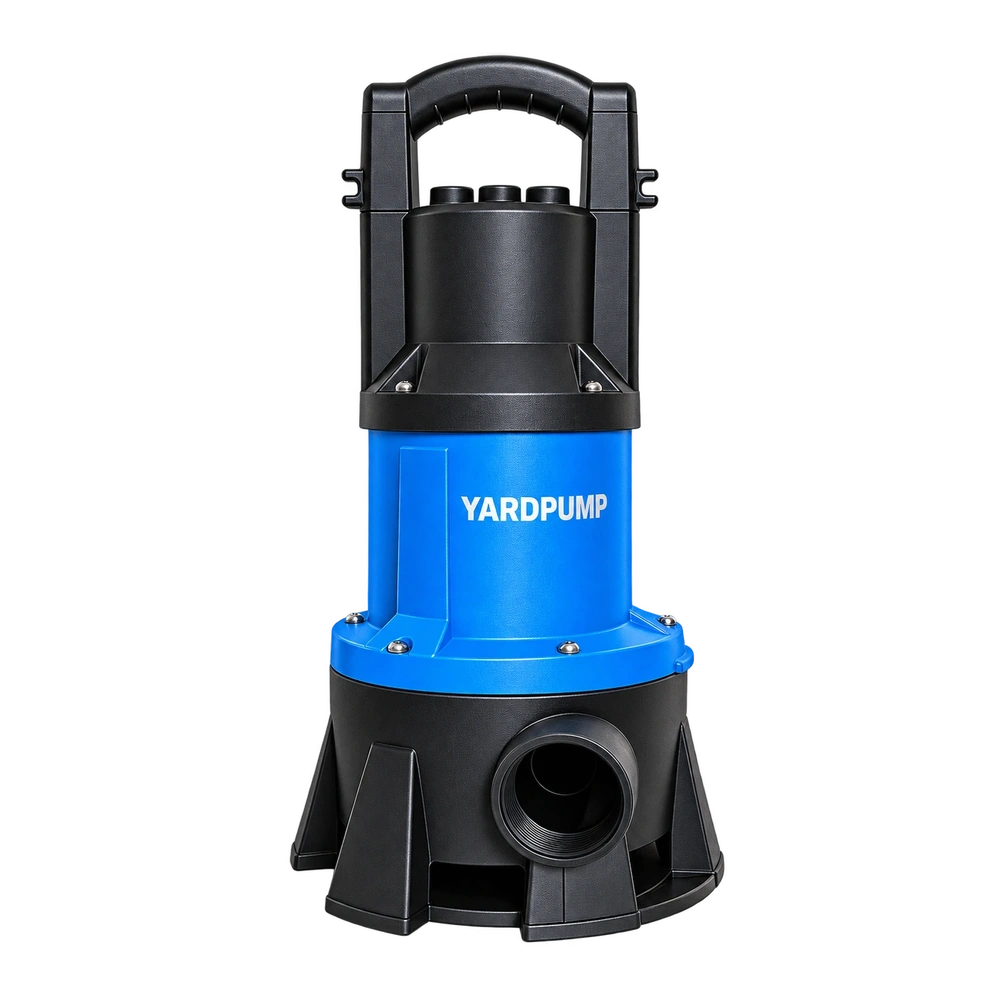
A clean-water pump suits liquid within its stated solids limits, with the gross debris kept away by safe screening where the setup permits. For a clean/dirty-water or dirty-water unit, check the instructed mode, passage and frequency of cleaning. Pump families can offer a more open inlet, but check the exact model's allowance for the material and loading you see.
Plan the finish before laying out the pump
For example, a two-stage plan may use a debris-tolerant pump for bulk water, then a low-level clean-water pump after screening. This is a workflow example, not a claim that two pumps are always required.
Start by removing large leaves and clumps from an accessible location with the equipment isolated. A permitted screen should have enough open area and be accessible for cleaning. Very fine mesh will fill rapidly in leafy water and starve the pump. Observe from a safe dry position. A declining discharge while the water level stays high can indicate clogging upstream of the pump.
For a wet yard that needs only bulk water removal, a compatible pump and screen may finish the task. If the last connected water needs to be shallower than the debris-tolerant mode can achieve, remove the debris first, then use an allowed low-level setup or another finishing method. Specifying both stages avoids asking one intake to admit leaves and skim a thin water film at the same time.
Describe the debris in terms a supplier can use
Tell the seller how wide the larger leaves are, whether long fibres are present, how much debris reaches the screen and how often the sump fills. Include the likely final depth and hose route. A photo showing a handful of typical debris beside a ruler can complement the description. Use the supplier’s exact limits to decide where prescreening or mechanical removal is needed.
Frequently asked questions
Will soft pieces always pass if they are below the stated particle size?
Shape matters. A folded leaf can bridge openings and fibres can wrap. Check what the model allows and how the actual debris behaves near the entry.
Can I put a fine bag over the pump to keep leaves out?
Use an approved screen or basket layout with enough clear area and access. A close-fitting fine bag can clog quickly and restrict the water supply.
Can an adjustable clean/dirty-water pump also finish the floor?
If the instructions allow a low-water mode, clear the remaining debris and follow the stated mode and minimum operating conditions before switching.