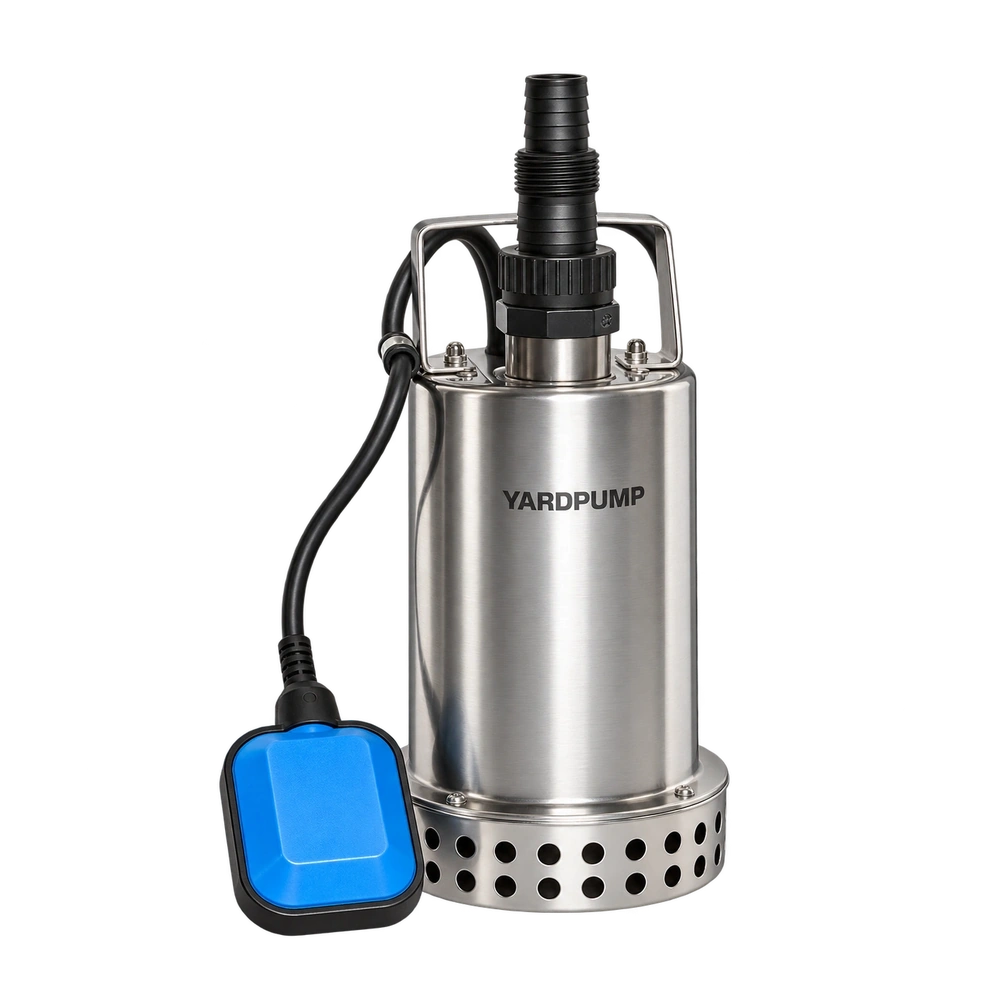
Suppose a driveway was treated with deicer and the next day a shallow drain channel holds clear-looking meltwater. Before using an ordinary low-level utility pump, check whether the actual liquid, temperature and debris fit the specific model's instructions. Clear appearance does not rule out dissolved salts. A surface with no obvious sand can still have grit in the channel. Low-level pickup describes shallow drainage. It does not establish that a pump can tolerate cold conditions, abrasive solids, salt or other contaminants in the water.
Identify where the water came from
Is the channel receiving untreated roof melt or water carried from a salted driveway by vehicles and foot traffic? Check whether a deicer was used and which product it was. Look for road grit, broken ice, mud and vehicle contamination. Water can contain dissolved chloride or other substances and still look clear. Settling and a typical mechanical screen mainly separate particles. They do not remove salts already dissolved in the water. Colour and odour are not enough to establish suitability for a clear-water pump.
At a managed site, retain the deicer information and a representative water sample under the facility's procedure. If necessary, have the water characterized by people equipped to do so. Type and concentration, exposure time, temperature and the parts actually touching the liquid can all affect suitability. A stainless component or a particular seal material does not establish that the complete pump is suited to the job. Ask the supplier about the limits of the exact model before presenting it as a saltwater option.
Two clear-looking channels can need different equipment
In an illustrative comparison, one channel receives meltwater from a roof where no deicer was applied. The operator finds no obvious oil or grit and plans to remove the water under the equipment instructions. The other receives runoff from a treated driveway and has grit on the bottom despite looking clear. For the first, continue checking temperature, usable depth and the drainage route. For the second, establish the liquid and material conditions first. Screening coarse grit would still leave the dissolved salts. This example does not guarantee that the first channel qualifies or give a general allowable salt concentration.
Consider temperature separately from chemistry. Deicer in the water does not establish that a pump may operate below its permitted temperature or that water trapped inside its casing or hose will not freeze later. If there is broken ice, concentrated residue, an oil film or an unknown chemical, follow the site's assessment procedure before moving it. Do not try an ordinary pump to see what happens. If different runoff streams mix, one visual check does not describe the full job.
Decide whether to separate the water or select different equipment
For a clear-water job, check approved liquids, starting and stopping depth, temperature and where the hose will discharge. If solids or chemistry are unresolved, keep the sources separate where possible or have the responsible person specify suitable transfer equipment. Avoid moving water into a walking area where it can freeze again. Confirm an appropriate discharge point under the site and local requirements; do not assume any ditch, soil or storm system is suitable. If water reaches electrical connections, vehicles or equipment, make the area safe and have qualified personnel handle it. Do not connect or disconnect equipment while standing in water.
If the model is suitable, clean, drain and store it according to its instructions. Do not use an unknown chemical to remove salt. Record the source, deicer, grit, expected temperature, operating duration and destination. Those details help a supplier choose more reliably than a description of shallow clear water alone.
Frequently asked questions
Does filtering out sand make salted meltwater equivalent to clean water?
No. Ordinary mechanical filtration removes particles, not dissolved salts. Verify the exact pump's permitted liquid.
Does a plastic casing make the pump suitable for salty water?
No. Check the shaft, fasteners, seals and other wetted parts under the actual conditions.
Can I pump near-freezing water if there is no visible ice?
Check the model's temperature, controls and draining requirements. The absence of visible ice is not an approval.