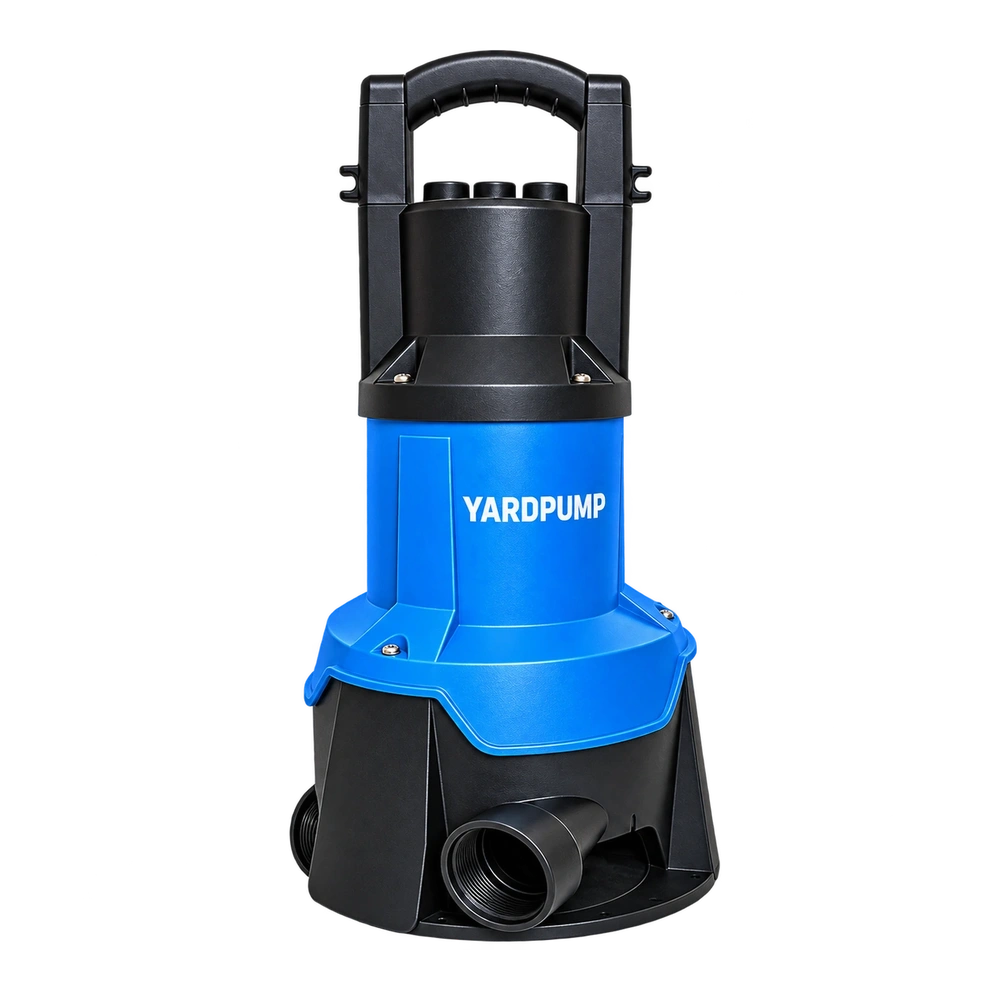
Consider a hypothetical replacement enquiry. A property owner needs to replace a sewage-system pump and finds a compact clean/dirty-water pump with an attractive flow figure. Can its particle-passage claim stand in for a grinder? No. Passing suitable particles through a flow path and cutting incoming waste are different functions. The replacement must suit the actual waste stream, working pressure and complete installation, not merely fit the basin or match the old motor wattage.
A passage is a doorway, not a cutting mechanism
A solids-passage statement describes a defined geometric or application capability under the maker's conditions. It does not demonstrate that the pump has cutters, will reduce fibrous material or can handle arbitrary household waste. A grinder incorporates a specific cutting arrangement intended for its declared service. Its cutters and hydraulic section form one designed system.
Ordinary sewage ejectors, grinder pumps, drainage pumps and other wastewater equipment also differ among themselves. Some sewage pumps pass solids without grinding. A product name containing “sewage” is not proof that it is a grinder, and a grinder is not a universal solution for sand, chemicals or every object that reaches a drain. Identify the construction and permitted liquid rather than relying on a broad category name.
Determine where the water must go
A pressure-sewer installation can require delivery against elevation, pipe losses and a receiving-system pressure. A compact drainage pump with a large maximum flow at low head may provide little or no useful delivery against that requirement. Maximum flow and maximum head are separate curve endpoints and cannot be combined into one operating promise.
As a hypothetical calculation, the required duty includes 3 metres of elevation, 4 metres of pipe loss at the chosen flow and 8 metres of receiving pressure expressed as water head. That totals approximately 15 metres at that flow. A pump with 10 metres maximum head cannot satisfy it merely because its maximum flow is larger. The figures illustrate selection logic, not a specification for a particular system or model.
| Replacement requirement | What must be confirmed |
|---|---|
| Waste stream | Actual solids, fibres, temperature and chemical limits |
| Cutting or passage function | Defined mechanism and approved application |
| Hydraulic duty | Required flow at total working head, including receiving pressure |
| Installation | Basin, coupling, pipe, access and service arrangement |
| Electrical and control system | Supply, starting, protection, level control and alarms |
Do not change the rest of the system by accident
The old unit may connect through a particular guide, coupling or controlled service arrangement. Matching its outlet thread alone does not establish fit, retention or pressure suitability. Existing control panels may also expect motor characteristics or sensors that the proposed pump does not have. These differences require qualified engineering and installation review.
Do not open a contaminated sewage chamber or improvise electrical adapters for a trial. Follow the site's access, isolation and specialist service requirements. Where a public or managed pressure sewer is involved, obtain the responsible operator's replacement requirements before purchasing. A temporary drainage product should not be put into service as an unapproved sewage-system substitute.
Translate the seller's claim into the right application
For compact clean/dirty-water families, verify the exact permitted soft-solids size and liquid use in current data. Such a statement can support a suitable drainage task without promising cutting. For example, the approved WQD-PA information describes a small clean/dirty-water family and a stated soft-solids limit; that description does not establish a grinder mechanism or approval for a pressure sewer.
A buyer who actually needs sewage cutting and pressure conveyance should specify those tasks explicitly and obtain the appropriate specialist solution. A buyer handling suitable rainwater or drainage may need no grinder at all. The useful distinction is the required function, not a hierarchy in which more cutters or more watts automatically makes every pump better.
Frequently asked questions
Is every sewage pump a grinder pump?
No. Sewage pumps can use different solids-handling principles. Confirm whether a cutting mechanism exists and what service is approved.
Can a larger passage replace cutting?
Not where the system requires reduced solids or a particular pressure-conveyance arrangement. Evaluate the complete task.
Does a grinder mean wipes and hard objects can be flushed freely?
No. Follow the equipment and drainage operator's waste restrictions. A cutting system has limits and is not permission to dispose of unsuitable material.