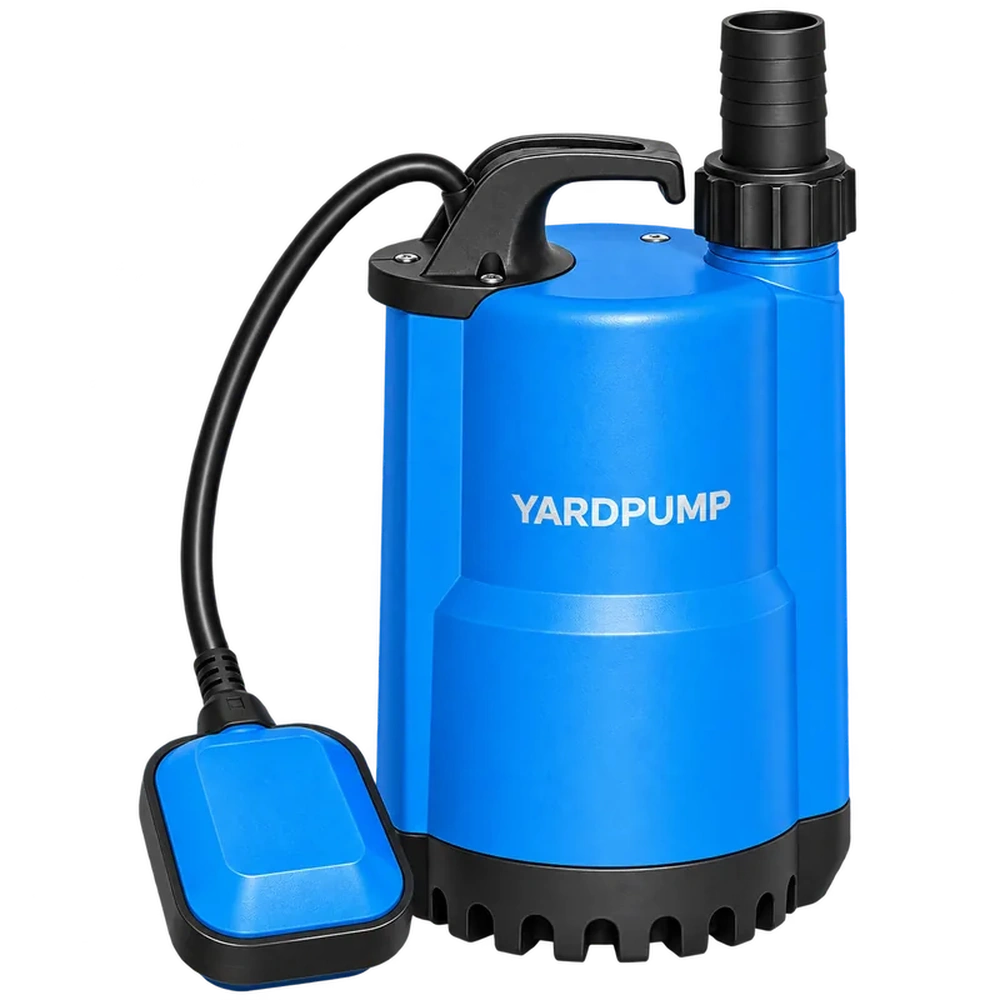
A submersible pump falls from a shelf. The housing looks intact, so can it be placed in water and briefly energized to see whether it works? In this typical after-sales situation, powered operation should not be the first test. An impact can affect the housing, seals, cable entry and internal alignment. Delivering water does not establish that electrical protection remains intact. Quarantine the unit, preserve evidence and arrange the assessment appropriate to the damage.
An intact exterior answers only part of the question
Plastic can develop fine cracks near an outlet root, rib or screw boss, while metal parts can suffer local distortion. A crack may be difficult to see while dry and unloaded, then become apparent when a hose is attached or the assembly warms. Inspect adjacent supports and connections as well as the visible impact point.
Cable jacket, plug, strain relief and entry retention also matter. An unbroken jacket does not establish that conductors, terminations or potting escaped mechanical loading. Record whether the cable caught during the fall and whether pipework remained attached. These details describe the actual load path more accurately than fall height alone.
Starting is not an electrical-safety assessment
An impeller may still turn although a sealing interface has moved. A motor may initially run normally but develop an insulation problem after immersion. A brief run cannot validate every water barrier, protective-conductor connection or potential rubbing point. It is not a replacement for applicable electrical-safety checks.
Do not touch equipment with wet hands to test for leakage, and do not treat the absence of a protective-device trip as the sole acceptance criterion. Protection is part of a safety arrangement, not permission to repeatedly expose a potentially damaged unit to fault conditions.
What can be documented without powering the pump
With the equipment disconnected and the area safe, record the nameplate, serial number, incident description and photographs from several directions. Retain the carton, cushioning and detached parts. Note visible changes to the base, lifting handle, outlet and cable. Grinding, gluing or replacing parts before reporting the incident can remove important evidence.
If the pump is already in standing water, do not enter a potentially energized area to retrieve it. Arrange isolation from a safe location with qualified assistance. Where contaminated water is involved, follow the agreed handling and return requirements. Safe packing and preservation of the original condition should be considered together.
Match professional checks to the damage path
Qualified personnel should use the manufacturer's procedure to decide whether shaft movement, impeller clearance, bearings, seal positioning and connections require examination. Removing an intake guard and reaching towards the impeller is not an appropriate user substitute for mechanical assessment. Some assemblies are unsuitable for field disassembly.
Electrical and sealing tests require suitable equipment, conditions and acceptance rules. Where repair is permitted, the complete rebuilt assembly may need revalidation. Do not borrow a test voltage, immersion duration or leakage limit from another model. A satisfactory insulation reading does not, by itself, approve the mechanical and sealing condition.
Avoid automatic approval and automatic condemnation
An illustrative decision sequence is to keep a unit with cracks, damaged cable, loose parts or evidence of ingress isolated for assessment. Where no obvious damage is visible, consult the manufacturer's requirements for inspection before reuse. Good appearance does not automatically approve reuse, but an impact also does not automatically prove that the entire pump must be discarded.
Height is only one variable. Landing surface, impact direction, unit mass, attached fittings and packaging influence the result. There is no general height below which every pump is guaranteed unharmed. Passing a specified packaged drop test is also not approval for arbitrary impacts on an unpackaged unit.
Leave a traceable reuse decision
Record inspected features, repairs, component revisions, test results and the responsible approval. Where a housing or cable entry is not field-repairable, follow the manufacturer's replacement arrangement rather than restoring appearance alone. Approval must apply to the checked complete configuration, not merely the most obviously damaged part.
Distributors can turn this sequence into a short handling card: stop and isolate, retain the original condition, describe the incident, obtain inspection and record the disposition. This is more useful than either “it pumps, so it is safe” or an unsupported conclusion that any subsequent failure must be a manufacturing defect.
Frequently Asked Questions
Does the absence of a protective-device trip rule out risk?
No. It cannot replace applicable testing or exclude a fault that appears only after immersion or loading.
If only the handle broke, is replacing it sufficient?
First establish whether the impact reached the housing, cable or internal supports. Follow the manufacturer's inspection requirements before approving reuse.
Is a packaged drop-test result valid for a bare pump?
No. Cushioning, orientation, surface and test conditions affect the outcome. Acceptance cannot be transferred between different impact conditions.