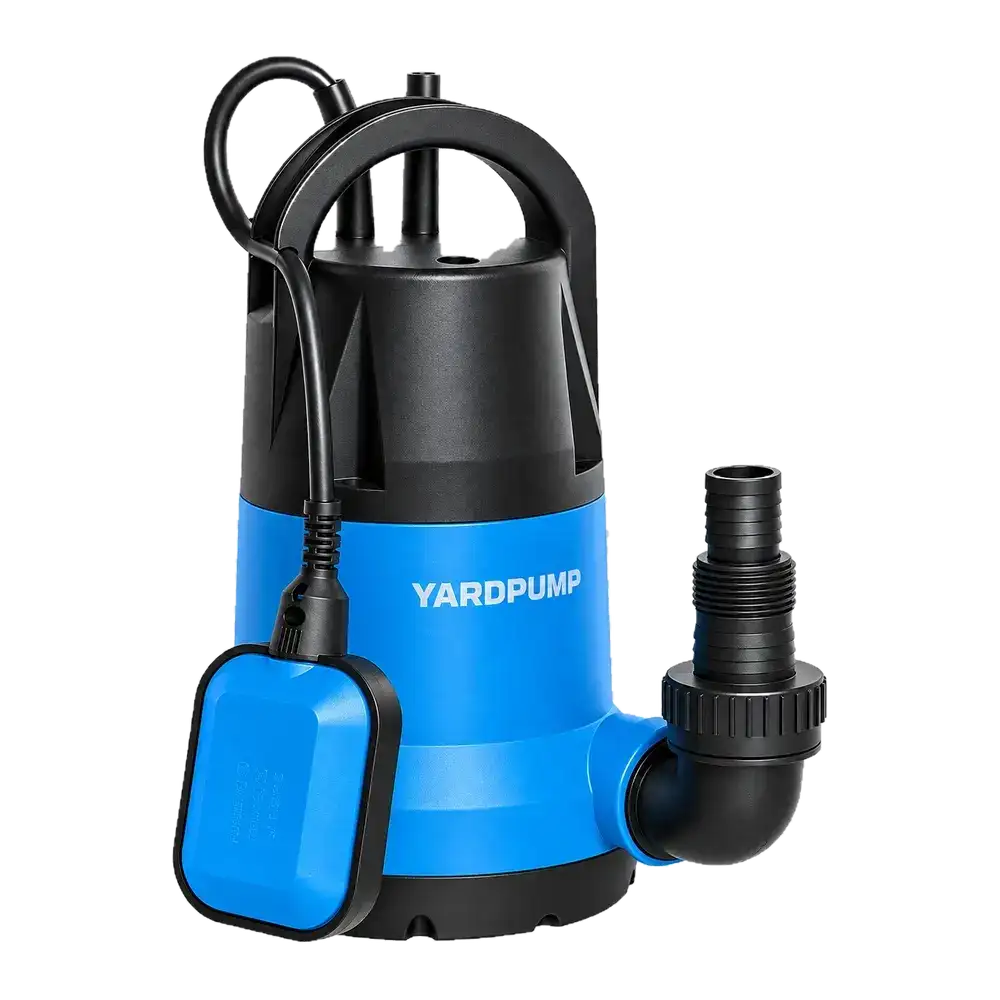
A buyer asks whether a high-flow water-transfer pump can circulate a fish pond and eliminate the aerator. This typical application question combines three different tasks: moving water, mixing a pond and adding oxygen. Pump flow describes water delivery. Aeration performance concerns oxygen transferred into the water under relevant conditions. More circulation can help a system, but it cannot be converted directly into a guaranteed oxygen supply or fish-stocking capacity.
Moving water and adding oxygen are different
Returning pond water from one location to another may improve mixing and reduce some stagnant areas. Without an effective oxygen source and suitable air-water contact, however, the arrangement may largely redistribute water already present. A visibly active surface does not establish that oxygen is adequate throughout the pond or at its most demanding time of day.
An aeration arrangement promotes oxygen transfer through an appropriate contact mechanism. The actual transfer depends on water temperature, salinity, existing dissolved oxygen, installation and other water conditions. Replacement water can also bring oxygen into the pond. Its contribution depends on the difference between incoming and outgoing oxygen concentrations, while fish, microorganisms and organic material continue consuming oxygen.
Keep separate water and oxygen accounts
Consider a hypothetical instantaneous exchange calculation. Water enters at 2 cubic metres per hour with dissolved oxygen of 8 milligrams per litre, while pond water leaving at the same rate contains 4 milligrams per litre. Ignoring other changes, net oxygen input is about 8 grams per hour: 2000 litres multiplied by a difference of 4 milligrams per litre. This is not a measured aeration result for any pump and does not subtract actual oxygen demand.
If incoming oxygen falls or biological demand rises, the same water flow can have a very different result. A cubic-metres-per-hour figure and a motor wattage cannot therefore promise a particular dissolved-oxygen level. Measurements of the pond and its load are more useful than relabelling drainage-pump watts as aeration capacity. Oxygen already present is not an unlimited reserve available for all species and conditions.
| Main task | What to establish | What it does not automatically prove |
|---|---|---|
| Transfer or water exchange | Duty flow, head and water suitability | A defined oxygen-transfer rate |
| Pond circulation | Flow distribution and continuous-duty suitability | Adequate oxygen at every location |
| Active aeration | Oxygen transfer, placement and control | Performance determined by motor watts alone |
Understand the pond before selecting equipment
Identify species, stocking level, depth, salinity, temperature, feeding and organic loading. Use this information to choose monitoring locations and appropriate targets with someone familiar with the aquaculture system. Requirements are not identical for every species or growth stage. Early-morning, hot-weather and high-demand conditions can differ from a reassuring daytime observation of the surface.
The transfer pump also needs its own application check. Sand, fibres, sludge and other solids present different demands. Suitability for clean water does not establish seawater compatibility, continuous circulation duty or safety around aquatic life. Intakes need an appropriate arrangement to avoid trapping or injuring animals. Water discharge and hygiene requirements must be considered independently of the advertised particle-passage size.
Qualify the customer's actual objective
A distributor should first ask whether the customer needs emergency drainage, planned exchange, better circulation or protection of a minimum oxygen condition. An aeration objective requires assessment of measured oxygen and demand, with suitable monitoring, controls and emergency arrangements. A portable drainage pump should not automatically be positioned as the sole safeguard for an aquaculture system.
During a trial, record the pump duty and oxygen behaviour separately. A video showing splashing discharge is not an oxygen-performance acceptance test. If oxygen distress is suspected, follow the site's emergency plan and obtain appropriate professional support rather than delay action to experiment with a transfer pump. A useful recommendation states clearly which water-delivery task the pump performs and which oxygen requirement still needs independent verification.
Questions about pond oxygen
Does a raised outlet with splashing make a pump an aerator?
It may improve air-water contact, but its actual transfer performance must be evaluated rather than equated with a dedicated aerator.
Do pumps with the same flow add the same oxygen?
Not necessarily. Discharge arrangement, contact mechanism, existing oxygen and pond conditions affect the result.
Can a clean-water arrangement be reused for marine aquaculture?
Not automatically. Confirm the complete wetted construction, seals, electrical arrangement and permitted duty, alongside the aquaculture requirements.