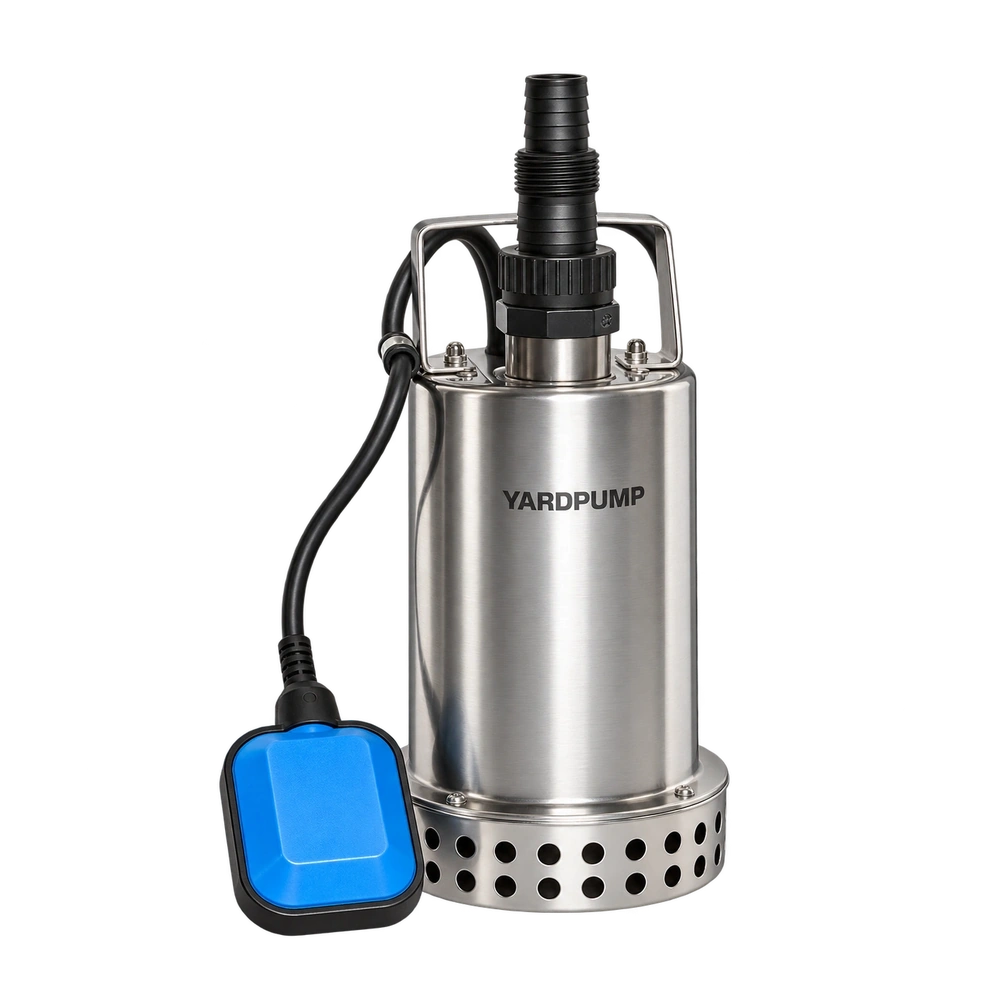
A row of drippers continues releasing water, but the garden pump stops. Opening a larger tap makes it run again. In this typical scenario, the motor may be healthy while demand falls outside the controller's recognition range. Assess the pump's permissible operating range, the controller's pressure and flow logic, and the irrigation demand together. An “automatic” label does not establish compatibility with every low-flow watering system.
The controller may observe something different
Some arrangements start on a pressure condition and use flow information to decide whether consumption continues. Others use pressure differences, pressure vessels or combined criteria. Visible water at one outlet does not establish that the flow is within a sensor's effective range, nor that the controller is in its normal supply state.
Read the indication before resetting. A normal pressure stop, low-flow stop, dry-run alarm and anti-cycling lockout imply different investigations. Treating every stop as dry running may lead to unnecessary priming attempts. Assuming every stop is normal demand control may conceal an actual shortage of water.
Budget the small flow first
As an illustrative calculation, twenty drippers rated at two litres per hour require forty litres per hour, or about 0.67 litres per minute. If a proposed controller needs at least 1.5 litres per minute to recognize sustained consumption reliably, the two specifications cannot simply be treated as a match.
Those figures explain the comparison, not a universal controller threshold. Actual dripper delivery depends on pressure, condition and elevation. Verify demand at the specified pressure, then request the exact minimum flow, starting pressure, stopping conditions and supported control modes. Maximum connected motor power is a separate specification.
Stored water explains some apparently contradictory symptoms
A pressure vessel, an elastic hose or elevated pipework can continue feeding drippers after the pump stops. Observing a drip does not prove the pump is supplying it at that moment. A subsequent fall in pressure may trigger another start, creating short cycles. Observe flow, pressure and motor operation on the same timeline.
Check branch valves, filters, regulators and non-return components as a complete arrangement. Partial obstruction can reduce demand, while leakage can increase it. Both can alter control behaviour. “The controller often stops” is therefore a symptom, not a reliable diagnosis of either controller failure or pump failure.
Do not solve recognition by wasting water
A more suitable controller, an engineered pressure-vessel arrangement or another manufacturer-supported control strategy may accommodate small demand. Before choosing it, verify pump cooling, permissible continuous operating conditions and starting-frequency limits. Keeping the controller energized does not prove the pump can safely operate indefinitely at very low flow.
Do not deliberately introduce leakage, leave an improvised bypass open or defeat dry-run protection to persuade the controller that demand exists. Such arrangements can waste water or prolong abnormal operation. A designed bypass or recirculation arrangement requires assessment of the complete hydraulic, thermal and protective system; it is not a casual field adjustment.
Commission three demand conditions
Following the equipment instructions, qualified personnel should assess minimum stable demand, normal demand and closed outlets under controlled conditions. Record controller state, pressure, flow and the timing of starts and stops. Confirm that the system stops correctly when demand ends. Isolate power before electrical work or access to internal setting switches.
Include clean-filter conditions and the expected maintenance condition. Determine whether changing demand approaches the controller's operating boundary. Do not pre-emptively disable every alarm merely to prevent a stop. Water shortage and lost priming must be corrected before deciding whether a setting is appropriate.
Explain the boundary at handover
Describe verified dripper demand and the approved supply and control combination. Avoid promising that one automatic pump supports any number of emitters. Dividing the garden into smaller zones or changing to lower-flow drippers can invalidate a previously successful control match, even though the pump and controller themselves are unchanged.
For after-sales work, retain a complete component list and the record of an operating cycle. This separates demand recognition, stored-water effects, filter maintenance and actual pump defects. Useful automation identifies demand correctly; it is not a promise to keep the motor running whenever any outlet releases a few drops.
Frequently Asked Questions
Does a high connected-power rating imply good low-flow control?
No. Electrical load capacity and the flow-recognition range are different specifications. Both must suit the application.
Can an extra open tap be used as a permanent solution?
Do not turn that diagnostic observation into an improvised installation. Use a manufacturer-supported arrangement rather than deliberate leakage.
Will adding a pressure vessel always solve it?
No. Usable drawdown, control mode, precharge conditions and permitted starting frequency must be considered together.