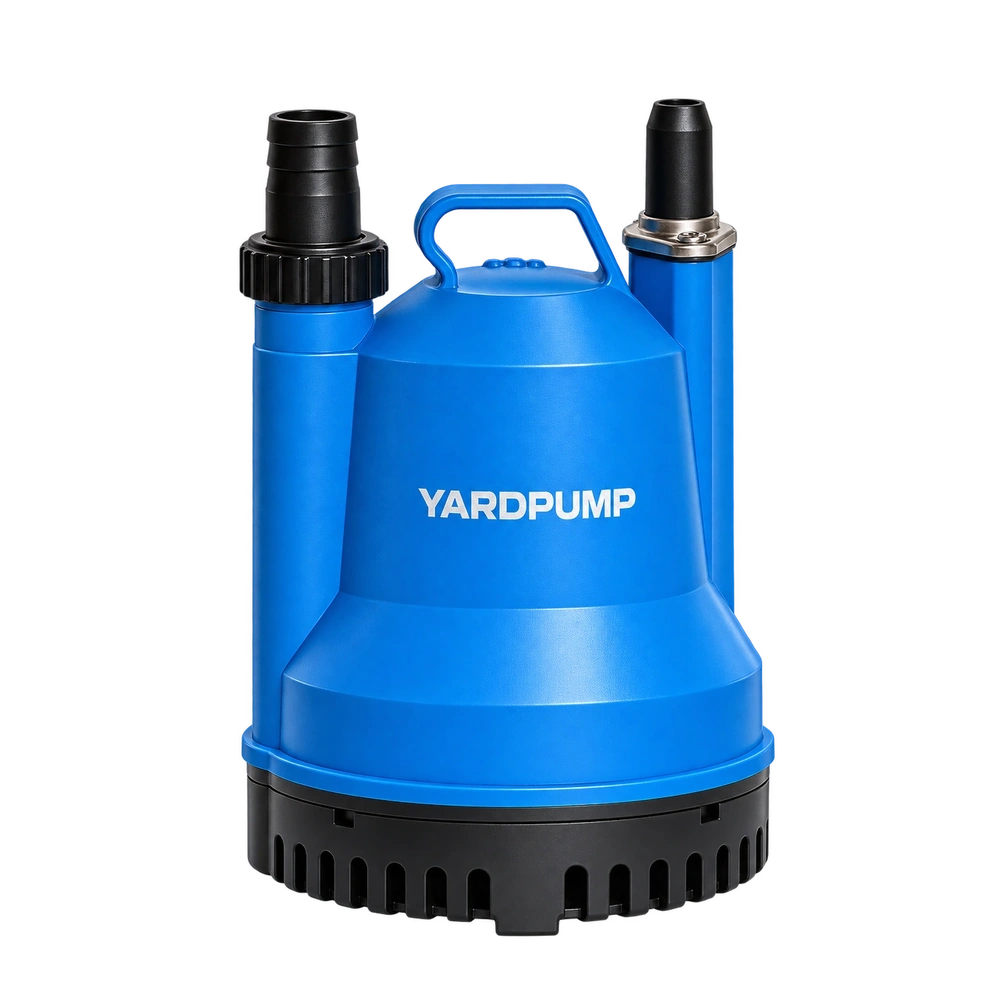
A garden pump delivers water at first, then flow decreases and its suction hose flattens. Is the pump too powerful? First check whether the hose is suitable for suction service and whether the intake system is creating excessive resistance.
A hose that withstands high internal pressure may still collapse under external pressure. Selecting a suction line solely by its working or burst pressure can miss the property that matters.
Why the hose collapses
Pressure at a running pump’s suction connection may be below the surrounding atmospheric pressure. The hose wall must resist the resulting external load. A flexible, inadequately supported or deteriorated wall can move inward.
Collapse reduces the flow passage and adds resistance, potentially worsening inlet conditions further. That helps explain why delivery can decline progressively rather than stop immediately.
Suction lift, diameter, length, bends, valves and strainers all contribute to inlet conditions. A blocked strainer, undersized foot valve or kink can push an already marginal hose into collapse. Replacing the hose and investigating restriction should therefore be part of the same response.
Stop before inspecting the line
Stop the pump and electrically isolate it before checking or rearranging the hose. Do not squeeze a running hose open by hand or repeatedly run a pump with inadequate water supply. Keep electrical connections in their specified safe locations and use qualified personnel for electrical investigation.
| Selection or inspection item | Evidence needed | Common mistake |
|---|---|---|
| Suction capability | Manufacturer’s vacuum or suction rating | Looking only at burst pressure |
| Temperature | Capability at the intended temperature | Applying room-temperature data everywhere |
| Bending and support | Bend limits, kinks and unsupported spans | Assuming reinforcement permits any bend |
| Restriction | Inside diameter, length, valve and strainer | Comparing outside diameter only |
Reinforcement alone does not establish suitability for every application. Check material compatibility with the water, sunlight, cleaning agents and connections. A joint that does not drip under positive pressure may still admit air under suction.
Why a short flattened section matters
For a hypothetical geometric example, a round hose with a 25 mm internal diameter has an area of approximately 491 mm². If local collapse reduces the effective area to half, the average velocity through that section would double at the same flow.
Actual collapsed shapes and losses are more complicated, so this does not predict delivered flow. It illustrates why a short damaged section can materially affect the inlet.
The example is not a recommendation that every garden pump use 25 mm hose. Select the line for the pump inlet requirements, lift, length and required operating point. A pump that performs correctly with a short test line has not demonstrated suitability for an unrelated long installation.
Confirm the correction as a complete system
Clean and inspect the foot valve and strainer. Confirm source water level, required intake submergence and avoid unnecessary high points or tight bends. Select a hose with appropriate suction capability and install its supports and seals as instructed.
The weight of the line should not impose unsuitable loads on the pump connection. Also consider how the arrangement will behave as water level falls or the hose warms in sunlight.
Observe delivery and hose condition during a safe, correctly primed start. Record source level, pipe arrangement and changes during operation. If a replacement hose stays round but delivery remains poor, investigate air entry, priming, cavitation, rotation and the operating point as applicable. Finding one fault does not establish that it was the only fault.
An importer buying a garden-pump kit should specify inside diameter, length, suction capability, temperature range, bending requirements and connections. “Include suction hose” leaves room for materially different interpretations. Acceptance should address the complete intended installation, not just the pump supplied without its accessories.
Frequently asked questions
Can a high-pressure discharge hose be used as suction hose?
Not automatically. Positive internal pressure and external-pressure loading are different. Check the manufacturer’s suction or vacuum specification.
Does a collapsed hose demonstrate strong pump performance?
No. It identifies a hose or inlet-condition problem, not high efficiency or useful delivered flow.
Will rigid pipe always fix the problem?
No. Rigid pipe also requires suitable material, connections, support and layout. Blockage, air entry and other inlet problems may remain.