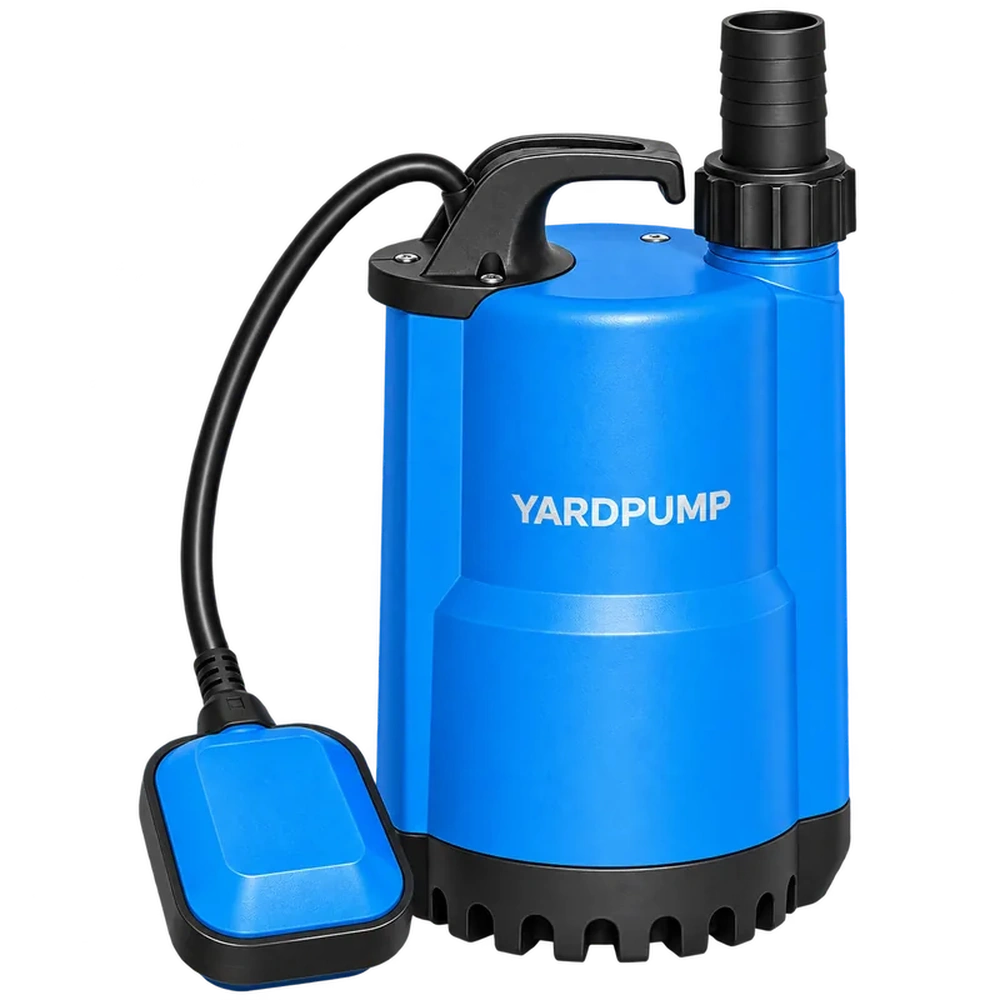
Take a greenhouse layout with one pump drawing from a nutrient tank. One outlet branch returns water for mixing and the other feeds the drippers. The return sounds lively, but delivery at the far end of the irrigation line is uneven. A shared pump can work if mixing and irrigation each pass their own test. An energetic jet does not tell you whether the tank is homogeneous or whether the last emitter gets the required delivery.
Treat mixing and delivery as two jobs
The return branch is typically short and easy to flow through. Open it wide and much of the water may take that route instead of flowing through a filter and a long irrigation line. Two equal valves do not imply two equal flows. Meanwhile, a jet directed back toward the intake can circulate the same fraction of the tank over and over. The bottom or far wall may still have a different concentration. At low level, check where the return enters the liquid and whether it introduces air near the inlet.
Commission mixing alone first. Choose an appropriate safe test medium and a meaningful measure of uniformity for the formulation. For a suitable dilute conductivity tracer, take time-stamped samples near the top, lower in the tank and away from the return. Record when all locations reach the agreed range. Conductivity can track certain dissolved ions; it cannot by itself establish uniform suspended solids or rule out precipitation from incompatible stock solutions. A single stable reading close to the pump proves very little about the far corner.
A turnover is a calculation, not a mixing result
Suppose the working volume is 120 litres and measured return is 24 litres per minute. The arithmetic turnover is five minutes. If the far sample is still outside the agreed range at five minutes and reaches it at eight minutes, use the observed minimum of eight for that condition. Check low and high levels and representative fill sizes before setting the timer. Next, run irrigation alone and compare near and far emitter delivery. If irrigation passes alone and falls short with return open, mixing first and irrigating second may be a better choice than increasing the return.
Test the valve sequence as part of that decision. Changeover must not leave the pump running against a closed outlet beyond its allowed limits, and low-level protection must still work. Measure delivery through the intended filters, valves and operating emitters. An open hose filling a bucket can be useful to isolate a problem, but it does not prove delivery at the working emitter pressure. Record filter condition, too. As the filter loads, its resistance may change the split between branches even if neither valve moves.
When separate equipment earns its place
Time sharing makes sense when the solution stays acceptably uniform through a watering run, delivery has a definite schedule, and a temporary pause causes no production problem. Separate mixing is easier to control if watering is continuous, solids need persistent agitation, or dosing and irrigation must be independently adjusted. Confirm pump, hose, seal and filter compatibility with actual concentration and cleaning agents. A clean-water performance curve tells you about delivery under stated conditions; it is not a compatibility approval for concentrated stock. Follow the dosing equipment and formulation instructions and keep incompatible stock concentrates apart.
A useful handover record keeps the mixing time and branch valve positions alongside the measured delivery at the last emitter. That gives the next operator a way to tell a dirty filter from a changed mixing setting.
Frequently asked questions
How do I recognize short-circuit mixing?
Compare response near the intake and at the far side. A fast local change with a slow distant response points to return direction or a dead zone.
Can I commission with clean water?
It is useful for valve sequencing and delivery. Verify uniformity, settling and compatibility separately under suitable representative conditions.
Will opening the irrigation valve farther help?
It can change the split. Check both emitter delivery and mixing. If no stable setting passes both, sequence the jobs or separate them.