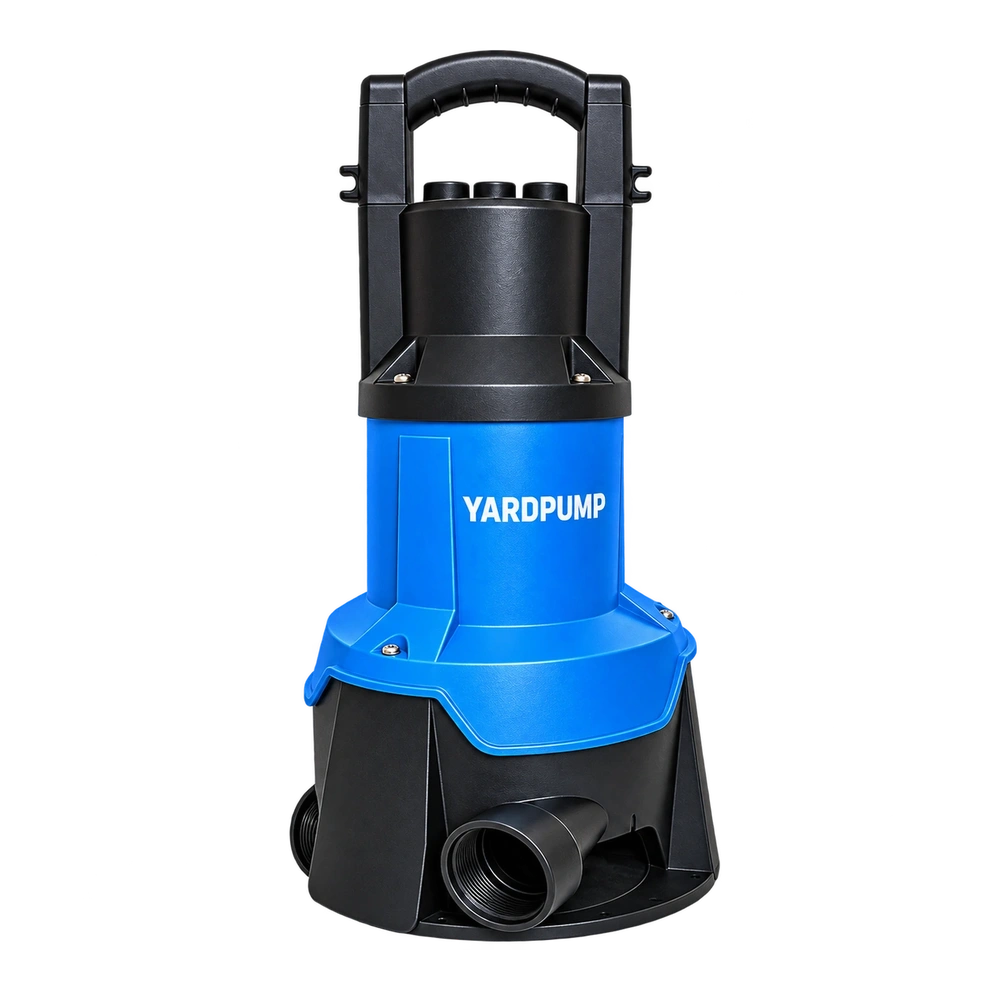
A drainage pump runs, yet only a small stream reaches the end of its layflat hose. Flow improves when the hose is straightened. This typical installation problem deserves a route inspection before a motor diagnosis. A layflat discharge hose normally develops its working section under positive pressure; coils, twists and compression can prevent it opening properly.
The working section is not fixed
A layflat hose collapses for storage. Unlike rigid pipe, its available flow area can therefore depend heavily on installation. A sharp fold may leave only a narrow passage, creating substantial local resistance. Pressure near the pump does not prove that the required flow reaches the discharge point.
Confirm that the selected hose is intended for the discharge side. An ordinary layflat discharge hose must not be substituted for suction hose merely because its nominal diameter fits. Negative pressure can collapse a hose that lacks the appropriate reinforcement. Check its pressure, temperature, medium and connection limits with the hose manufacturer.
A nominal diameter is also not the smallest bore in the assembled system. A connector or reducer can restrict the path even when the hose is correctly opened. Include the effective connection bore in the purchase specification.
Walk the route before starting
Isolate electrical power and prevent an unintended start before arranging the hose. Unroll it toward the intended discharge location, remove twists and overlapping folds, and avoid doors, wheels, sharp edges and surfaces where it can slip. Check that connections are assembled and secured using the intended method.
Provide a smooth transition near the pump outlet. A hose that immediately doubles back over the connector is vulnerable to restriction and mechanical damage. Changes in direction need the bend space permitted for that hose, including room for movement as it fills.
Do not place bricks directly on the hose as a restraint. Where a route crosses an access area, use an appropriate protection and support arrangement that addresses vehicle loading and trip hazards. Nobody should need to grip an inflating or moving hose to keep the installation working.
| Observation | First checks | Conclusion to avoid |
|---|---|---|
| Hose swells near the connector but little water exits | Downstream fold, closed valve or obstruction | The pump must have excessive head |
| One section repeatedly collapses | Twist, bend geometry and support | The nominal bore must be false |
| Flow improves after rerouting | Actual working section and installation | The motor has permanently changed power |
Include filling in the trial
During an authorised safe trial, observe from a safe position as the hose fills. Check for movement, leakage and failure to open along the route. Stop and isolate the equipment before correcting an abnormal condition. Do not keep a restricted pump running in the expectation that pressure will eventually straighten every fold.
The pump's permitted low-flow operation and cooling requirements still apply. A blocked outlet is not harmless to every submersible design. Likewise, never open a pressurised connector as a way to discover whether a restriction remains.
Consider a hypothetical comparison using the same pump with a fully deployed hose and then with a pronounced fold. Lower flow in the second arrangement does not establish a false power rating. The system resistance and operating point have changed. Restore an acceptable route before comparing flow, head and electrical input under matching conditions. This is a diagnostic example, not a reported product test.
Specify the installation with the accessory
A distributor's kit should match the pump outlet, connection bore, hose rating and intended task. Ask whether a supplied reel is specifically approved for operation while partly wound. Without that approval, do not assume that a compact storage arrangement is also a working arrangement.
Instructions should show acceptable routing, bends and restraint. A simple deployment photograph taken during sample validation can reveal problems that a hose diameter entry misses. Retain the route and connection configuration in the acceptance record so that later comparisons are meaningful.
After stopping, account for trapped water weight and the contamination history of the job. Drain, clean, dry and store the hose according to its instructions. Worn reinforcement, damaged walls or slipping connections require an approved response; temporary wrapping is not a reliable substitute for repair or replacement.
Frequently Asked Questions
Must every layflat hose be completely unrolled?
Follow the approved hose and reel instructions. Ordinary discharge hose should be sufficiently deployed; operation as a tight pressurised coil must not be assumed acceptable.
Does a firm hose prove that discharge is normal?
No. It may pressurise upstream of a fold. Check the full route and the required outlet flow.
Can an operator straighten the hose while the pump runs?
Stop and electrically isolate first. Sudden hose movement, connection separation and nearby electrical hazards make live adjustment unsuitable.