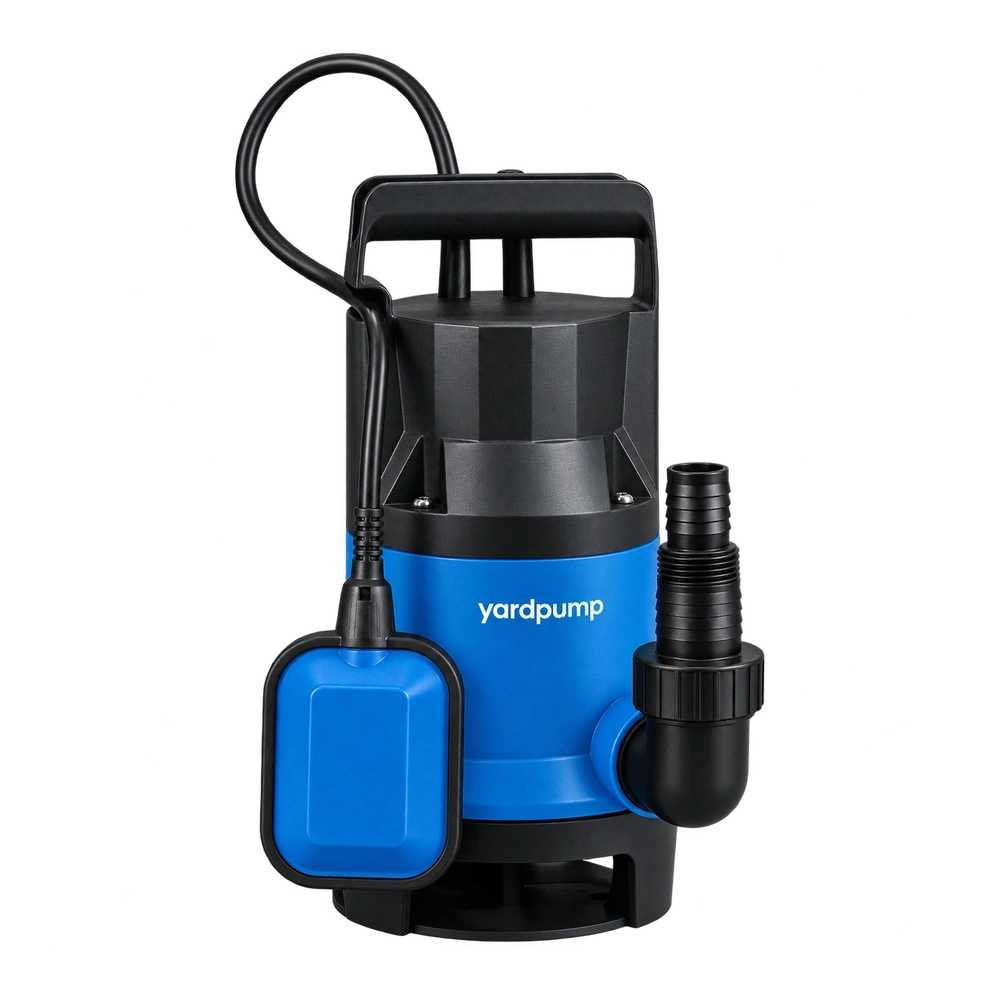
Short answer. A portable submersible pump can be considered for temporary removal of non-hazardous water from a loading dock only after the site is safe, the liquid is suitable for that specific pump and the discharge destination is permitted. A depressed dock may collect runoff, oil, litter and sediment. A pump that moves water quickly does not make contaminated water safe to discharge or replace a permanent drainage design.
A warehouse manager sees several centimetres of water in the truck well after heavy rain. The obvious response is to lower a small utility pump into the lowest corner and run a hose out to the street. Before buying or energising anything, the manager needs to answer three questions: What is in the water? Where is more water coming from? Where may it legally go?
First separate rainwater from a possible spill
Loading docks are not equivalent to clean indoor tanks. Trucks, pallets, stored chemicals, forklift traffic and nearby drains can introduce fuel, lubricants, cleaning agents, fine sediment and debris. Water with an oily sheen, unusual odour, unknown chemicals or other suspected hazardous contamination should not be handled by an ordinary clean-water pump. Isolate the area and follow the facility’s spill-response and environmental procedures.
Do not direct unknown dock runoff into a storm drain simply because a hose reaches it. The permitted disposal route depends on the site, local rules and whether water has been contaminated. Where a dock is part of a stormwater or spill-containment system, bypassing the control may create a bigger problem than the standing water.
| Field observation | What it changes | First action |
|---|---|---|
| Clear rainwater, limited debris | Potential temporary drainage duty | Confirm water quality and approved outlet |
| Oil sheen, solvent smell or unknown spill | Possible hazardous or regulated liquid | Stop and use the site spill-response plan |
| Mud, packaging fibres and gravel | Inlet and impeller blockage risk | Assess settling, screening and solids limits |
| Water rising while pumping | Inflow exceeds removal or runoff recirculates | Measure inflow and inspect discharge route |
| Trucks still moving through the area | Cable, hose and pedestrian hazards | Isolate traffic and establish a safe work zone |
Size the pump for the real route, not its headline flow
Record the lowest water level, vertical rise from the pump to the hose outlet, hose inside diameter, total length, fittings and any high points. The required operating flow is found where the pump’s Q–H curve meets the system resistance. Maximum flow at negligible head and maximum head near zero flow are not simultaneous capabilities.
As an illustration only, a dock receives an estimated 6 cubic metres of runoff over 30 minutes. Ignoring ongoing inflow, a nominal 12 cubic metres per hour would remove that volume in half an hour. In practice the installed pump delivers less than its free-flow maximum, and water may keep entering. Measure the actual inflow and verify the flow at the intended total head; the arithmetic is not a YARDPUMP performance claim.
Check the pump’s permitted solids passage and its inlet geometry. A shallow dock can leave a layer of water below the intake or the automatic switch-off level. Manual low-level removal and automatic unattended operation solve different problems. Do not defeat float protection to chase the last millimetres of water.
Plan the discharge and the work area together
A hose across a loading lane can be crushed by a truck, kinked by a pallet or create a trip hazard. Route it away from traffic, support it at bends and secure the outlet against movement. Make sure discharged water cannot run back down the ramp or enter a neighbouring property. A temporary pump is not a substitute for clearing a blocked trench drain or repairing failed site drainage.
Electrical connections must remain in a dry, protected location with the protective devices required for the site. Never handle energized equipment while standing in floodwater. If cables, outlets or control equipment may have been submerged, isolate the supply and obtain qualified inspection before reuse. Do not suspend the pump by its power cord or let the discharge hose pull it over.
For related site-specific decisions, compare flat-roof emergency drainage and silt-heavy trench dewatering. The same headline pump size may be unsuitable in all three locations for different reasons.
A distributor’s RFQ checklist for dock dewatering
Request the water description and any known pollutants, required pumping duration, peak inflow estimate, water depth, solids and fibre content, hose dimensions, vertical lift, permitted disposal location, electrical supply and control arrangement. Ask whether the buyer wants supervised emergency equipment or a permanently installed automatic system. The latter requires a separate design and duty review.
Document the acceptance trial at the real installation: flow and head, start/stop behaviour, remaining water, hose routing, thermal behaviour and safe retrieval. A successful brief demonstration does not establish continuous-duty suitability or chemical compatibility. Only propose a YARDPUMP family after checking the specific model’s approved medium, electrical version and operating limits.
Questions facility buyers ask
Can a normal clean-water pump handle oily loading-dock water? Do not assume so. Suspected oil or chemical contamination requires the site’s spill-response procedure and equipment specifically approved for the liquid and conditions.
Why does a pump rated for high flow empty the dock slowly? Hose friction, lift, bends, debris, ongoing inflow and discharge recirculation can reduce net removal.
Can the hose discharge to the nearest storm drain? Only if the water quality and local discharge rules permit that destination. A convenient outlet is not automatically a lawful one.
Is a portable pump suitable for permanent unattended dock protection? Not by default. Permanent duty requires an engineered drainage and control arrangement with approved equipment and maintenance.