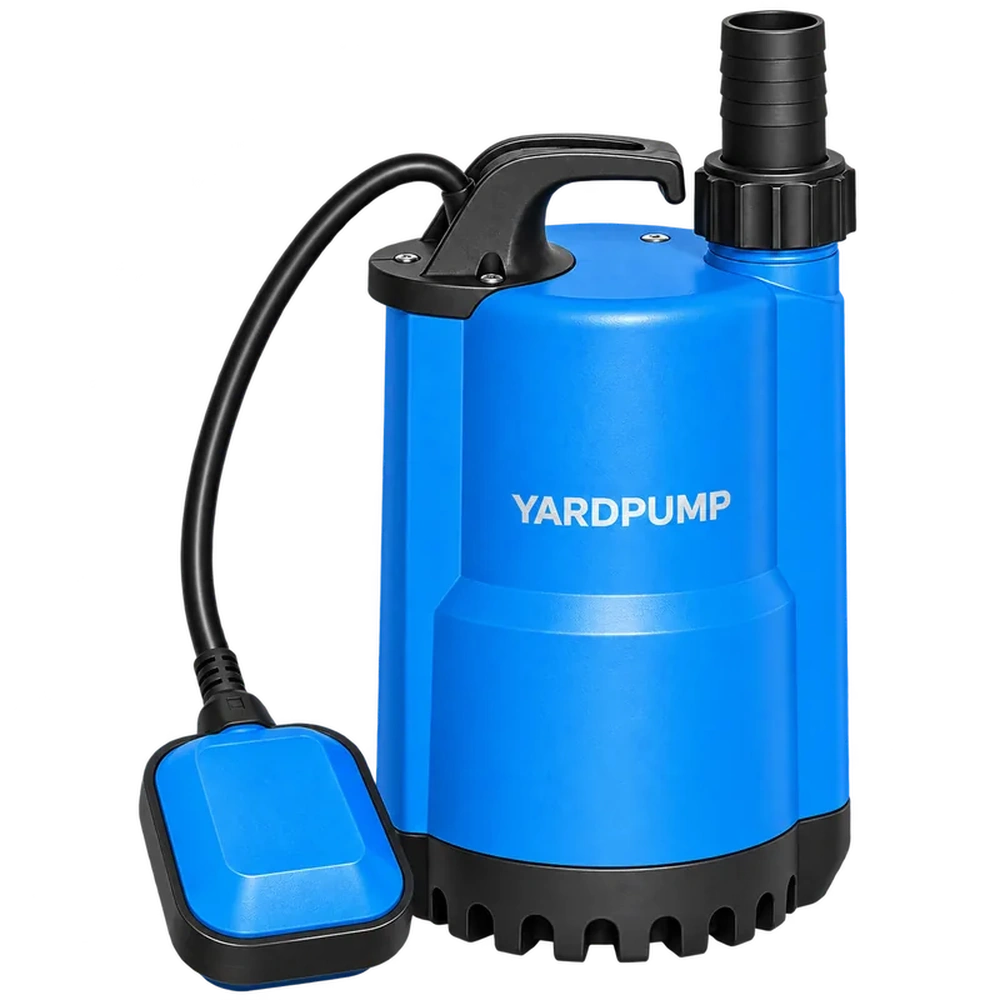
A low-level pump sits on a garage floor. A puddle remains a metre away, but the pump is already drawing air and cannot remove more water. Does that disprove its low-level specification? First check whether the water can actually reach the inlet.
Small slopes, joints, thresholds and depressions can separate a flooded floor into isolated puddles. A pump can remove water that flows to its intake. It cannot pull a disconnected puddle across a dry raised section simply because it is nearby.
Close distance does not establish a flow path
A low intake reduces the local water level that a suitable pump can handle under its specified conditions. It does not change gravity. As water falls below a ridge, areas that were initially connected can become separate pools.
The pump location may then be shallow while another depression remains deeper. Starting depth, achievable running level and the measurement reference are also different matters. A result from a flat test surface does not describe every floor.
This article addresses access to water, rather than redefining a model’s minimum starting depth. Model-specific low-level figures must still come from the approved instructions.
Check the site safely
Flooding around electrical equipment, distribution boards or vehicles needs appropriate risk isolation first. Do not walk into potentially energised water to move the pump or handle plugs with wet hands. Disconnect and isolate the pump before repositioning or inspecting it.
Professional help may be necessary for building drainage or restricted access. Floor inspection is not a reason to alter electrical protection or enter an unsafe space.
| Observation | Check first | Possible explanation |
|---|---|---|
| Shallow at the pump, deeper nearby | An exposed ridge between them | The puddles are disconnected |
| Water remains along a wall | Slope direction and pump position | Water drains to a different low point |
| A small depression stays wet | Depression depth and its raised edge | The inlet cannot draw across the edge |
| Adequate water remains at the inlet | Intake, controls and discharge | Another fault needs investigation |
After isolation, suitable tools can help record relative levels and puddle locations. Visual estimates alone may miss a small but decisive ridge. Do not cut channels or drill a floor without assessing building and waterproofing requirements.
A small height difference can explain the result
Imagine the pump location has about 5 mm of water while a nearby depression is 10 mm lower and separated by a raised section. Once the ridge becomes exposed, that depression can retain visible water.
These are hypothetical dimensions, not a pump specification or installation recommendation. The important relationship is between water level and the highest point on the connecting path. Whether the puddle is one metre or two metres away is secondary.
Increasing pump power will not make isolated water flow uphill across a dry barrier. A lower inlet only helps if water can reach it.
Choose between repositioning and a drainage change
For temporary cleanup, the pump may be moved to another suitable low point after safe isolation, following its instructions. Recheck starting depth, intake clearance and any float requirements. Do not leave it running without adequate water or tie up a float to force operation below its approved range.
For recurring flooding, a professional assessment may identify a better collection point, floor fall or drainage path. A suitable sump or another finishing tool may be appropriate. An ordinary pump should not be installed in a location that fails electrical or building requirements simply to reach a puddle.
Manual collection of small remnants also depends on water quality and electrical safety. It is not suitable advice for every contaminated or hazardous site.
A purchaser should describe floor geometry, flooded area, low points, discharge location and the required cleanup result. Removing water from every joint and depression is a complete drainage and finishing task, not a requirement adequately defined by one low-level number.
Record acceptance conditions
During a safe controlled assessment, record the starting position, required starting conditions, final local level at the inlet and remaining puddle locations. Distinguish connected areas from separate depressions.
If sufficient water still covers the inlet but pumping stops, investigate blockage, air entry, controls, return flow or discharge conditions. Floor slope is one boundary condition, not an explanation for every malfunction.
Frequently asked questions
Will a more powerful pump remove a disconnected puddle?
Do not expect power to create a flow path over a raised floor section. Change the intake position or drainage arrangement.
Does low-level pumping mean dry-running capability?
No. Low intake geometry and dry-running tolerance are different. Follow the model’s starting and running requirements.
Where should remaining water be measured?
State the reference and location. Record water near the inlet separately from isolated puddles rather than combining them into one figure.