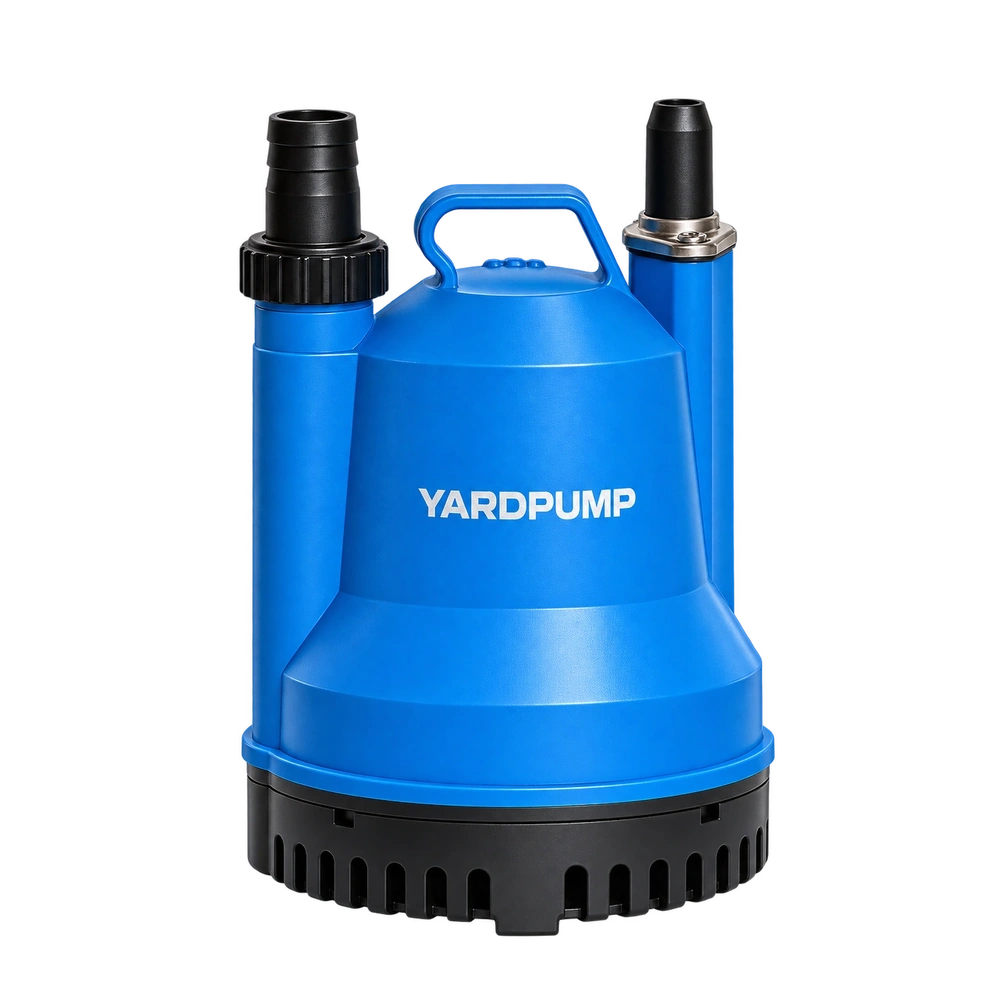
Suppose a new pond waterfall gets plenty of water but falls in a thick sheet on the left and only drips on the right. Check the crest for level and inspect distribution inside the spillway before buying a larger pump. A slightly lower end can release the incoming water before it reaches the higher end. More pump flow can raise the level in the box, but it can also make the existing thick side stronger.
Locate where the sheet becomes uneven
Separate the total volume delivered to the box, the way water spreads inside it, and the way it leaves the crest. A feed elbow pointed to one side, a missing baffle or a partial obstruction can bias flow before it reaches the edge. If the surface behind the edge is calm and nearly level but only one side wets first, check crest elevation. If both halves are wet at the crest and the sheet shifts only after leaving it, look downstream for a protruding stone, a rough edge, water adhering to a surface or exposure to wind.
With the equipment off, clear deposits and verify that decorative stones are stable. Measure left, centre and right with a level or comparable elevation measurement. The relevant line is where water actually crosses, rather than the top edge of a cover or the outside of the box. Repeat after fasteners or supports are set. A thin sheet can be sensitive to a small difference. Keep people in safe positions during running checks and isolate power before moving equipment or cleaning near the water. Leave the inlet protection in place.
Use a split collection test
For illustration, take a 600 millimetre crest and collect the two halves for ten seconds each under the same running conditions. If one gives seven litres and the other three, the combined result, neglecting splash, is about 60 litres per minute with a seventy-to-thirty split. If the design target was already 60 litres per minute, investigate distribution before specifying more pump. If one container is used for two timed collections, hold water level, valve position and pump condition steady. When a container disrupts the sheet or loses splash, use the result as a comparison rather than a precise flow reading.
Repeat at about the same total flow after correcting crest level or a distribution component. A split that improves after leveling shows that crest elevation mattered. A level crest that still responds strongly to feed direction points to the box. Isolate equipment before altering the feed, and have the builder review distribution where the spillway lacks room to settle the incoming jet. Blocking one end with improvised hardware can shift the symptom and leave debris behind.
Know when to return to the pump curve
Once the crest and box are working, a uniform sheet that remains too thin is a good reason to review pump duty. Use the target flow, elevation from the operating supply level to the crest, and losses from hose, fittings and filtration. Note pond level and inlet basket condition during testing, and check whether the box and return can accept a higher flow. Where the pond also serves aquatic life or has outdoor electrical requirements, evaluate those separately. An attractive sheet establishes neither aeration performance nor electrical suitability.
Keep wind and recapture losses separate from crest distribution. If split flow is similar in still conditions but one side repeatedly blows outside the pond, more pump may increase splash rather than solve it. Note weather and collection position, and establish the crest behaviour under a suitable calm observation. Then review shelter, fall height or the receiving area with the feature designer. Frequent top-up does not show that the pump itself has become inefficient.
Frequently asked questions
Why is the sheet less even when I reduce the flow?
A thinner layer over the crest makes a small height difference more significant. The high end can dry out first.
Can I stick a strip along the low side?
Have the structure and flow path checked first. An improvised strip can collect debris, make water cling to the edge or come loose and reach the intake.
Why can equal collected volumes still look different?
Check edge finish, protruding stones, water tracking along a wall and wind. A visible difference can develop after water crosses the crest.