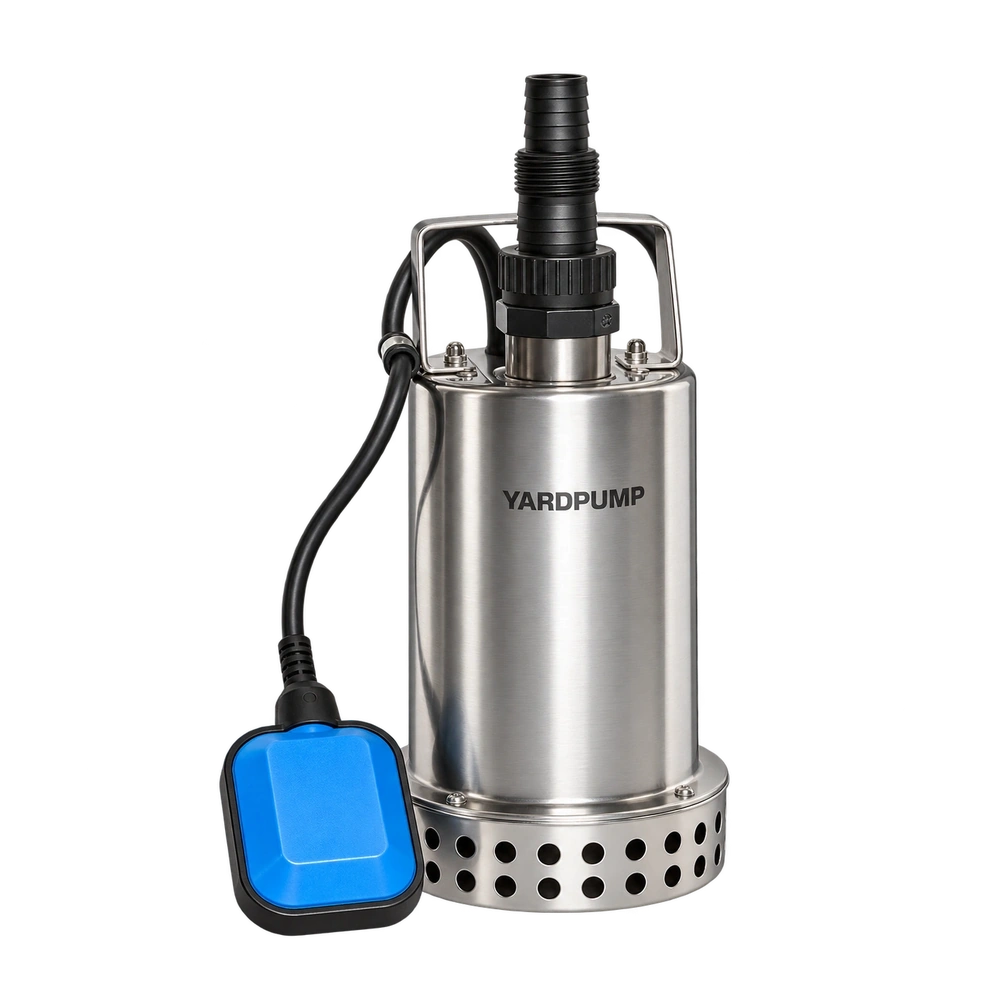
Suppose the winter cover instructions call for lowering a pool to a marked level, but the only pump at hand is a low-level utility pump with its own float. Placing the pump at the bottom and waiting for that float to stop it can take the water well below the intended mark. Decide where the water must stop before choosing how to control the pump. The minimum water a pump can leave behind is not a winterizing target.
Mark the waterline before you move the pump
The pool shell, liner and winter cover can each impose a constraint. Some covers rely on water beneath them for support. The acceptable drawdown may also depend on the pool construction and local groundwater. Winterizing a filter or return line does not, by itself, establish that the whole shell should be drained. Check the instructions for the particular pool and cover, and have the installer resolve any conflict. Mark the target against a fixed point you can see from outside the pool. A movable skimmer lid or a loose cover edge makes a poor datum.
A float attached to the pump reacts to water around the float, with travel determined by its mounting and nearby obstructions. It has no way to know where you marked the winter waterline. A low-level sensor may be there to support shallow pumping or protect the pump. Neither device should be assumed to stop at the desired mark. If the equipment supports a separate level control, position and test it against the actual pool level in a supervised trial. Confirm the stop as the level falls, not just the start as it rises.
A worked example: Lowering a 24 square metre pool
Assume the plan is to lower a nearly vertical-sided pool by 0.10 metres across 24 square metres of surface. The volume is approximately 2.4 cubic metres. At an observed delivery of 60 litres per minute, that represents roughly 40 minutes without rainfall, refill or changes in output. At two centimetres above the mark, the remaining volume is about 480 litres. That is the point to increase supervision or use an approved method of reducing delivery. Treat the estimate as a way to plan the work, not as an unattended timer setting.
Measure output with the intended hose length and outlet elevation. A short test with the hose lying on the deck may not represent a discharge running uphill or through a smaller fitting. Allow for the time needed to stop safely and observe the outlet. If a full hose runs to an outlet below the pool surface, the arrangement can continue siphoning after the motor stops. Check the layout and approved means of breaking the flow, then confirm the waterline has stabilized before leaving.
Set up the discharge and retrieval before draining
Confirm where treated pool water may be discharged and keep it from flowing back around the shell or across a public walkway. Restrain the hose, keep electrical connections dry and use the pump only as directed. Keep people out of the pool during temporary pumping and retrieve the unit by its intended handle or lifting arrangement with power isolated. A soft liner calls for particular care: the intake and pump support should not pull or damage it.
If the water has already fallen below the permitted level, stop the drawdown and ask the responsible installer how to restore it. The pump rating cannot establish whether the shell or cover remains safe. Afterward, drain and store the pump and hose as their instructions require so water left in fittings cannot freeze.
Frequently asked questions
Can raising the pump replace a stop control?
Only use support arrangements allowed by the maker. Raising the inlet changes where it draws water, but loss of flow and safe motor shutdown are different events. Do not rely on the pump sucking air to define a precise level.
Should I leave extra room for forecast rain?
Follow the pool and cover requirements. Manage anticipated rain or cover pooling separately. Going below the permitted line can remove water the cover needs for support.
What if the pool keeps dropping after switch-off?
Observe whether discharge continues and whether the hose could sustain a siphon. If there is no outlet flow, investigate other leakage paths before restarting the pump.