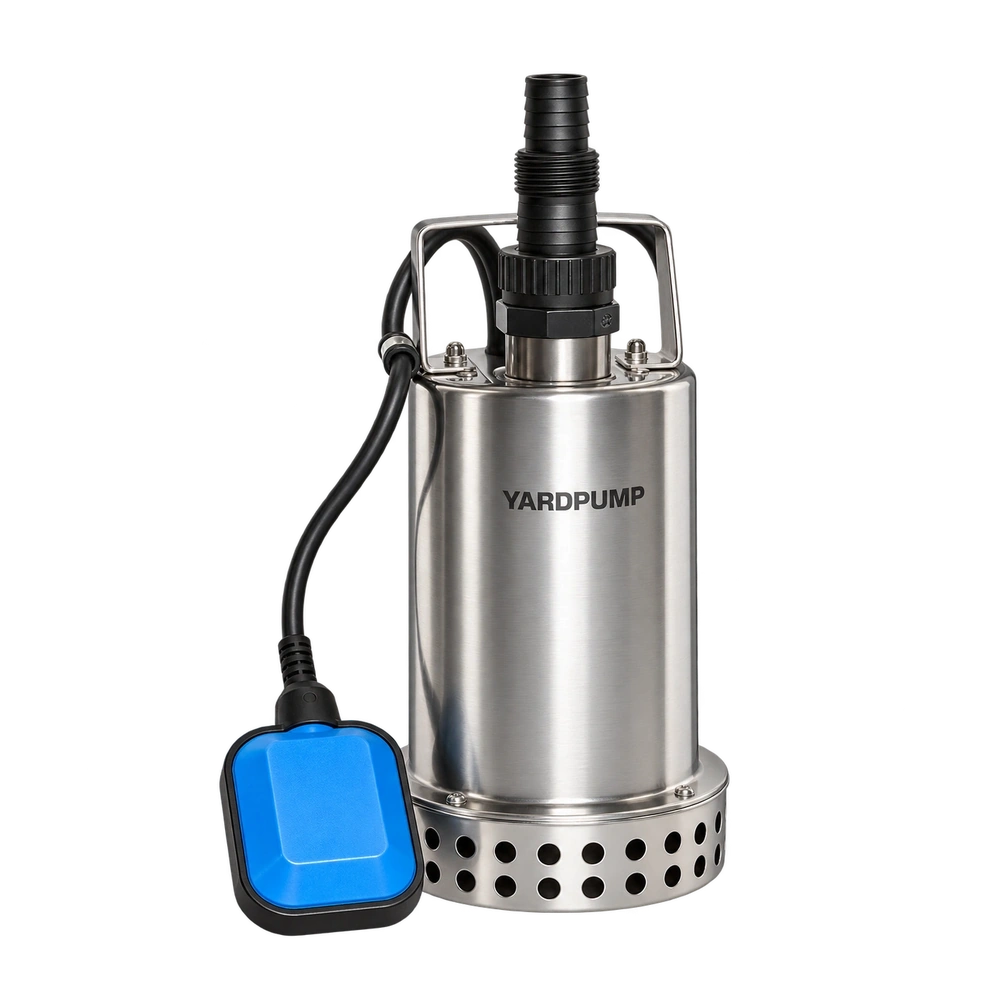
A portable pump drains water while a boat sits evenly at the dock. After people or cargo move to one side, the pump location becomes shallow while water collects elsewhere. Is more flow the answer? First investigate heel, trim and internal drainage paths.
The lowest collection point changes with vessel attitude. Structural members or compartments may also prevent water reaching a single intake. A portable pump can be an auxiliary tool within its approved use, but saltwater-compatible materials alone do not make it a complete or approved bilge system.
The collection point can move
Heel describes side-to-side inclination; trim concerns the fore-and-aft attitude. Loading, occupants and motion can alter where water accumulates. Frames, partitions and other structures may restrict movement toward the pump.
Nearby water is not necessarily accessible water. A pump cannot remove a separate pool if no flow path leads to its inlet under the relevant attitude.
Support matters too. An unsecured pump can slide, tip or be pulled by its hose. A float may strike surrounding structure. Do not assume a power cable is a lifting or restraint device; use only the support arrangement permitted for the equipment.
Establish environmental and electrical suitability first
Marine locations may contain saltwater, oil, fuel or flammable vapours. Requirements differ between spaces. Corrosion-resistant components do not establish suitability for fuel-contaminated liquids or a location requiring ignition protection.
A general mains-powered pump is not automatically compatible with a vessel’s supply, grounding and protective arrangements. Personnel competent in marine systems should confirm the application and installation.
Never remove protection, improvise exposed connections or place unsuitable joints in water. This guide does not provide instructions for through-hull drilling, electrical conversion or designing a vessel safety system.
| Area | Question to answer | Inadequate substitute |
|---|---|---|
| Attitude and intake | Where does water collect in relevant conditions? | An empty boat floating level |
| Support and movement | Will the pump, line and controls remain positioned? | Loading the electrical cable |
| Liquid and space | Salt, oil, fuel or flammable vapours present? | A stainless-steel or seal-material label |
| Discharge and return | Is the arrangement safe as attitude changes? | Delivery observed only at the dock |
Assess access to water before capacity
Consider a hypothetical boat where water collects near the centreline when level but moves to a separate side area when heeled. This is an illustrative scenario, not a customer case. A pump with adequate tank-test flow still cannot collect water outside its accessible area.
Have the responsible designer or service professional assess drainage paths and intake coverage. Do not drill structural passages informally to connect compartments.
Overboard discharge also requires consideration of static and heeled waterlines, return flow and siphoning. The solution depends on the vessel, pump and applicable requirements. Copying another boat’s discharge height or relying on one check valve does not establish safety.
Confirm delivered capacity at the actual lift and line resistance. Maximum flow on a specification sheet is not the installed discharge rate. If the pump serves only auxiliary cleanup, identify that role, attendance requirements and exclusions clearly. A successful temporary demonstration should not become an unsupported safety claim.
Verify the approved arrangement
Competent personnel should assess the intended attitudes and loading conditions safely, recording water collection, intake coverage, restraint and control action. Do not create a dangerous vessel attitude or conduct a demonstration during an actual flooding emergency.
Checks should also address discharge-line support, abrasion, supply and alarm arrangements. An auxiliary pump does not replace required primary systems, backup capacity or other vessel safety measures.
Compared with a land-based tank, a boat introduces changing attitude and environmental hazards. Those variables need their own assessment rather than an assumption based on a successful pump test.
For procurement, separate evidence for saltwater materials, liquid compatibility, marine environment, installation design and system acceptance. They are related questions, but neither a model name nor a material list answers all of them.
Frequently asked questions
Is a saltwater-configured submersible pump automatically a bilge pump?
No. Marine environment, electrical supply, ignition risks and system requirements still need separate confirmation.
Is drainage while the boat is level sufficient acceptance?
Not necessarily. Intended attitudes, loading and collection paths affect intake coverage and should be assessed under the approved plan.
Will a check valve alone prevent seawater entering?
Do not treat that as a universal solution. Discharge position, heeled waterlines and siphoning need competent assessment, and valves have limitations.