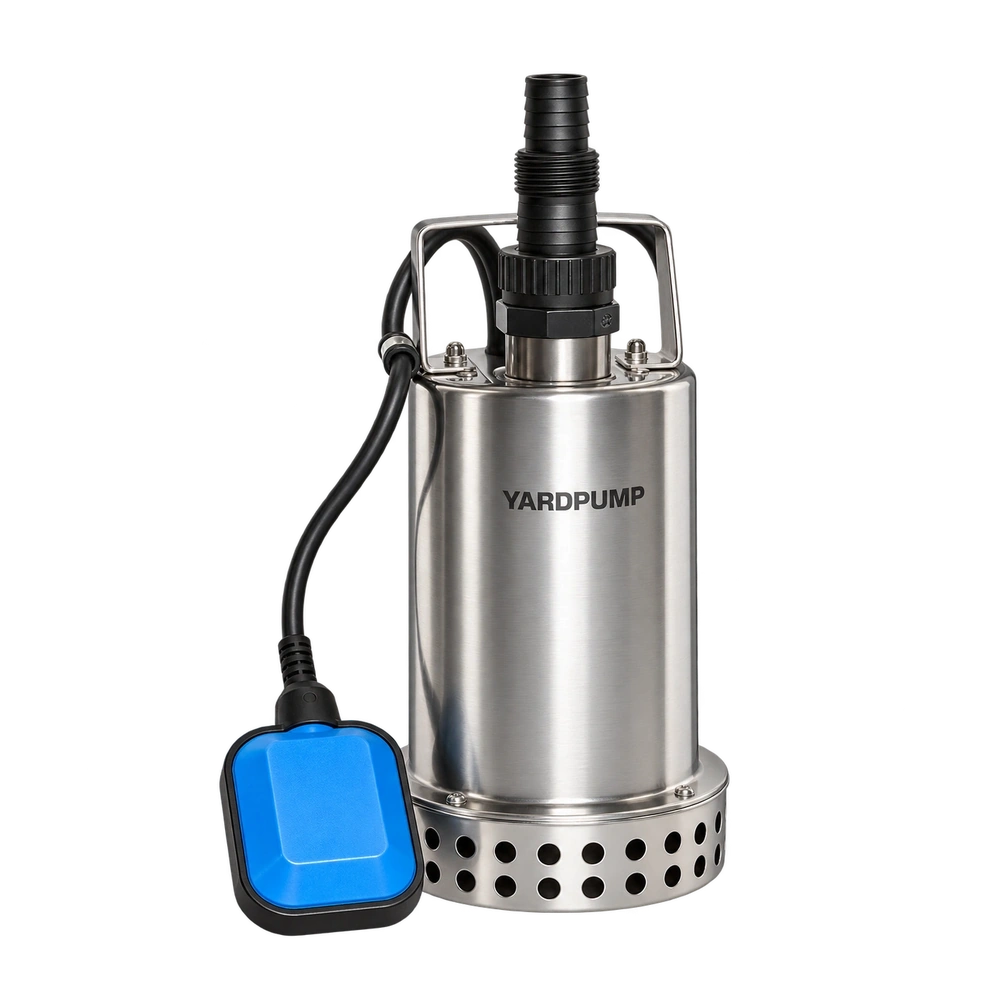
A portable pump has removed muddy standing water. Its casing is rinsed clean, and the next job involves a clean-water storage tank. Is it ready to move? That typical dispatch question cannot be answered by appearance. The previous contamination, intended next use and permitted cleaning process all matter. Rinsing does not turn an ordinary drainage pump into equipment approved for drinking water or food contact.
Separate water appearance from sanitary suitability
In a pump catalogue, clean water commonly describes a medium within specified limits for solids, temperature and other properties. It does not automatically establish drinking-water suitability. Clear water can still contain microorganisms, dissolved contaminants or chemical residues.
Ask two separate questions: is the liquid hydraulically and chemically suitable for the pump, and is the equipment acceptable for the intended sanitary use? Evidence answering one does not necessarily answer the other. Avoid treating a general clean-water description as a hygiene certificate.
Floodwater or unknown standing water may contain sewage, oils or chemicals. That does not establish identical hazards in every puddle. It does mean that the actual exposure history should be investigated. Where significant contamination cannot be excluded, isolate the equipment for competent assessment rather than releasing it after repeated rinsing.
Include the hidden surfaces and accessories
The visible casing is only part of the wetted system. Residue can remain behind strainers, around the impeller, inside the pump chamber, along hose walls and in connection crevices. A cleaned pump connected to its contaminated hose can contaminate the next task again.
Damage and difficult-to-clean surfaces may complicate a reliable cleaning process. Do not dismantle energised equipment to inspect them. Electrically isolate first and use personal protection appropriate to the identified contamination.
A pump designed for immersion does not make its plug, control box or every accessory immersible. It also does not establish compatibility with any cleaner or cleaning temperature. Keep electrical components within their specific handling limits.
| Intended next task | Evidence needed before reuse | Insufficient release basis |
|---|---|---|
| General non-potable drainage | Medium compatibility, residue and accessory condition | No visible mud |
| Supply with hygiene requirements | Suitable equipment and a validated cleaning process | Clear-looking water |
| Food contact or a sensitive growing process | Assessment by the responsible process and hygiene personnel | Previous informal practice |
Cleaning must suit the complete equipment
Rinsing, cleaning and disinfection have different objectives. Rinsing can remove loose contamination without demonstrating disinfection. Chemical effectiveness depends on factors including concentration, contact time, temperature and surface condition; these cannot be combined arbitrarily.
There is therefore no universal chemical recipe for every portable pump. The equipment manufacturer and the parties responsible for cleaning and the next use should confirm an appropriate process. Consider plastics, elastomers, metals, lubricated areas and electrical accessories together. A stronger treatment can damage materials or leave unacceptable residues.
Unknown chemical contamination may require specialist handling. Killing microorganisms does not establish removal of oils or other chemicals. Similarly, a method suitable for a tank wall may not be suitable for an assembled pump with enclosed passages.
Establish a reuse record
Rental, service and distribution operations can record the task, exposed medium, cleaning method, date, operator and released use for both pump and accessories. Clearly identify equipment awaiting assessment or restricted to a particular non-potable application. Do not apply an unsupported sanitary approval label.
Separate equipment for hygiene-controlled work and ordinary drainage can be easier to manage than repeatedly proving that one kit can change between every application. The decision depends on the actual process requirements, not merely on whether another pump is available.
For a hypothetical dispatch, a pump returning from unknown floodwater is requested for a storage system with hygiene controls. Pause the reassignment, check suitability and exposure records, and select confirmed dedicated equipment if the necessary conditions cannot be met. Delivery urgency does not resolve missing technical evidence.
Function and hygiene require different evidence
After approved cleaning, check for obstruction, damage and correct function. Electrical assessments belong to qualified personnel. Good flow and satisfactory electrical condition do not establish sanitary suitability, just as a clean appearance does not establish electrical safety.
Handle cleaning waste and contaminated residues according to site requirements. Otherwise, cleaning the equipment can simply move contamination elsewhere.
Frequently Asked Questions
Does clear rinse water prove drinking-water suitability?
No. It does not establish removal of microorganisms or chemicals, or approval of the equipment for that use.
Is fitting a new hose enough?
No. Assess the pump's internal surfaces and all remaining accessories against their exposure history and the next task.
Is a stronger disinfectant always safer?
No. Use a confirmed process compatible with the equipment and intended use; stronger chemicals may damage components or leave residues.