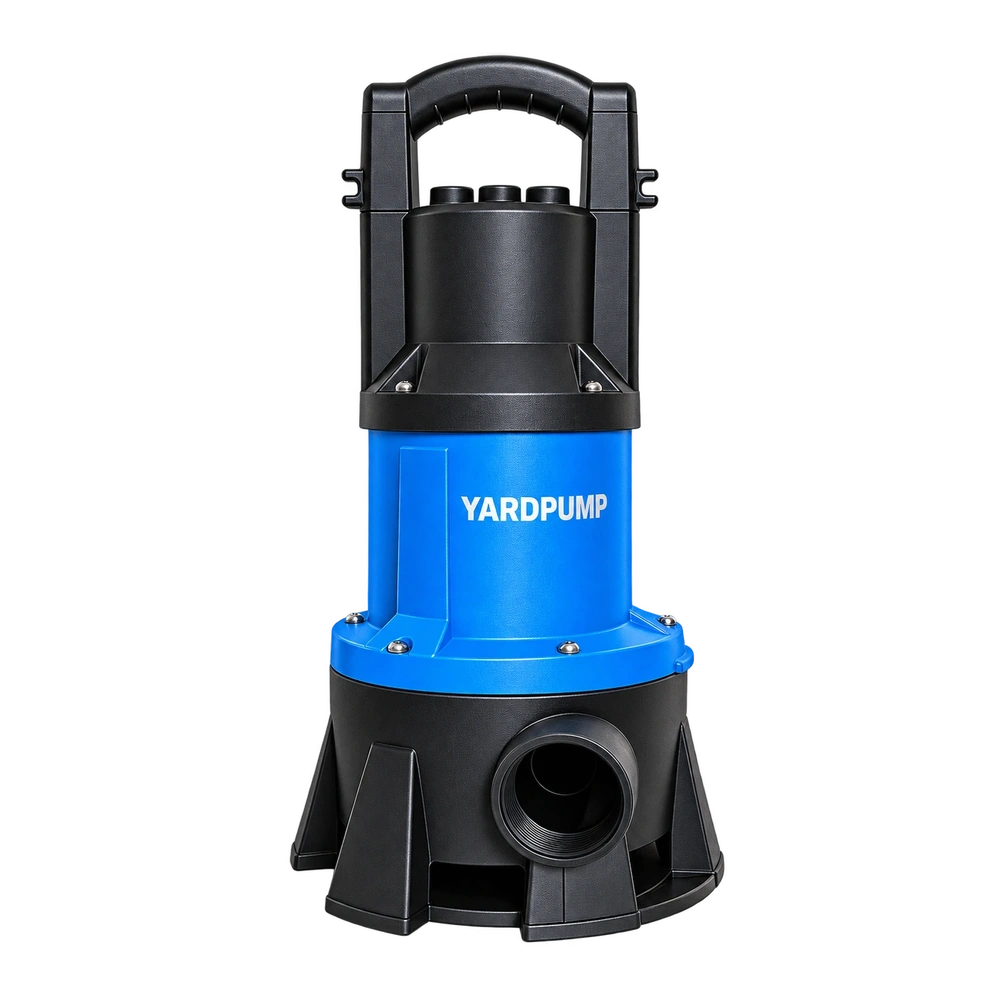
In a typical post-rain drainage job, water leaves the pump strongly, yet the pit level falls slowly. Water discharged nearby then runs back toward the collection area. Before selecting a larger motor, investigate the discharge destination. The installation may be circulating water around the site rather than removing it from the problem area.
Identify the return path
A rising level can result from continuing rain, groundwater, reverse flow inside a discharge pipe or water returning across the ground. Several mechanisms may operate together. A check valve addresses reverse flow within a suitable pipe arrangement; it cannot prevent water taking an external route back to the pit.
Record pump starts and stops, level changes and conditions at the outlet from a safe location. Sketch the high and low ground, trenches, building edges and collection point. Do not enter flooded areas where electricity, unstable ground or contamination may be present. Electrical isolation or access to hazardous facilities requires appropriate competent personnel.
A useful site photograph includes the complete hose route and receiving area, not just the pump. If a return path is hidden beneath landscaping or fill, a drainage specialist may need to investigate rather than relying on visible surface water alone.
Discharging is not the same as removing
Saturated ground may accept little additional water. An outlet near a foundation can feed permeable backfill that carries water toward the collection system. A ditch or drain that is already full can also raise the receiving level, reducing the pump's available flow or creating other backwater effects.
Use a simple hypothetical water balance. Suppose the pump discharges 100 litres per minute, 60 litres per minute eventually returns through the site, and separate incoming water adds 30 litres per minute. The net removal is only 10 litres per minute. These are illustrative figures, not measured pump performance. Real return flow may be delayed, so a single instantaneous reading cannot establish the proportions.
| Site observation | Possible implication | Useful follow-up |
|---|---|---|
| A surface stream develops toward the pit after starting | External surface recirculation | Check levels and a permitted outlet location |
| No visible stream, but ground remains saturated | Possible subsurface return | Obtain a site-drainage assessment |
| Receiving ditch is high and discharge weakens | Limited receiving capacity or backwater | Check destination level and actual system head |
The discharge destination must also satisfy local requirements for drainage, neighbouring land and public systems. Moving water onto a road or into a neighbouring property is not an acceptable engineering solution.
Recalculate when the route changes
Moving the outlet farther away often adds pipe length, elevation or fittings. Each can change the operating point. Do not promise unchanged flow merely because an extension seems short. Reassess hose diameter, friction losses, bends and the highest expected receiving-water level against the pump curve.
Support and secure the revised route, protect access areas and prevent kinks. The outlet should not undermine soil, erode a foundation edge or create a slip hazard. Whether an outlet may be submerged and what reverse-flow provisions are needed depend on the complete system design.
Raising the hose unnecessarily or adding valves without analysis can introduce more head, air problems and maintenance work. Select a route that meets the drainage objective and the pump's approved limits rather than accumulating accessories by trial and error.
Confirm the diagnosis with comparable observations
Where a permitted alternative destination is available, compare water-level trends before and after the route change. Keep the pump and measurement method consistent and record differences in rainfall or other inflow. Document changes to pipe length and height so that an improvement is not attributed to an unexplained test difference.
If the level still falls too slowly, continue checking actual discharge, ongoing inflow, inlet obstruction and connections between collection areas. External recirculation is one possibility, not a universal explanation for every slow drainage complaint.
For distributors, a route sketch and wide site photographs often provide more decision value than a nameplate alone. The pump must deliver an appropriate hydraulic duty, while the site must receive and carry away that water. Both conditions are necessary for effective drainage.
Frequently Asked Questions
Will a check valve prevent surface water returning?
No. It cannot block routes through the ground, soil or separate drainage channels.
Is a more distant outlet always better?
No. The destination must be permitted, have capacity and remain compatible with the pump's head and flow capability.
Does slow level reduction prove inadequate pump flow?
No. Compare the actual discharge with all incoming water, including any water the installation returns to the collection area.