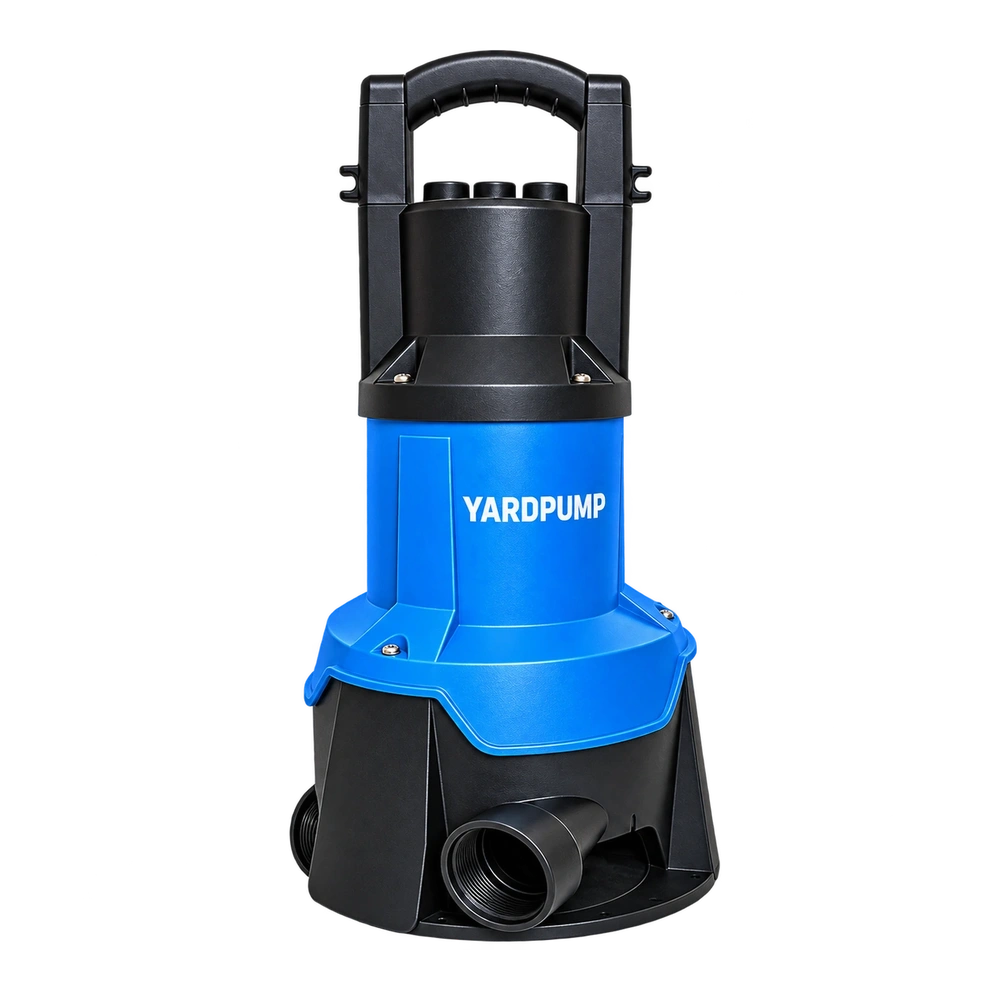
A compact pump has a 1½-inch outlet, and the only hose on hand is a long 1-inch line. A reducer can be usable when the pump and fitting are approved for it. The question to settle before committing is how much water will reach the far end at the lowest water level you expect.
Look for the narrowest water passage
The outlet size identifies a connection and gives room for the designed flow. It is not a promise that every downstream component has that clear bore. Friction rises quickly as bore decreases, especially through long flexible hose, small barbs and multiple elbows.
Measure the clear bore at the reducer, hose tail and any quick coupling. A 1-inch marking on a hose or fitting can describe a nominal connection. The passage through a shouldered insert can be narrower. It is common to find two restrictions in series, one at the pump and another at a tap-style fitting on the end. Taking the end fitting out of the comparison can misrepresent a setup that will actually include it.
At the same flow, going from a true 38 mm bore to 25 mm makes the average water velocity about 2.3 times as high. Friction varies with the hose and flow, and the actual delivery will settle at a different point on the pump curve. The velocity calculation explains why a long narrow run deserves a test before someone spends money on a bigger pump.
Give the hose a job to pass
Record actual hose inner diameter, total length, vertical lift, fittings and the flow needed at the destination. Compare a short approved full-bore route with the proposed route under the same water level. Measure delivered volume and time, not only the appearance of the jet.
For example, if a task needs 120 litres moved in ten minutes, a route delivering 7 L/min is unsuitable even though water exits continuously. One delivering 14 L/min meets the time target.
Use the pump curve for the exact voltage and frequency version as a screening tool. Put the discharge level and the planned flow on the sketch, then add losses for the hose and fittings at that flow. Leave room for the rise in lift as a tank empties. If the outlet is feeding a sprinkler or another device that needs pressure, include that demand as well. A free discharge into a container cannot establish the flow at a pressurised outlet.
Fit the reducer without loading the outlet
A hose full of water can pull hard on a short plastic outlet when it hangs over a curb. Support the hose independently, leave a gentle bend at the pump and use the specified thread and seal arrangement. A tight joint is only part of the approval. Check that it remains aligned during starts and stops and that the hose stays open through the bend.
For an OEM kit, record the tested hose length, clear bore and adapter revision with the pump configuration. A later substitution that keeps the same thread but reduces the bore needs a hydraulic review. A label that gives the connection size is still useful on the carton. Put the tested hose arrangement on the drawing or instruction sheet.
Frequently asked questions
Can a short 25 mm reducer work with a longer 38 mm hose?
It can in an approved setup. A short restriction adds local loss, and a long length of smaller bore adds loss along the whole run. Check both in the assembled configuration.
What flow should I measure when emptying a tank?
Take readings at the highest and lowest normal pumping levels. The low level usually gives more static lift to a fixed open outlet, so it can govern the time estimate.
Should I choose a larger pump if the narrow hose misses the target?
Test a practical larger-bore hose first. If the hose is fixed by the job, select from the curve at the installed head and flow and check the pump’s allowed operating range.