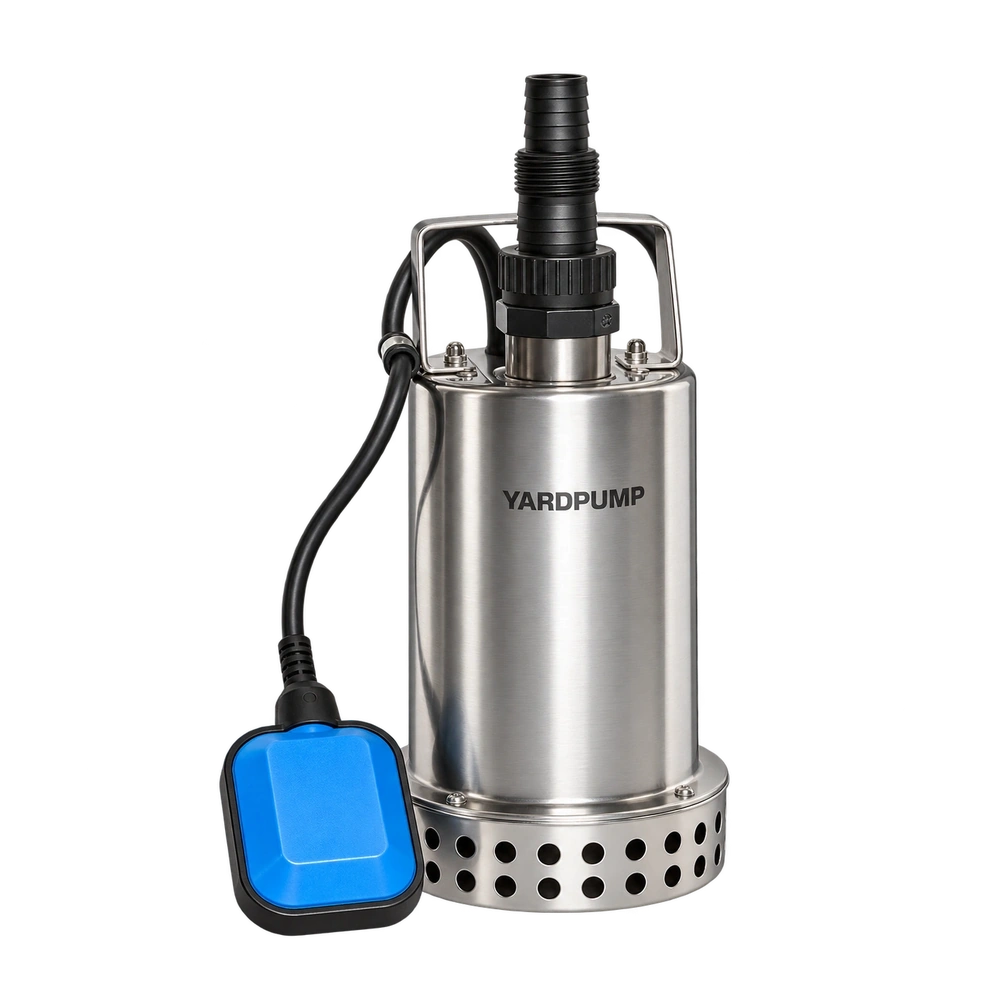
A field question often begins with: Can a Quarantine Tank Share the Main Aquarium's Water-Transfer Pump? The practical answer is to map the source level, target condition, actual hose route and control method before changing the pump. Choose transfer equipment around species, water temperature and quarantine practice, with a defined cleaning process and effluent route. Maximum flow or motor wattage is only a screening value; it does not establish installed duty.
Define the exact decision before testing
The quarantine duty is to preserve water quality and separation, not to move water as fast as possible. Sharing a pump, hose or bucket can return pathogens through residual water and wet surfaces. A strong jet can also stress fish.
The boundary is specific: 既有稿讨论普通小泵给水族箱换水;本文解决隔离区设备共用、流速控制和生物安全边界。 A result from an adjacent problem can look relevant while answering a different decision.
Within the Pump Selection: Types, Liquids and Tradeoffs section, the controlled decision is quarantine tank dedicated transfer pump. The record should repeat the exact scenario in “Can a Quarantine Tank Share the Main Aquarium's Water-Transfer Pump?” and identify the physical item, revision or site condition to which the conclusion applies. If any of those identifiers changes, reopen the assumptions instead of carrying the previous answer forward. This keeps the article's decision distinct from neighboring pump topics even when some tools or measurements are shared.
An illustrative calculation or comparison
For an 80 L quarantine tank, a 25% water change is about 20 L. At an actual 10 L/min, transfer takes only two minutes, so fish exclusion, level observation and refill temperature matter more than a larger pump.
Label every assumption as an example and every observation with its measurement boundary. Values from different locations, units or time windows are not directly comparable. Keep original quantities and conversion steps so teams can reproduce the conclusion.
A practical investigation sequence
Start with the supply isolated and the area accessible. Inspect the source, inlet, hose, fittings, valves, outlet and control. Conduct a supervised trial with intended accessories, recording levels, elapsed time, volume and unusual sound. Electrical checks require isolation and a qualified person. Never handle energized equipment with wet hands, bypass protection or dismantle a live pump.
Use three columns: what was observed, what it can rule out, and what it cannot prove. This prevents one complaint becoming an invented industry rate and stops the investigation ending at the first plausible clue.
This check concerns quarantine tank dedicated transfer pump; results from another revision or lot cannot be silently combined.
Turn the result into an acceptance record
Retain model and revision, sample or site identity, date, liquid and environment, dimensions or pipe route, instrument and range, raw readings, photograph references, conclusion and open actions. If a part, valve, setting or position changes, preserve before and after states rather than only the final successful image.
Set acceptance criteria before testing. A boundary value calls for attention to resolution, repeatability and sample variation; rounding should not manufacture a pass. For a field complaint, restore a safe controlled condition before assigning commercial responsibility.
Limits of the method
This method covers ordinary transfer or drainage where liquid and installation are understood. Oil, corrosive liquids, sewage, live animals, structural safety and regulated discharge require separate decisions. Calculations are illustrative, not ratings for a YARDPUMP model. Never bypass a protector, safety device or alarm to simplify diagnosis. If liquid, wiring or construction cannot be established, stop and obtain qualified direction.
Frequently asked questions
quarantine tank dedicated transfer pump question 1: Will a larger pump solve it immediately?
Not necessarily. Establish duty, hose and control limits first. A larger unit can add cycling, throttling or overflow problems. For this article, also apply the site or revision boundary stated in “Can a Quarantine Tank Share the Main Aquarium's Water-Transfer Pump?”.
quarantine tank dedicated transfer pump question 2: Is one field flow measurement enough?
No. Repeat with intended level, hose and valve positions, and record the boundary. Duty changes with levels. For this article, also apply the site or revision boundary stated in “Can a Quarantine Tank Share the Main Aquarium's Water-Transfer Pump?”.
quarantine tank dedicated transfer pump question 3: Can it run unattended?
Only where pump, controls and installation allow it and alarms, overflow and stop conditions have been tested. Temporary work should be supervised. For this article, also apply the site or revision boundary stated in “Can a Quarantine Tank Share the Main Aquarium's Water-Transfer Pump?”.