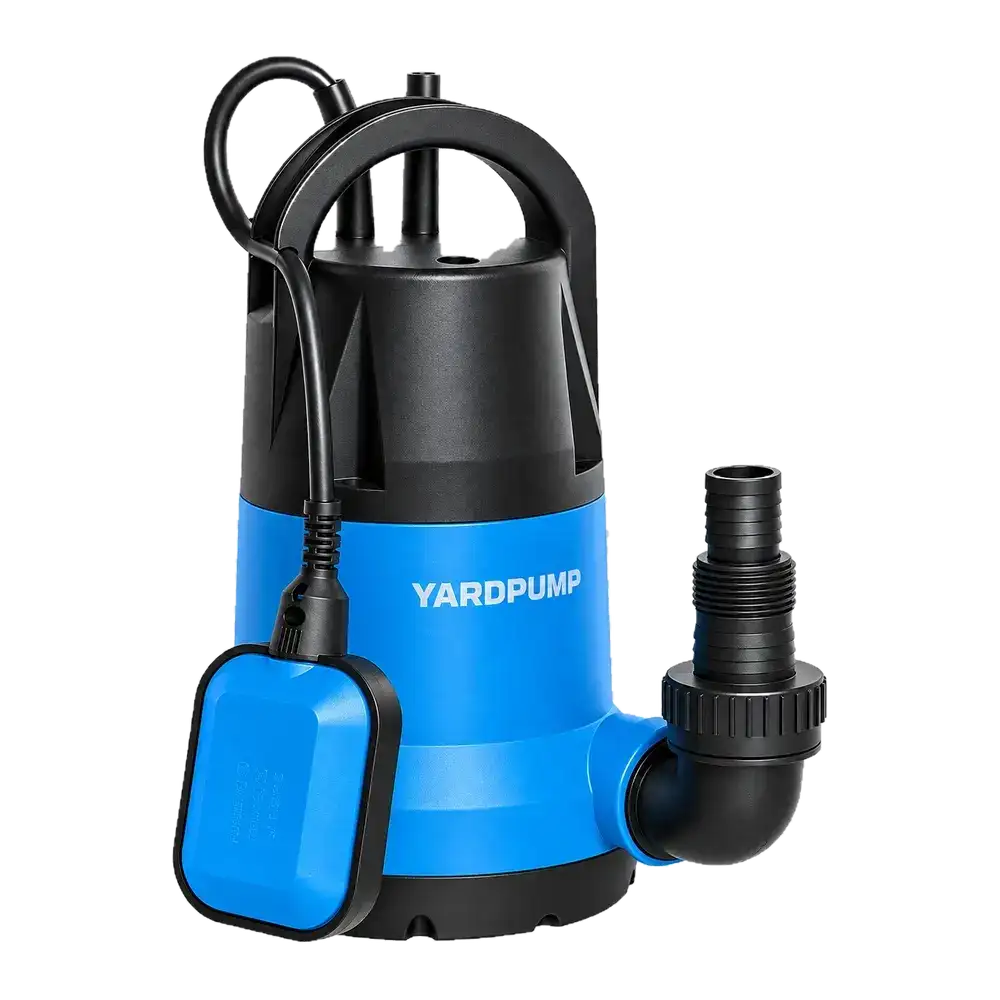
Suppose the rain barrel looks clear, but the first water from the garden hose runs brown and then lightens. Catch that first draw before flushing it away. Take a second sample after delivery has settled. The contrast helps you decide whether you are seeing water left in the hose, sediment at the pump’s intake depth, or material stirred up as the pump starts. Looking into the tank after the hose runs clear throws away the timing that makes the complaint diagnosable.
Find where water waited between runs
A hose can retain fine sediment from the last use, loose material from the inside wall, or debris from a fitting. A hose laid over steps and dips rarely empties uniformly after shutdown. Water retained in low spots is among the first to leave on restart. The tank presents a different possibility: a clear surface can sit above a layer of settling solids. A bottom intake may draw from that layer after refilling or tank maintenance even when the water still looks clear from above.
Catch three separate samples from the same outlet: a little of the first draw, a sample after roughly the hose volume has passed, and another during stable delivery. Label the order rather than mixing them in one bucket. If there is safe access from an inspection point, a sample taken near the pump’s intake height without stirring the bottom gives you a tank comparison. Do not enter a tank to sample. If a plug has become wet, the pump behaves abnormally, or a protective device trips, stop and have a qualified person isolate and inspect the equipment. Do not disconnect plumbing for a sampling comparison while the pump is running.
Use a hose volume to set the scale of the test
For illustration, a 20-metre hose with an actual 19 mm inside diameter holds about 5.7 litres when full. At a steady 12 litres per minute, replacing one full hose volume takes roughly 28 seconds. A hose that partly drains will clear sooner; mixing between stagnant and fresh water can extend the transition. These numbers explain why the first cup can miss the problem and why a universal flush time is a poor diagnostic rule. For an irregular hose with reducers, this estimate is only a starting point.
If the original long hose shows the colour but a clean, compatible short hose and the intake-depth sample are clear, inspect the old hose’s low spots, connections and condition first. Compare outlets at similar flow and water level, in a safe discharge area. Comparing a restricted spray head with freely flowing short tubing changes the disturbance at the intake. If both hoses deliver particles and the intake sample is also cloudy, look at the sediment depth and any refill jet hitting the intake area. A start-only burst from both routes suggests checking what is disturbed at startup. Deal with the water source and intake position before deciding that a clean-water pump is still an appropriate choice.
Know what colour cannot tell you
Settling, floating material and an oily appearance are useful observations to record. They do not establish chemical identity or fitness for a particular use. If the source is unknown, the colour persists, or chemical contamination is suspected, suspend the irrigation use and get the water assessed. Treat collected rainwater as non-potable, and do not infer that it is suitable for spraying edible parts of plants because it passes a pump. A dealer receiving this complaint can ask for photos of the separate samples and of the actual intake position. That is far more useful than a photo of the barrel lid or the pump’s nameplate alone.
Keep those diagnostic samples separate from any decision about water quality. A cup that settles clear can still contain dissolved contaminants or germs. Treat it as a comparison for the source of discoloration and use water suitable for the intended task.
Frequently asked questions
Does quick clearing mean the hose is deteriorating?
No. The hose may simply have held sediment from an earlier run. Compare a known clean short route and an intake-depth sample before blaming the hose material.
Will a finer inlet screen fix the first brown water?
A screen cannot remove water already held in the discharge hose or reliably remove dissolved discolouration. A fine screen can also restrict inflow if it clogs. Match filtration to the application and the pump instructions.
How long should I let the bottles settle?
Use the same wait time for each bottle and record it. Compare the change between samples rather than trying to identify a substance from its settling time.