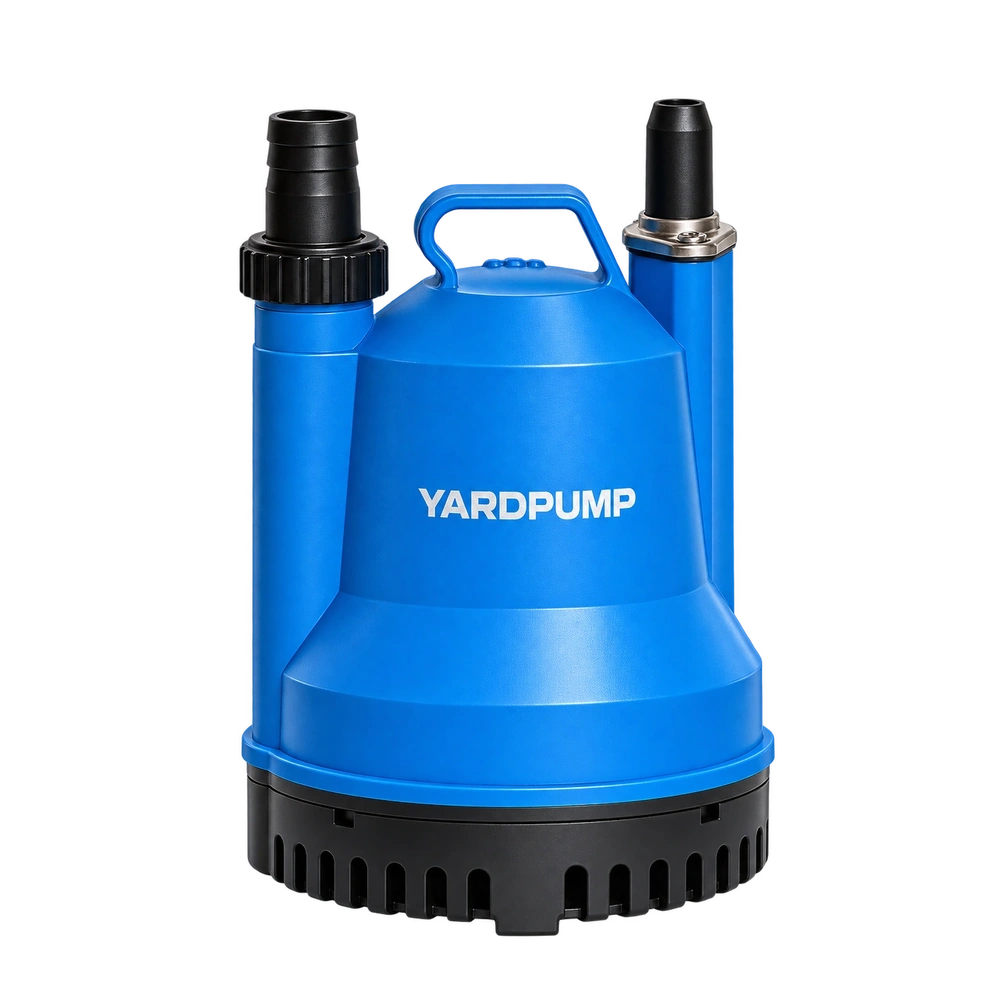
A customer wants rainwater to refill a toilet cistern. A drainage pump has a large advertised flow, so the customer assumes it will work. Match more than litres per hour. The inlet valve needs suitable pressure, its final filling flow may be small, and the pump needs compatible control and low-water behaviour. Potable-water separation also matters. Select a supply system, not merely a tank-emptying pump.
The inlet is not a permanently open outlet
A cistern valve closes progressively and stops flow when filling is complete. The pump therefore encounters changing operating points rather than continuous open discharge. A high-flow, low-head drainage pump may not supply suitable pressure after pipe and valve losses. It may also prohibit sustained operation near closed discharge.
Obtain the inlet valve's pressure and flow requirements. Calculate elevation from the available source level to the valve, with pipe and filtration losses. Confirm liquid suitability and operating duty. A matching connector does not establish functional compatibility, and a temporary hose trial is not a substitute for an appropriate installation assessment.
Can the controller recognise the small flow?
Control systems may respond to pressure, flow or liquid level. Their operating ranges matter, not only maximum current. If the final filling flow falls below a controller's detection range, it may stop early or cycle. A control arrangement that does not stop promptly can instead leave the pump at an impermissible closed-discharge condition.
Assess small demand, minor leakage, simultaneous use and an empty source. A pressure vessel or another control arrangement may be appropriate for a particular design, but adding a vessel is not a universal answer. Commissioning and fault-condition checks reveal whether the selected components function together throughout the task.
| Match | Practical check |
|---|---|
| Inlet valve | Permitted pressure, filling flow and closing behaviour |
| Pump and pipework | Actual duty, filter loss and operating limits |
| Control | Low-flow stopping, minor leaks and cycling |
| Source and separation | Low-water response, backup supply and cross-connection prevention |
Do not improvise a mains connection
A qualified installer should design and inspect the relationship between rainwater and potable-water systems under local requirements. An ordinary check valve cannot universally replace the required backflow protection. Tank top-up and appliance-side connections represent different boundaries and need separate attention. A retrofit must not bypass the isolation built into the original installation.
Water condition must also suit the use and equipment. Sediment and debris can affect the inlet valve and control system, so plan catchment management, appropriate filtration and maintenance. Non-drinking use does not mean materials, hygiene and identification can be ignored. Those requirements need to be established for the complete installation.
Accept a complete filling cycle
Suppose a hypothetical refill requires six litres. At an effective average of three litres per minute, the ideal filling time is two minutes. This is an illustrative calculation, not a universal cistern specification. Because the valve closes progressively and pressure changes, maximum pump flow cannot predict the actual refill time.
Observe the entire empty-to-full process during commissioning. Confirm starting, stable filling, final-stage behaviour and correct stopping. Check permitted low-source-level operation and recovery, with relevant fault conditions assessed according to the system design. Qualified personnel should handle electrical connections and protection. Bypassing a controller to keep water moving is not a valid commissioning solution.
Give users an operating boundary
Identify the source, permitted use, maintenance and abnormal-condition response. Retain information for the actual pump, controller, valve and filters. If an unconfirmed utility pump is already installed, establish suitability with the design or supply team before proceeding. Repeated switching should not automatically be blamed on customer operation.
A suitable selection makes the pump, valve and controller work through the complete filling cycle. That includes the small-flow end of the cycle, which a maximum-flow comparison can completely miss. It also preserves source separation and a clear maintenance route rather than leaving the customer to discover those limits after installation.
Questions about rainwater cistern supply
Will a high-flow drainage pump fill the cistern quickly?
Not necessarily. Valve restriction and actual pressure can limit flow, while control and operating limits still need matching.
Can a check valve permit a mains connection?
Do not assume so. Qualified personnel need to establish separation under the applicable local water-supply and backflow requirements.
Should pressure be increased to stop final-stage cycling?
Do not adjust blindly. Check the valve, pump, controller and possible leakage, keeping changes within approved equipment limits.