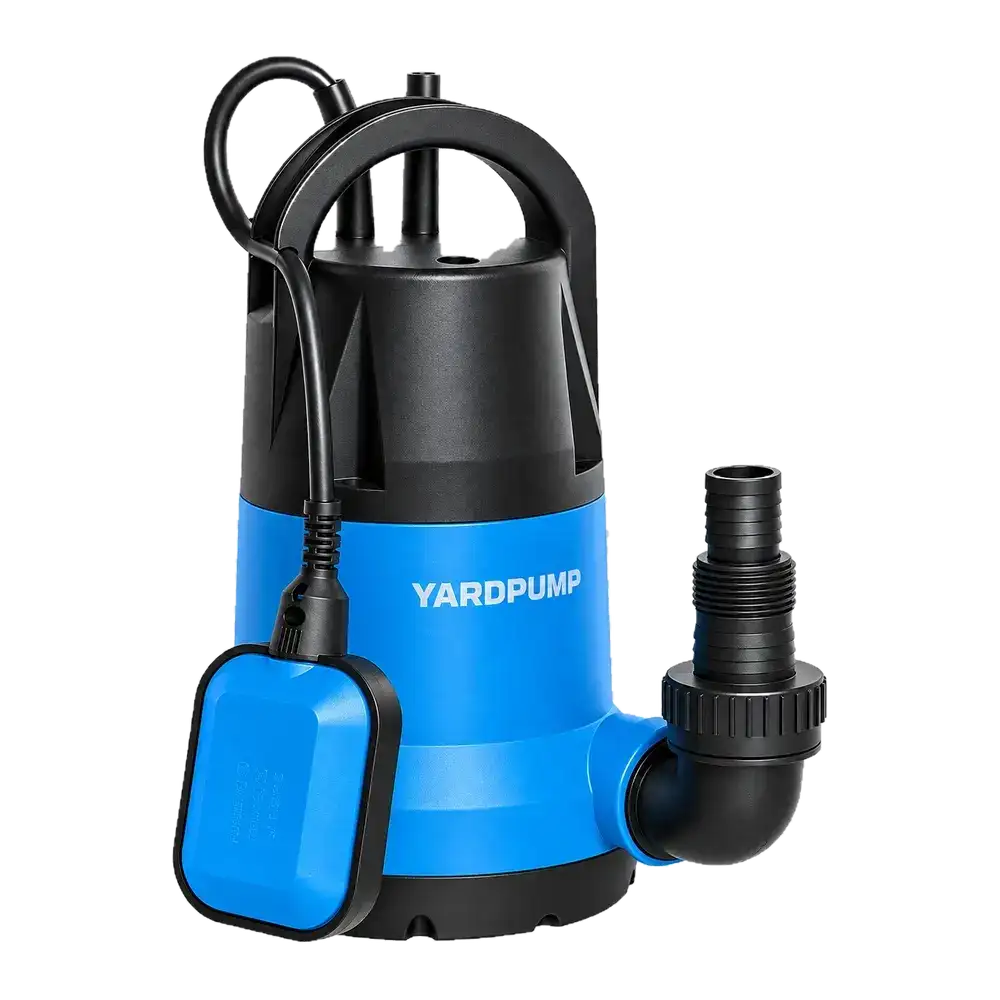
Suppose a garden rain tank stops feeding its drain tap, but there is a visible layer of water across the bottom. Why will the tap not deliver the rest? The remaining water may be below the usable gravity outlet. First establish that the outlet, air path and discharge route are clear. Then estimate the amount below the actual gravity cutoff and check whether it is useful. A low-level pump can finish certain shallow clean-water transfers when its starting depth and installation conditions are met. The presence of water on the floor of the tank is insufficient on its own.
Establish where gravity drainage ends
A side tap can be raised above the tank floor so settled material has somewhere to accumulate without immediately blocking the normal outlet. Gravity delivers water according to the elevation difference between the surface and the outlet, with part of the available head used up by the line and fittings. Flow generally weakens as the level falls. Once the opening in the tank draws air, there may be no way for that ordinary outlet to remove a deeper layer below it. The end of the attached hose may instead be higher than the tap, or a restricted air supply or blocked screen can stop flow earlier. These are different reasons to investigate before changing the tank or pump.
Compare the accessible water level with the outlet position and actual path the hose follows, using a repeatable reference on the tank. A water surface noticeably above a tap that produces nothing calls for an examination of the approved connections and air path first. The comparison should not require entering a tank, reaching into unsafe spaces or changing a sealed or permanent arrangement. An underground tank or one with inaccessible fittings calls for a qualified assessment. Do not drill a new opening merely to reach the last visible water.
Convert depth to volume and separate out the unusable layer
For a flat-bottomed tank with nearly straight walls, multiply its effective horizontal area by the shallow depth to estimate the water volume. In an illustrative case, a floor area of 0.6 square metres and five centimetres of water below the gravity cutoff give around thirty litres. If you want to leave a one-centimetre sediment zone alone, subtract roughly six litres. Of the remaining twenty-four litres, some may still be below the level where the pump should stop or isolated in a lower corner. The thirty litres is therefore a geometric estimate, not an assured delivery amount. For a horizontal cylinder or a tank with ribs or a separate low pocket, look for the maker's level-volume chart or use a safe measured calibration rather than extending a straight-wall assumption.
This estimate should change the purchase if there is little usable water. If the approved low drain can remove a few remaining litres, there may be no reason to add a pump. If you need a larger amount of clear water and can safely position a unit, a supervised low-level pump may be an option. Verify access, approved liquid and temperature, starting depth and residual performance for the exact installation. The pump must be able to start at the depth available. Never hold a float in its on position, allow dry running, or alter the inlet in pursuit of the final few litres.
Record the two levels that will guide future use
Use one mark for the point where ordinary gravity delivery becomes insufficient and a second for the lowest intended water level with the approved finishing arrangement. Keep the sediment boundary and pump position with those records. If the pump, fittings or hose need adjustment, stop and isolate power from a dry location and discharge pressure as instructed. A dirty tank, an uncertain pipe destination or an unsuitable electrical location should be addressed before a wet test. When asking for a pump, share the actual opening, water depths and discharge path. Those facts help distinguish a genuinely useful pump option from a lower residual-depth number on a specification sheet.
Frequently asked questions
Why can water be visible when flow at the tap is weak?
The useful elevation difference may be small, or a hose rise, poor venting or blockage may limit it. Inspect the permitted route before judging the tank.
Does a large leftover volume guarantee the pump can start?
No. Starting depends on local depth and the approved installation, not the number of litres spread across the floor.
Can the same clean-water pump remove bottom sludge?
Check the approved liquid limits. Heavy sludge or debris belongs in the tank's cleaning plan.