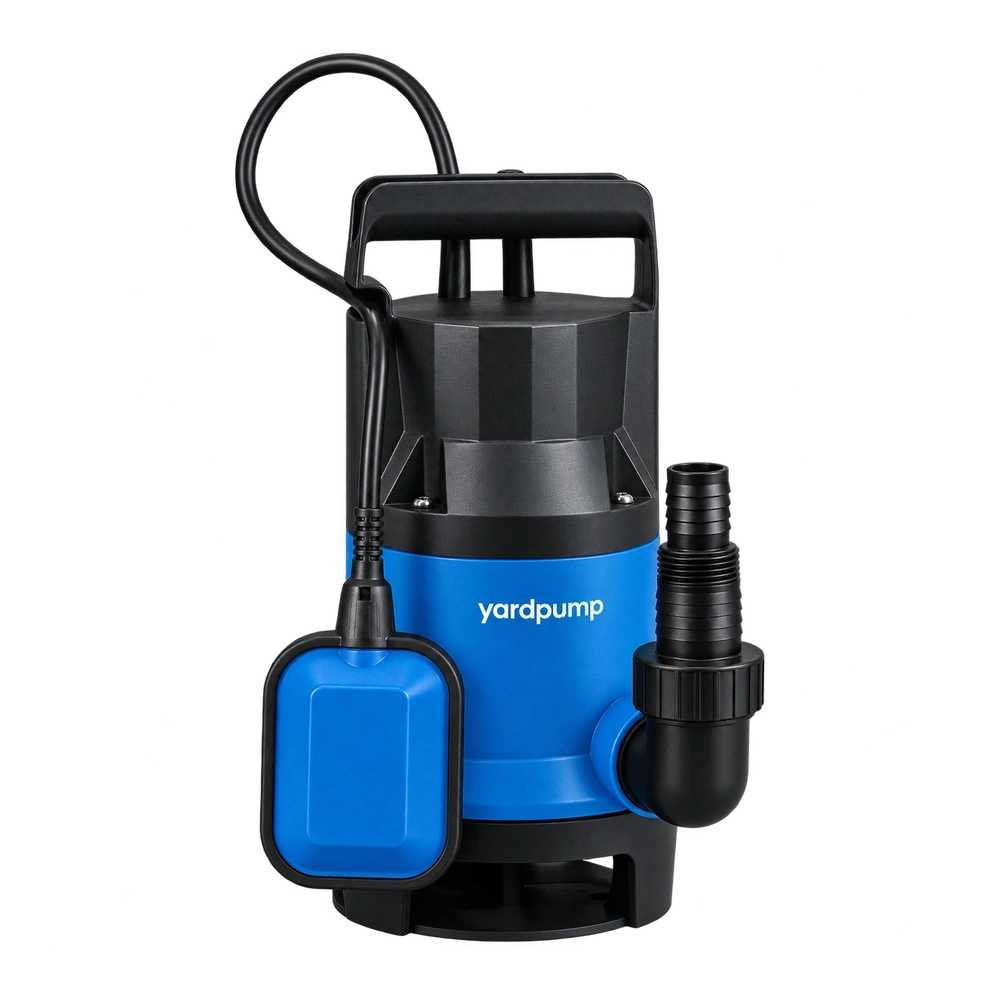
Water beads under a sealed sump lid can look like a failed pipe joint. Should the installer reseal the cover, change a fitting, or leave it alone? Start with the first wet location and its relationship to a pump cycle. Condensation, splash and leakage can coexist. A sealed lid is a barrier to air movement, not a promise that its inner surface will remain dry.
Does the moisture follow the pump cycle?
Condensation generally forms many fine droplets across a cool cover as humid pit air meets it. Splash appears quickly after a pump starts and often follows the direction of an anti-airlock vent or falling inlet. A joint leak begins close to a thread, coupling or valve and tends to grow along one path.
Think of a cold glass in humid air: moisture can form on its surface without liquid leaking through the glass. The same physical distinction matters at a sump cover. Moisture inside a covered basin is not, on its own, evidence that the pump housing has leaked. If the surrounding floor is wet, investigate how water crossed the rim or a penetration as a separate issue. Condensation inside does not explain every exterior puddle.
Trace the first wet point before resealing
Without reaching into an energized pit, observe from outside and record the cover before a cycle, ten seconds after start and after shutdown. Qualified personnel can then isolate power, open the cover, dry zones and inspect joints, valves and penetrations. If the lid is part of a radon system, restore the approved seal rather than leaving it open.
Separate a film that develops during a long idle period from fresh large droplets that appear during pumping. Use an original observation window where one is provided. Do not drill an inspection hole merely to obtain a better view. Opening the lid belongs in a planned service visit: isolate the electrical supply, dry and mark inspection zones, and restore safe barriers before any operating observation. Hands and tools must remain outside an energized basin.
Follow a wet trail upward. Water from a joint higher on the riser can run down the pipe and collect beside the cord or pipe penetration, making the wrong fitting appear responsible. A vent jet striking the wall can instead throw water back toward the riser. Photograph the first wet point together with the dry area above it and the cycle timing. A picture of the final puddle loses that distinction. Repair a damaged connector or gasket according to its design rather than relying on the lid to contain a pipe leak.
Example: condensation and splash together
Example: divide the cover into four observation zones. After twenty idle minutes all four show a fine film, but two seconds after startup large drops appear only beside the riser. The film supports condensation while the new cluster points to splash. Both can coexist; the timings illustrate a record, not a universal limit.
There are three useful handover outcomes. An idle film with dry joints supports monitoring. A repeatable splash path calls for checking the approved vent position and nearby obstructions. A growing trail from a joint requires a connection repair followed by another cycle check. There is no universal number of droplets that separates these outcomes. Location, timing and the shape of the trail must agree; conflicting observations justify further investigation rather than an immediate pump return.
Make a practical handover decision
For a compact sump pump, this separates the pump from its pipework and cover. Replacement must preserve float clearance, sealed penetrations and service access. Where the cover belongs to a radon system, the appropriate specialist should restore and verify that system. Never block a required air-release path simply to make the lid dry. Dryness is a useful observation, but it is not a complete acceptance criterion for a working drainage installation.
Frequently asked questions
Do evenly spread droplets prove condensation?
No, but a uniform film that does not track pump cycles supports it. Penetrations and joints still need inspection.
May I plug the anti-airlock hole to stop splash?
Do not plug it without model-specific approval. Its need, size and direction belong to the installation design.
Can ordinary sealant close the cover after inspection?
A radon or gas-tight cover must be restored to its approved system and applicable local requirements.