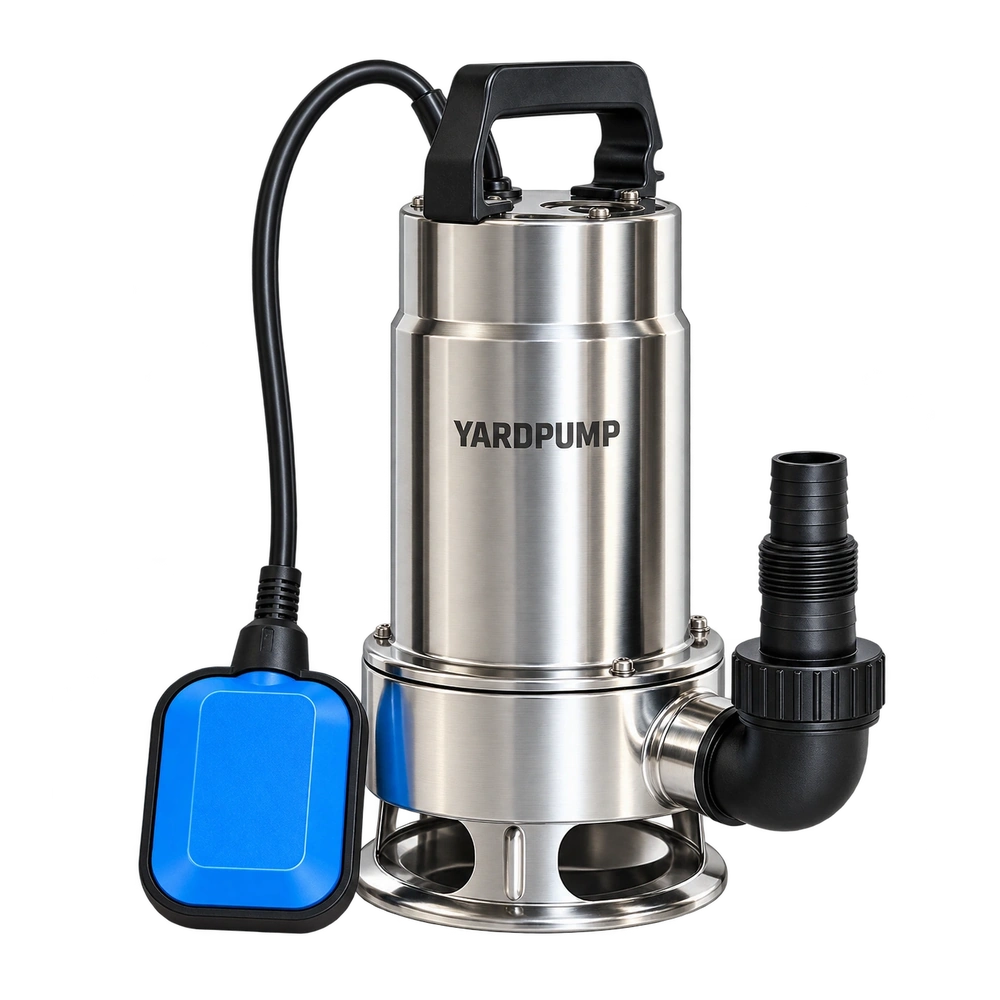
A buyer wants to add a smart plug to a portable pump and control drainage from a phone. That is a switching request, not yet a complete automatic pumping system. A typical smart plug does not know the water level, inlet condition or permitted pump duty. Local level control, dry-running protection and electrical safeguards still need an appropriate design.
What the remote command establishes
Within its approved application, a smart plug can connect or disconnect power and offer scheduling or remote access. It does not add missing sensors to the pump. An application showing “on” may mean only that a relay is closed; it does not establish that water is moving.
Power restoration also deserves attention. Some pumps start immediately when supply returns, while some controllers require a reset or retain a different state. Assess the combined plug, pump and controller. The feature list of one device cannot establish the behaviour of the whole installation.
For a drainage task, an incorrect assumption about restart behaviour can leave the area unprotected or create an unexpected start during maintenance.
Do not compare amperes without the load category
Motor starting and running differ from a simple resistive load. A plug's maximum current may apply to a particular load category. It is not universal permission to switch any motor drawing less than that current in normal operation.
Confirm motor-load suitability, starting-current capability, switching frequency, environmental limits and the manufacturers' compatibility requirements. A recurring relay failure should not be addressed merely by selecting a plug with a larger headline number.
Fixed wiring, earthing, protection and connections in wet locations require qualified personnel and compliance with local requirements. Covering an indoor device with a plastic bag does not give it an appropriate enclosure rating. Do not connect or disconnect live equipment beside standing water or leave extension connections where they can become wet.
| Condition | Behaviour to establish |
|---|---|
| Network unavailable | Local level control and protection remain effective as designed |
| Power restored | Restart, remain stopped or require an intentional reset |
| Water below the permitted level | Stop by an appropriate local control |
| Level continues to rise | Alarm and any required backup response |
Keep essential protection local
Drainage demand can increase during severe weather, when communications and power may also be less reliable. Necessary local controls should function as designed without a cloud connection. Remote access can add convenience and information, but should not be the only means of stopping an unsafe condition.
Do not bypass an existing float merely to make phone control easier. Any change must belong to a manufacturer-approved complete control arrangement with the necessary protective functions retained.
A thermal protector does not replace low-level control, and an RCD does not establish normal pumping performance. These devices address different problems. Calling each one automatic does not make them interchangeable.
Accept a state table, not just an application screen
For a hypothetical validation, assess commands at low, normal and high water levels, then review the approved response to lost communications, power restoration and sensor faults. Fault testing belongs to competent personnel in suitable facilities. It is not an instruction for household users to disconnect live wires.
Record the physical pump response and alarms. If the installation has no flow feedback, state the limitation explicitly: a remote switch indication is not confirmation of successful drainage.
For unattended property protection, assess the consequences of failure and whether a backup pump, independent high-level alarm or alternative supply strategy is needed. A remote button alone does not address those consequences.
Make the sales claim match the function
Distributors can offer remote control as an option while identifying the compatible pump, environment and control arrangement. Avoid presenting a generic smart-plug combination as a guaranteed flood-prevention system.
Commissioning should verify the discharge route and actual pumping as well as the control interface. Routine checks still include cables, connections and level devices. An online application cannot detect every mechanical obstruction or external return-water path.
The useful result is a clearly defined system: who or what requests operation, which local conditions permit it, how it stops and what happens when communications or power fail.
Frequently Asked Questions
Can phone-based switching replace a float?
No. It depends on human action, communications and device state rather than providing equivalent local level control.
Is a current rating above running current sufficient?
No. Motor starting, load category, switching frequency and compatibility must also be confirmed.
Should the pump stop or continue after losing the network?
There is no universal answer. Define and validate the response for the task and its risks before delivery.