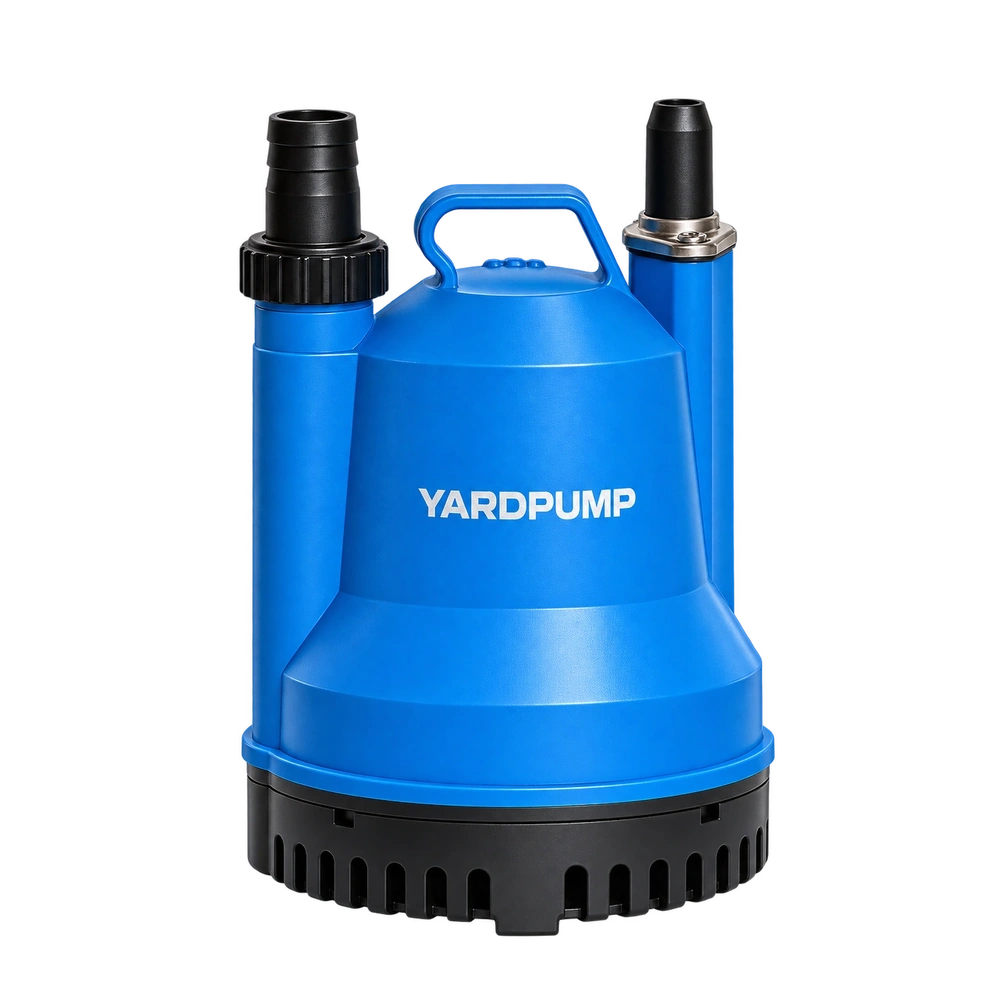
The basement and sump are above freezing, the motor can be heard, yet the water level keeps rising. In a typical winter installation, the overlooked restriction may be outside: a frozen discharge line or blocked outlet. A warm pump does not establish an open water route. Nor can an ice blockage be treated as ordinary pipe friction that a more powerful pump will overcome safely.
The frozen section may be far from the motor
Wall penetrations, exposed ground-level pipe, low bends and the final outlet experience different conditions from the basement. Residual water can collect and freeze between cycles. Snow and frozen discharge around the outlet can create another obstruction. Indoor observation describes only part of the installation.
Whether a line drains after stopping depends on its slope, supports, check valves, outlet level and arrangement. There is no universal instruction to retain water everywhere or remove every check valve. Those changes also affect backflow, cycling and the approved installation. Assess the complete system rather than solving one symptom by creating another.
A blocked outlet is not a normal operating duty
Obstructed delivery can leave the pump operating at very low flow. Power and temperature behaviour then depend on the specific design and conditions. Even a functioning thermal protector does not convert an obstructed discharge into an approved continuous duty. Repeated starting and thermal stopping do not demonstrate effective drainage.
For illustration, suppose the level barely falls during each run, no discharge is visible outside and the motor eventually stops on protection. This supports investigating the discharge route, but cold weather alone does not establish an ice blockage. A faulty check valve, ordinary obstruction or another hydraulic fault can produce related symptoms.
Keep people and the property outside the investigation risk
If water approaches electrical equipment, obtain professional isolation and drainage help from a safe position. Do not enter potentially energized water to inspect the pump. Where an obstructed installation has been identified, stop abnormal operation and arrange appropriate alternative drainage, alarms and attendance. A repeatedly overheating unit is not a dependable flood-management plan.
From accessible safe locations, observe snow, ice, the outlet and visibly crushed pipework. Record conditions against the times the pump runs. Do not disconnect pressurized fittings. Flames, boiling water and improvised pressurization are not suitable general remedies: they can damage components or expose people to discharged water.
Restored flow needs a complete-system check
The responsible installer or service provider should select the remedy for the actual pipe material, accessories and site. A little water at the outlet does not prove full recovery. Partial ice can continue reducing the effective area, lengthening pumping cycles or contributing to another blockage.
After restoration, check delivery, level reduction, non-return operation and cycling. Inspect connections that may have experienced freezing expansion, movement or abnormal pressure. Cracking, leakage or electrical abnormalities require continued isolation and the manufacturer's inspection process. Simply resetting the equipment and leaving is insufficient where damage remains possible.
Winter design is more than adding insulation
Insulation can slow heat loss, but it cannot guarantee that a water-filled, inactive section will remain unfrozen under every exposure. Examine exposed length, trapped-water low points, outlet clearance and maintenance access. Select a freeze-management arrangement suitable for the whole installation rather than relying on one material around the pipe.
Where a purpose-designed freeze-relief or alternative-discharge fitting is used, verify its intended application, destination and installation conditions. Do not imitate it by drilling the pump housing or an arbitrary pressure-containing pipe. Trace heating, fixed electrical alterations and building-drainage modifications require the appropriate qualified design and installation.
Give distributors a route, not just a model number
Keep a sketch from the pump and non-return components through the wall to the final outlet. Identify low points, exposed sections and accessible inspection locations. Explain what the user should observe in cold weather and when an obstructed outlet or abnormal pumping cycle requires maintenance assistance.
This article concerns a running installation with an outdoor restriction. It does not replace the pump's winter-storage instructions. Residual water freezing inside a stored pump and ice blocking an installed discharge are separate failure paths. Either can occur without the other. Checking them separately prevents a warm basement from giving false reassurance about the drainage system outside.
Frequently Asked Questions
Can a higher-head pump force the ice blockage clear?
Do not use increased pressure as a remedy. Remove the obstruction safely and assess the condition of the complete installation.
Does a little water outside prove the pipe is clear?
No. Partial freezing may still restrict the passage. Confirm actual drainage capability and the falling water level.
Does pipe insulation guarantee winter protection?
No. Temperature, retained water, flow and exposure duration still matter. The whole installation requires an appropriate design and maintenance plan.