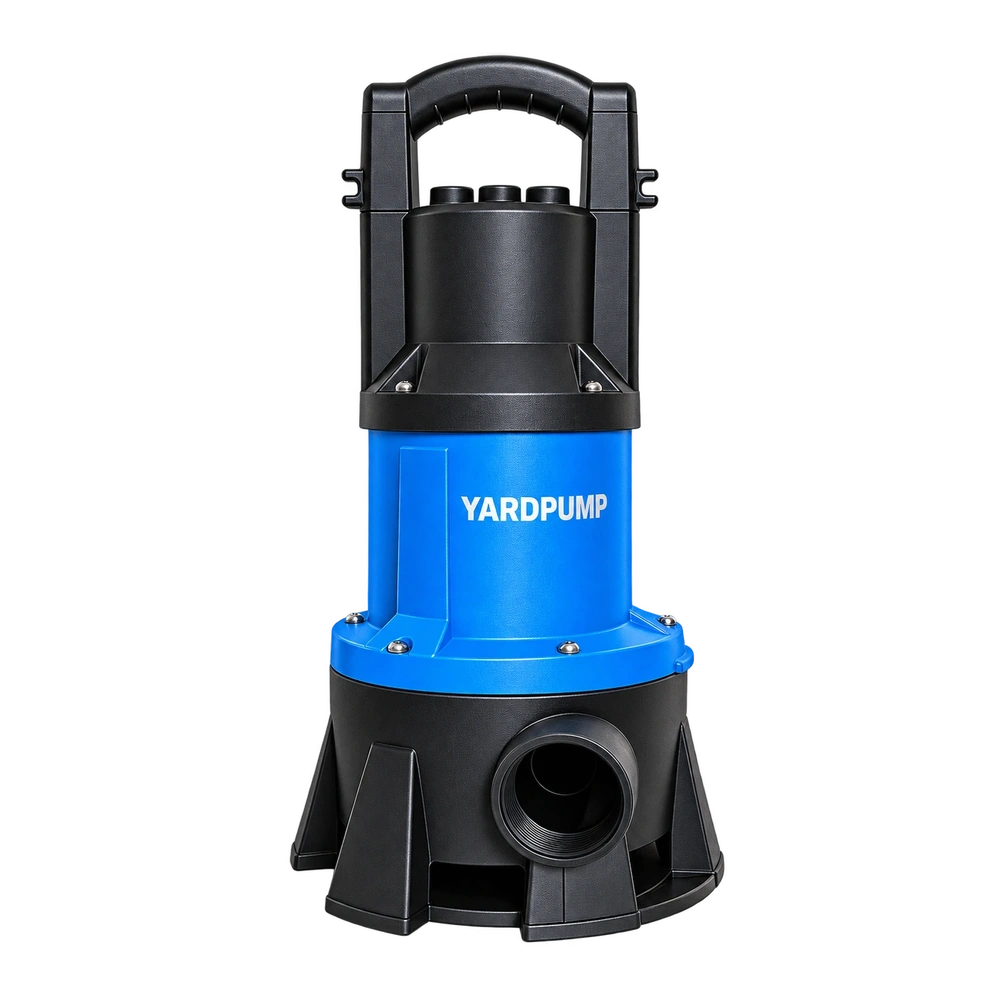
After a replacement, the sump lid hums and the float occasionally fails to fall. Check whether the pump housing touches the basin wall. Contact can transmit vibration and reduce clearance for the float or cord; pipe side load can also move the pump. Isolate power and restore a stable, interference-free installation before assigning the noise to the pump itself. Wedging soft material beside the housing is not a complete repair.
How wall contact transmits vibration
Motor and hydraulic vibration enters the thin basin through a contact point, letting the wall act as a sounding panel. A rigid riser or twisted hose can push the pump sideways. A float that clears while still may touch the wall or cable under startup reaction and flow.
Contact creates a vibration path through the housing, basin and lid. A relatively broad, flexible lid can turn a modest vibration into an audible hum. That does not by itself establish greater rotor imbalance. At the same time, the small wall gap may be the space required by a float, guide or cord. One installation issue can therefore cause both symptoms, although noise and control behaviour still need separate confirmation.
Inspect the entire installation envelope
Isolate power, confirm all feet rest on a stable base and the discharge is independently supported. Check dynamic clearance around housing, float and cable. After restoring the approved arrangement, observe a complete controlled fill, start, drawdown, stop and drainback cycle without holding the running pump by hand.
Check the base surface, support under every foot and any sideways pull from the discharge pipe. A top-down photograph is insufficient: the lower housing, outlet fitting or float travel may extend closer to the wall than the handle. With power isolated, inspect the full moving envelope and arrange the cords and hose. Use an appropriate bracket or support where the design requires one. Do not drive wedges between the housing and basin as an improvised restraint.
There is no universal wall-gap figure independent of the design. A guided vertical float and a tethered float need different space, and hose inflation during starting can alter the connection position. Acceptance should establish no contact, obstruction or gradual movement during the permitted operating cycle, not merely record a resting clearance. A basin that is too small may need a compatible control arrangement or a different pump envelope rather than a forced fit.
Clearance depends on the control geometry
Example: the housing is 15 mm from the wall at rest but hose torque shifts it to 3 mm at startup and it taps the basin. Removing twist and supporting the hose holds the gap. Values illustrate dynamic observation, not a universal clearance.
After a safe corrected installation, the installer can compare sound with delivered water. For illustration, reduced lid hum after separation from the wall and independent pipe support, with unchanged discharge, supports a transmission-path explanation. Persistent noise, rubbing, abnormal delivery or protection trips requires further service. Do not label every sound as resonance or reach into a running sump to hold the pump and listen for a change.
Separate installation correction from pump repair
For replacement sourcing, provide dimensioned site photographs and the control type, then check the sample with its planned pipe connection. Handover should identify foot support, pipe restraint, cord route, complete switching travel and removal access. Those observations help a distributor distinguish installation correction from pump repair. Extra weight, a thicker housing or more power cannot substitute for adequate space and correct support around a compact sump pump.
Frequently asked questions
Will a soft pad eliminate vibration?
Only an approved stable material that preserves inlet clearance may be used.
Is hand-moving the float enough?
No. Observe clearance through actual filling and pump cycles.
Will a heavier pump solve it?
Weight alone does not address base, pipe side load, basin size and control geometry.