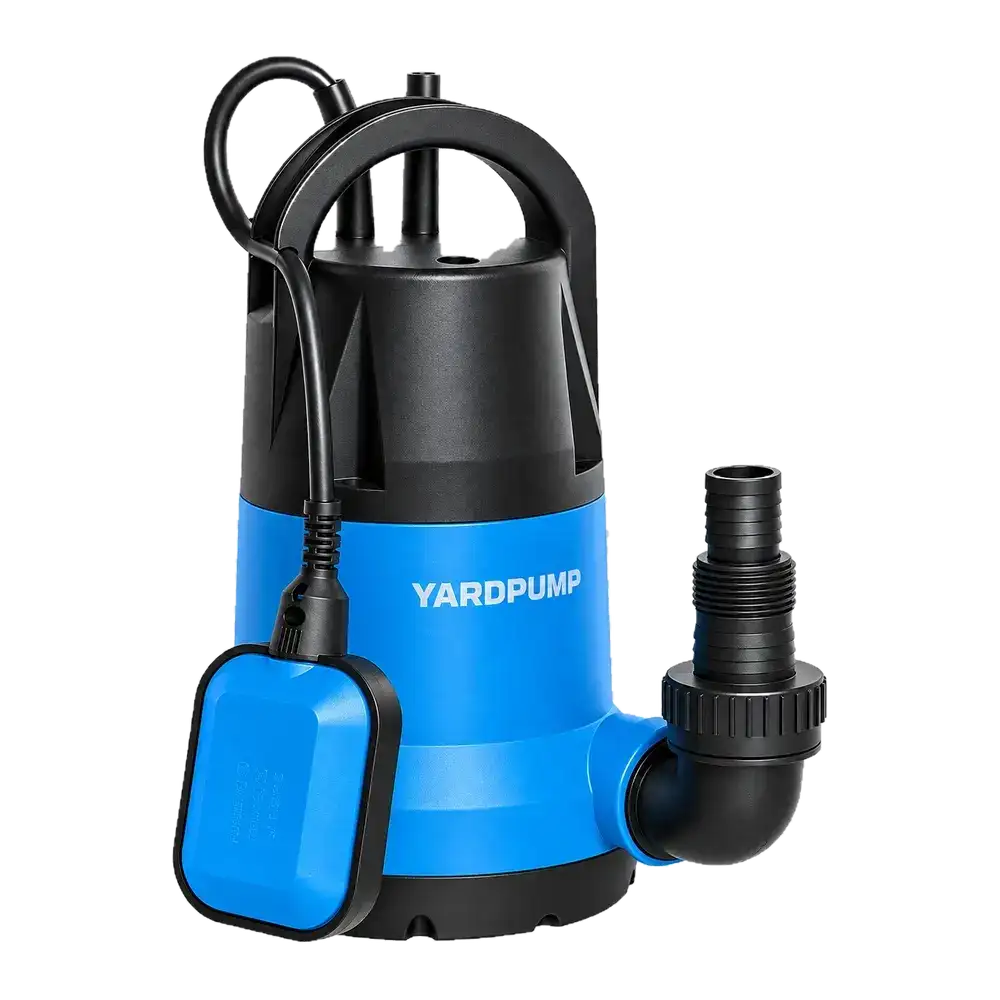
Consider two sump basins with the same advertised capacity and the same type of pump. In both, the measured start and stop levels are twelve centimetres apart. One basin flares outward above a narrow lower section, and its pump starts more often. Before buying a larger pump, find the volume between the actual switching levels. Water below the stop level stays in the basin. Space above the start level is a separate reserve. Neither belongs in the amount the pump clears each time. The same vertical distance can contain different amounts of water in different parts of the basin.
Put all levels on one drawing
Choose a fixed datum, such as a known point at the rim. Record the basin floor, inlet invert, pump-on level, pump-off level and high-water alarm level relative to it. Mark steps in the liner and where the housing or fittings occupy space. Measure the liquid surface when the switch actually operates under a controlled wet test allowed by the installation instructions. The top of a float body is not the water level. Measurements referenced to different points on an uneven floor may appear comparable when they are not.
If you have dependable inside dimensions, divide the switching band into layers. Multiply the average effective horizontal area of each layer by its thickness and add the results. Split the calculation at steps, and use smaller slices where a continuous taper changes area quickly. For a complicated liner or a heavily occupied pit, ask for a volume-by-level chart or have suitable personnel calibrate it with measured additions of water. Keep other inflow and losses accounted for during that test. A marked bucket cannot measure water that entered from elsewhere at the same time.
Work through the volume and the timing
Suppose the first six centimetres above the stop level have an average net area of 0.14 square metres, and the next six have an average net area of 0.26 square metres. Those layers hold about 8.4 and 15.6 litres respectively, or 24 litres together. Using the larger area throughout would give 31.2 litres. The difference comes from the basin geometry. It does not show that the pump delivered more or less than its rating.
Continue the illustrative example with a steady inflow of 12 litres per minute and a pump delivering 60 litres per minute at the installed head. Assume no appreciable drainback. The stopped pump takes about two minutes to get back to its start level. While running, water in the basin falls at a net 48 litres per minute, so the pumping period is about half a minute. That is a cycle of about two and a half minutes. Real inflow, drainback and delivery can change. Compare several cycles in representative conditions rather than treating these numbers as permitted starts for any model.
Do not trade away the reserve
If the pump short cycles, look for an active band squeezed into the narrow section, water returning on shutdown or restricted float motion. The installer can then compare approved changes to the control location, usable basin section or pump selection. Raising the start level reduces the margin to an inlet, alarm or overflow. Lowering the stop level may violate operating water levels or cooling requirements. Do not extend a tether, bypass an alarm or run below a permitted level just to gain more drawdown.
For acceptance, write down the start and stop elevations, the observed inflow conditions, the run time and the amount of water that returns after shutdown. Compare the resulting cycle with the instructions for the actual equipment. If the pit still rises during peak inflow, check the system's sustained discharge capacity separately. More storage can buy response time, but cannot make up for a pump that cannot keep pace over a sustained period.
Frequently asked questions
Can I use the diameter just below the lid?
Only for the part of the basin where that diameter applies. Estimate the net area in each layer within the switching band.
Does the formula work when rain intensity changes?
The volume estimate still helps, but the timing changes. Use the inflow and installed delivery for the period of interest or observe actual cycles.
Will a larger pump always start less often?
No. A larger pump may finish a run sooner without changing how much water must refill the band or how quickly that water arrives.