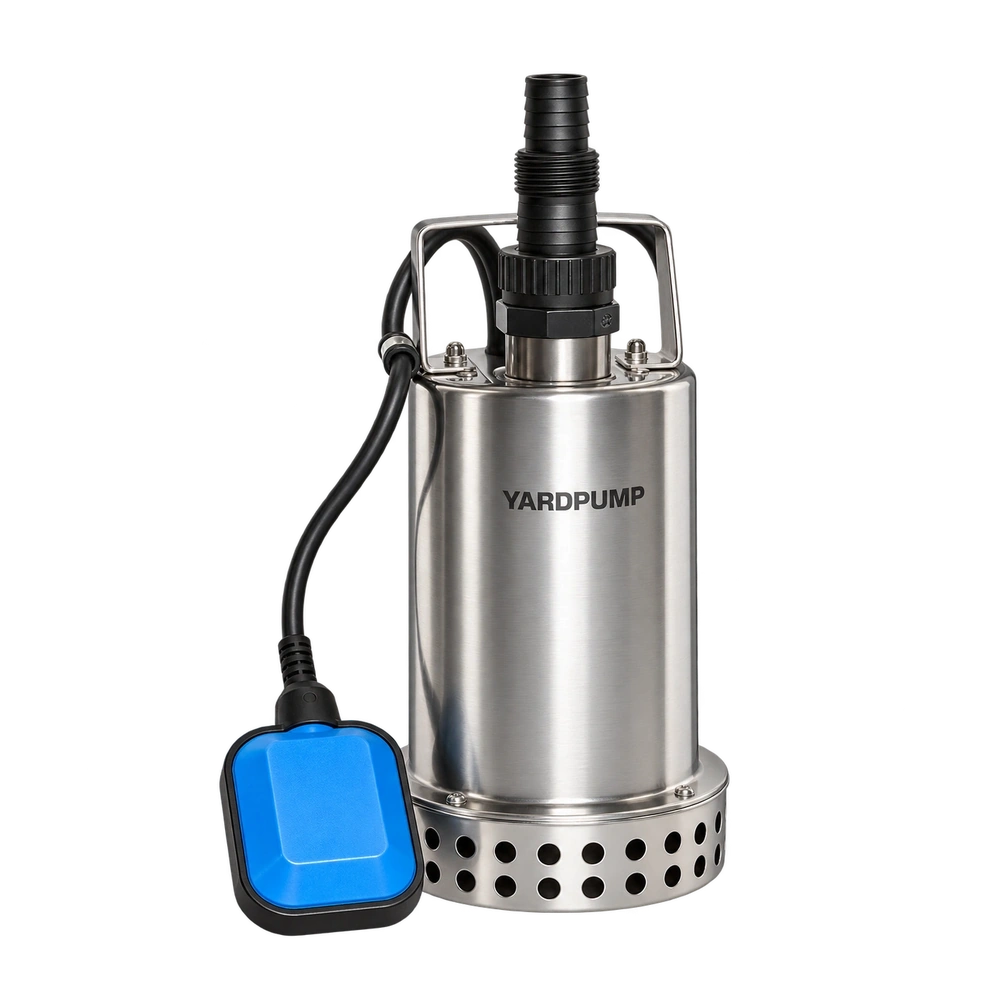
A familiar pump problem often starts with a simple observation: A user needs temporary water for irrigation from a shallow stream. Placing the intake on the bed draws grit; suspending it too high risks vortexing or loss of submergence.
The useful answer is not to choose a larger rating or accept a supplier's single measurement. Support the intake above the bed and below the lowest expected water level, with a screen sized for debris and service access. Verify that abstraction and discharge are permitted locally. This keeps the decision tied to the actual liquid, installation, component revision and operating point.
The decision first
Support the intake above the bed and below the lowest expected water level, with a screen sized for debris and service access. Verify that abstraction and discharge are permitted locally.
The first step is to freeze what is being compared. Record the pump model or component revision, liquid condition, supply, speed, installation and test method. If two samples are tested under different water levels, temperatures, hose layouts or electrical conditions, the result cannot isolate the feature named in this article.
For a service complaint, preserve photographs, labels, marks, deposits and measured values before cleaning or dismantling. For a purchase change, connect the drawing, BOM, supplier lot, sample and production cut-in. That evidence prevents a plausible explanation from becoming an unsupported conclusion.
Why the symptom can be misleading
Bed sediment is densest near the bottom, while floating leaves collect near the surface and banks. The pump needs enough submergence to avoid air entry, but a fine screen raises loss as it clogs. Stream level and velocity can change the load on hoses and supports quickly.
The observed symptom is therefore a system response. A dimension can influence hydraulics, mechanics and heat at the same time; a control component can change both operation and the evidence seen by a technician. The correct question is not whether one feature is “good” or “bad,” but what changes at the agreed duty and which limit becomes controlling.
A practical check plan
| Check | What to verify | 中文现场提示 |
|---|---|---|
| Water range | Record normal and lowest expected depth | 记录正常及最低预期水深 |
| Bed clearance | Support the intake above movable sediment | 让进口高于易移动沉积层 |
| Screen area | Balance debris exclusion with low restriction | 平衡杂物拦截与低阻力 |
| Anchoring | Secure pump, hose and retrieval line against flow changes | 固定水泵、软管和提拉绳以应对流速变化 |
Carry out the checks in a sequence that protects evidence. Begin with identity and external conditions, continue with non-destructive measurements, and dismantle only when the earlier results justify it. Use calibrated or otherwise controlled instruments appropriate to the decision. Record raw values as well as the final pass/fail judgment.
When several factors may be involved, change one controlled factor at a time. Keep an approved reference unit where possible. A matched comparison usually explains more than a single result against a broad catalogue tolerance.
Worked example
Example only: survey the lowest expected depth, set the intake on a perforated cradle 100 mm above the bed, and observe turbidity and screen differential during a trial. The 100 mm is only a trial assumption, not a universal dimension.
Write the example assumptions into the report. Show the starting condition, what was changed, and the measured response. If the result depends on an assumed dimension, water level, voltage or material condition, label it as an example rather than presenting it as a YARDPUMP model specification.
How to turn the result into a decision
For selection, confirm that the installed duty remains inside the pump and accessory limits, then document the setup the user must reproduce. For procurement, turn every critical finding into a drawing note, inspection characteristic, approved sample or change-control requirement. For after-sales work, distinguish a confirmed cause from a symptom and an untested possibility.
Acceptance should cover the complete assembly where the interaction occurs. A loose component may pass a dimensional check and still behave differently after clamping, immersion, heating or loading. Conversely, a failed assembly test does not automatically identify which component is defective; it tells the team where a controlled comparison is needed.
Boundaries and safety
Do not present this as permission to take natural water or disturb a watercourse. Local environmental, landowner and water-use requirements must be checked.
Industry mechanisms in this article are not specifications for every YARDPUMP model. Use the latest approved drawing, datasheet, manual and compliance file for the exact model and revision. Stop any test that creates unsafe heat, leakage, unstable support or electrical exposure.
Frequently asked questions
Is a deeper creek intake always more reliable?
Too low draws sediment; too high can expose the inlet. Set its range from minimum water level and bed clearance.
Will a fine screen remove all sediment?
It clogs more readily and is not a substitute for fine filtration. Match screening to the allowable solids and cleaning access.
Should I recheck after rain raises the stream?
Yes. Reassess anchoring, debris, bank safety and water quality.