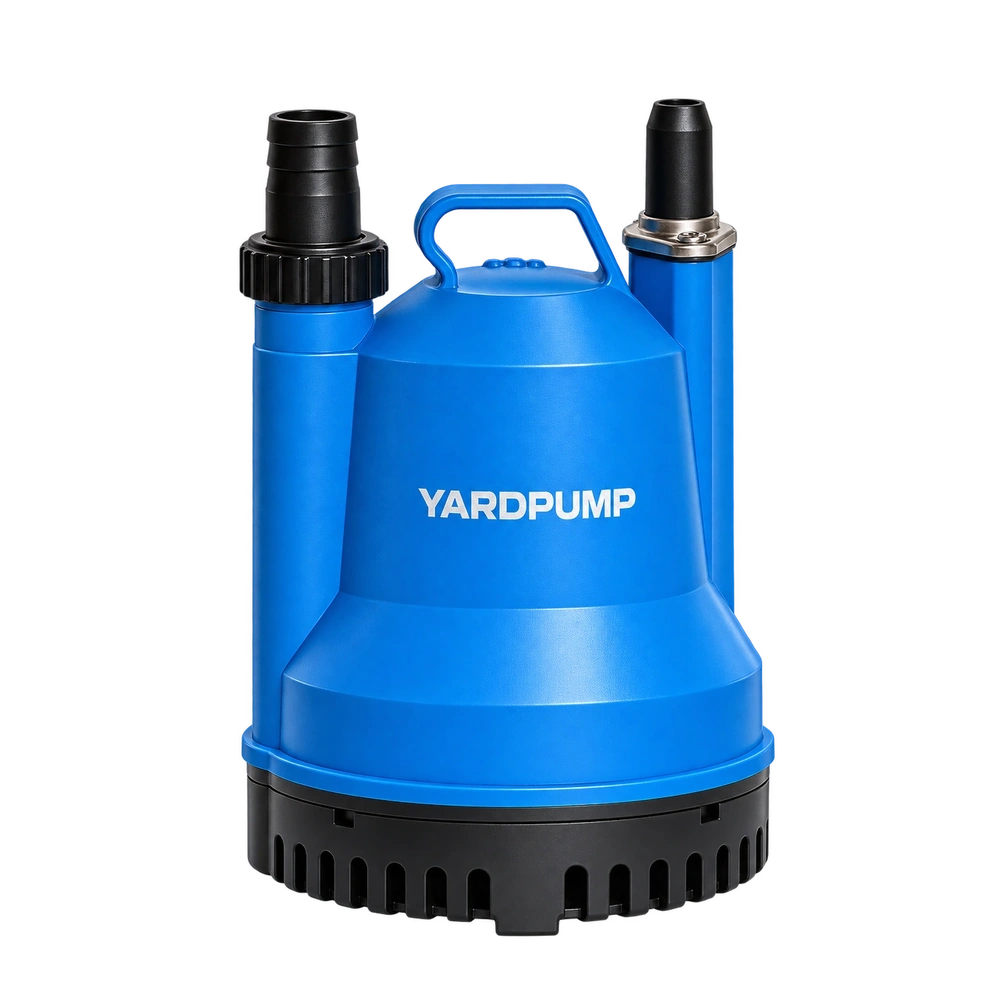
Suppose a low-level submersible pump can remove shallow water from a hard garage floor. On a rubber mat, its motor still sounds as if it is running, but discharge quickly stops. Stop and isolate the pump, then use a firm, level surface allowed by the instructions as a comparison. The mat may cover part of the path that water uses to enter the pump. The motor sound alone cannot establish that the impeller is faulty, and there is no benefit to leaving the pump running without discharge while waiting for it to recover.
How a soft surface can change the inlet
A low-level pump may take water through openings near the bottom edge, around the base, or underneath it. Identify the openings for the actual model. On a firm surface, the inlet gaps designed into the base can keep their shape. A flexible mat, loose liner, or surface with a soft spot can deform. Water movement can also pull the material against an opening. As the gap closes, the available area falls and the pump may no longer receive enough water. Placing the pump on a mat can also raise the inlet. Separate that change in starting depth from an opening that is physically covered.
For a geometric example, suppose the width of a section of inlet gap stays constant while its height falls from 3 millimetres to 1 as the mat deforms. That section then has about one third of its original area. Contact at a particular spot could reduce it further. This only illustrates the change in area; it does not predict flow or give a dimension for any model.
Set up a comparison that answers the question
Stop and isolate the equipment according to the site and product instructions, working from a safe, dry position. Do not touch the inlet, pull the mat, or lift the pump while it is energized or capable of restarting. Once isolated, inspect the base for impressions, a folded edge, or trapped particles. Clean accessible screen openings as allowed and photograph the mat edge and the actual inlet together. A mat may spring back when the load is removed, so a lack of marks does not rule out contact.
Set the pump upright and stable on a permitted firm, level floor. Keep the same hose and discharge point. Match the starting water level relative to the inlet and meet the pump's required starting and cooling conditions. Check for a kink introduced when the pump was moved. Within an approved short run, note when the flow becomes steady, how the water level falls, and whether discharge stops again. If the original surface must stay in place, there is no need to reproduce a no-flow run deliberately. Inspect the contact with the pump isolated and have suitable personnel confirm an approved support or a different layout.
Use the result to decide what to change
If flow returns on the firm surface, remove the soft surface where it can cover the inlet or use a stable support allowed by the instructions. Recheck the residual water level, starting level, and stability after the change. Raising the base can leave more water behind. Avoid loose bricks or slippery offcuts as improvised supports. Leave the original screen and housing intact.
If there is still no discharge on the firm surface, record starting depth, hose route, discharge elevation, and whether any required venting or starting procedure was followed. Qualified service can then check for blockage, air entry, excessive head, or a wet-end problem using the approved procedure. For a dealer, a comparison clip with a base photo and starting water depth is more useful than a report that the motor runs. It helps decide whether to correct the installation or bring the unit in for examination.
Frequently asked questions
Do holes in the mat guarantee that water can get in?
No. Check whether those holes align with the actual inlet, stay open under load, and leave no loose edges that can fold over it. Prefer a support the pump instructions allow.
Can I add a soft mat if the pump already has rubber on its base?
The original base is part of the pump design. An extra mat can close a gap that the design leaves open. Use the instructions and the actual inlet conditions to decide.
Why can the pump start on a hard floor but leave water under the mat?
The trapped water may not connect to the inlet, or the available level may already be below the permitted operating level. Guide the water to a suitable collection point and follow the starting, stopping, and residual water conditions for the model.