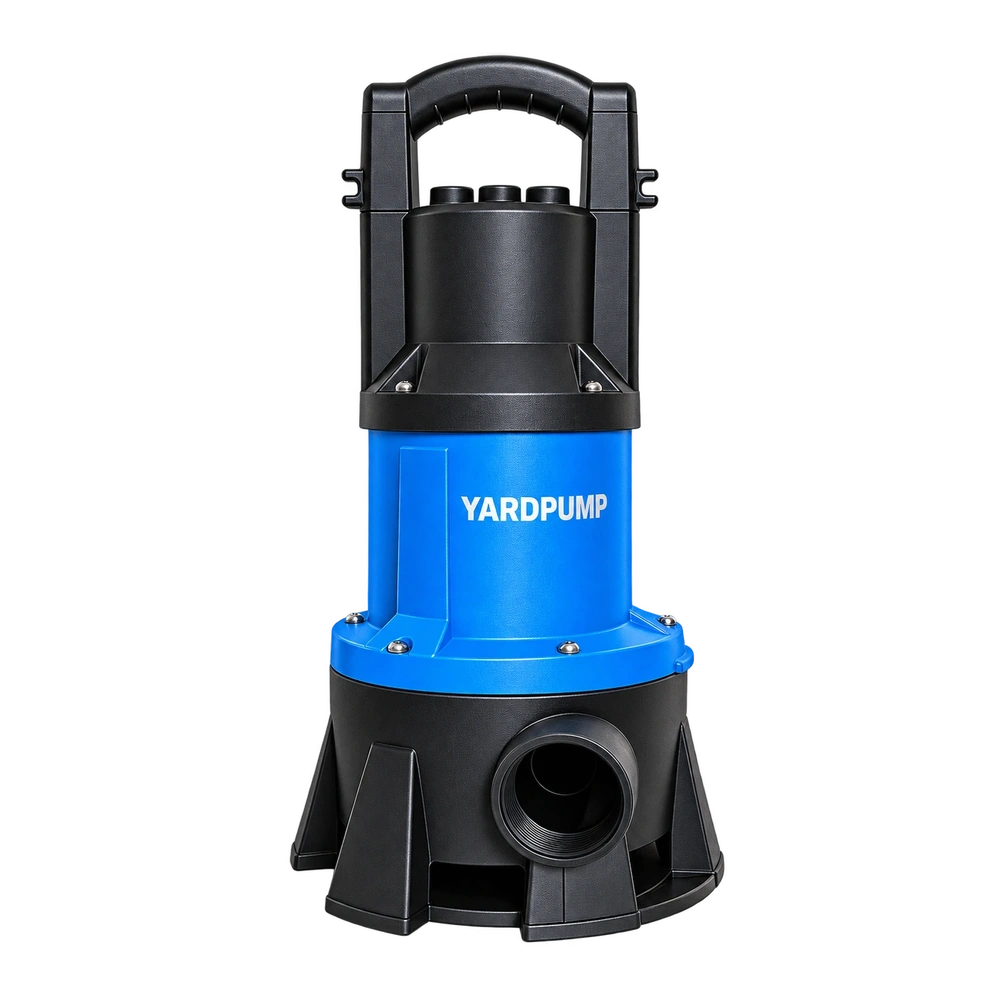
Suppose a low-level pump is used in a shallow tray. It delivers promptly when restarted a few minutes later. After approved cleaning and draining, it takes longer to deliver the following day at what looks like the same depth. Does that prove lost capacity or an inadequate start level? Check the initial liquid in the pump separately from the initial liquid in the hose. Both can influence first delivery. A comparison needs repeatable conditions within the instructions for the exact pump.
Distinguish the spaces that need to fill
For a centrifugal drainage pump, water must reach the relevant inlet and impeller passages. Air may also need to leave through the intended paths. If the pump retained water from a previous cycle, or if it has a design feature intended to retain it, the next initial condition can be different. A damp exterior does not demonstrate what remained inside. Do not assume every pump retains water reliably or is rated to operate with a dry chamber or below the specified starting depth.
The hose can make the same observation for a different reason. If part of it is full on the second run, less volume needs to be moved before the water arrives. A changed outlet height, check valve, air pocket, hose route or inlet obstruction can also matter. Define what is timed: delivery at the pump, first water at the destination, or sustained usable output. Those are different observations. A residual water figure after pumping is not evidence that the pump can start from that depth.
Compare within the approved starting conditions
Qualified staff can use a safe permitted bench or installation with the applicable starting water depth. Set the pump at the same approved position, measure depth from a repeatable datum and hold liquid, supply, hose route and discharge height comparable. Record whether each unit was recently run or was drained and positioned as instructed. Separately document the initial state of the hose. Isolate power safely and relieve pressure as directed before moving equipment or changing a connection. Do not open a sealed pump to fill its cavities or start it dry to force an extreme comparison.
For illustration, one run is made after normal operation and another after the pump has been drained and stored as permitted. In both cases the external hose starts empty and the inlet is at the same approved depth. If the time to stable delivery repeatedly differs, there is a reason to look at the pump's retained water or venting conditions. If the outlet height, check valve or actual start depth was not recorded, correct that uncertainty first. The example gives no general waiting period and does not prove self-priming capability. If permitted delivery cannot be established or the pump begins behaving abnormally, stop as instructed and have qualified service examine it, rather than waiting for protection to trip.
Preserve the starting conditions buyers care about
If the job requires restarting at low water, ask for the exact starting depth, allowed pumping range and residual water under their own test conditions. Keep a clear record of which data were obtained after storage and which were obtained during repeat cycles. A video showing a recently wetted unit restarting may not represent first use following approved draining. A purchase should say what the equipment must deliver and under which initial condition. This makes a startup comparison useful without turning delay into an unsupported performance rating.
Repeat both initial conditions. Record the initial orientation and the first sustained discharge, with any sound or first bubbles as observations only. If the two sets of results overlap, do not use one slow run to infer a design difference.
Frequently asked questions
Does a wet exterior show that the pump chamber is full?
No. Record the prior operating and draining condition without opening a sealed unit.
Can a faster second start justify using it below the stated start level?
No. Follow the starting conditions for the approved configuration.
Does a shorter wait at the outlet demonstrate higher pump efficiency?
No. First delivery time and stabilized input-to-water performance describe different parts of operation.