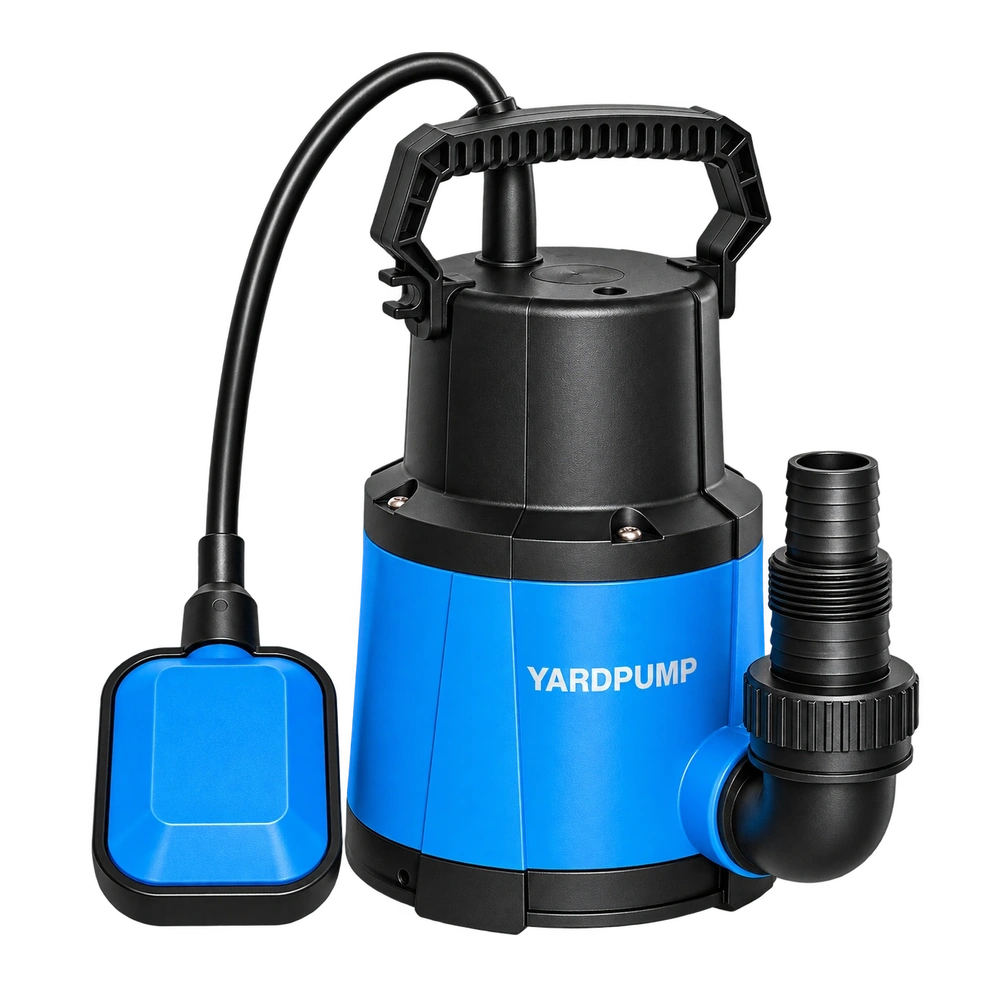
During an outage, a portable generator is brought in to power a small utility pump. The pump starts on a suitable utility supply, but on the portable source it hums briefly and stops. The generator’s rated running watts appear sufficient. Have a qualified person check whether the supply arrangement is permitted and what happens as the motor attempts to accelerate. The continuous rating alone does not establish motor starting capability. Voltage sag, frequency dip, current limiting, another load starting at the same time and a pump fault call for different checks.
Tell engine slowdown from inverter output limiting
For an induction motor, synchronous speed depends on supply frequency and the number of poles. The actual shaft speed also depends on slip and load. A conventional engine-driven alternator may slow briefly as load is applied; its output frequency can dip, and its voltage regulator also has to respond. An inverter generator can decouple output frequency from engine speed. Depending on its design, it may retain frequency while limiting current, reducing voltage or switching off. Do not interpret every portable supply as though it were the same machine. The pump’s variant, starting equipment, hydraulic loading and mechanical condition all affect the current and time needed to reach speed.
Consider three hypothetical traces for a 120 V, 60 Hz pump supply. In the first, an engine-driven alternator falls to 96 V and 53 Hz during starting, then recovers in 0.7 seconds. Investigate how the source responds to the load step and whether another load was present. In the second, the motor fails to accelerate as an inverter generator holds close to 60 Hz, the voltage drops and the source indicates current limiting. Check the inverter’s transient capability and approved load configuration. In the third, voltage and frequency remain within the pump’s permitted range but the motor still fails to accelerate on a suitable supply. Look at the pump and installation. The traces describe possible observations. They set no acceptance limits.
Make the test safe before trying to reproduce it
Use a portable fuel-burning generator outdoors well away from buildings, with exhaust directed away from doors, windows and air intakes. Never run it in a basement, garage or other enclosed or partially enclosed space. Have qualified people make the connections and assess flood or shock hazards. Do not backfeed premises wiring through an outlet or defeat grounding or protection. Do not restart repeatedly to capture a fault, or touch wet equipment to make a measurement. If a safe and permitted temporary setup is unavailable, arrange suitable equipment or professional drainage.
A qualified team can check the pump and generator instructions, supply variant, short-duration and continuous load capacity, other active loads, and the wiring. Record what the source does before the start, during the load step and through recovery. Align the record with the pump command and whether delivery establishes. A display that updates slowly can miss a short dip. For a comparison, use an approved source and comparable hydraulic duty. Inspect an inlet or hose only after safe isolation and as the instructions permit.
Decide whether the supply or the pump needs work
Confirm which portable source can support the starting demand as well as the settled load. An unsuitable source calls for an approved alternative, not a higher protective setting. If the pump also fails on a suitable supply, continue the model’s electrical and wet-end diagnosis. Use a utility pump on a temporary source only if the model, supply and site permit that arrangement. Record the exact pair that was verified rather than assuming another similarly rated generator behaves the same.
Frequently asked questions
The generator is stable with nothing connected. Does that clear it?
No. Look at the voltage, frequency and current limits during the authorized motor start and recovery.
Frequency never changed on an inverter model. Why might the pump still stop?
Current limiting, voltage sag, a protective shutdown or a fault in the pump can still occur. A stable frequency alone does not rule out a supply issue.
Can I use the generator in a garage with the door open?
No. Use it at a suitable outdoor location away from building openings. Carbon monoxide cannot be detected by smell.