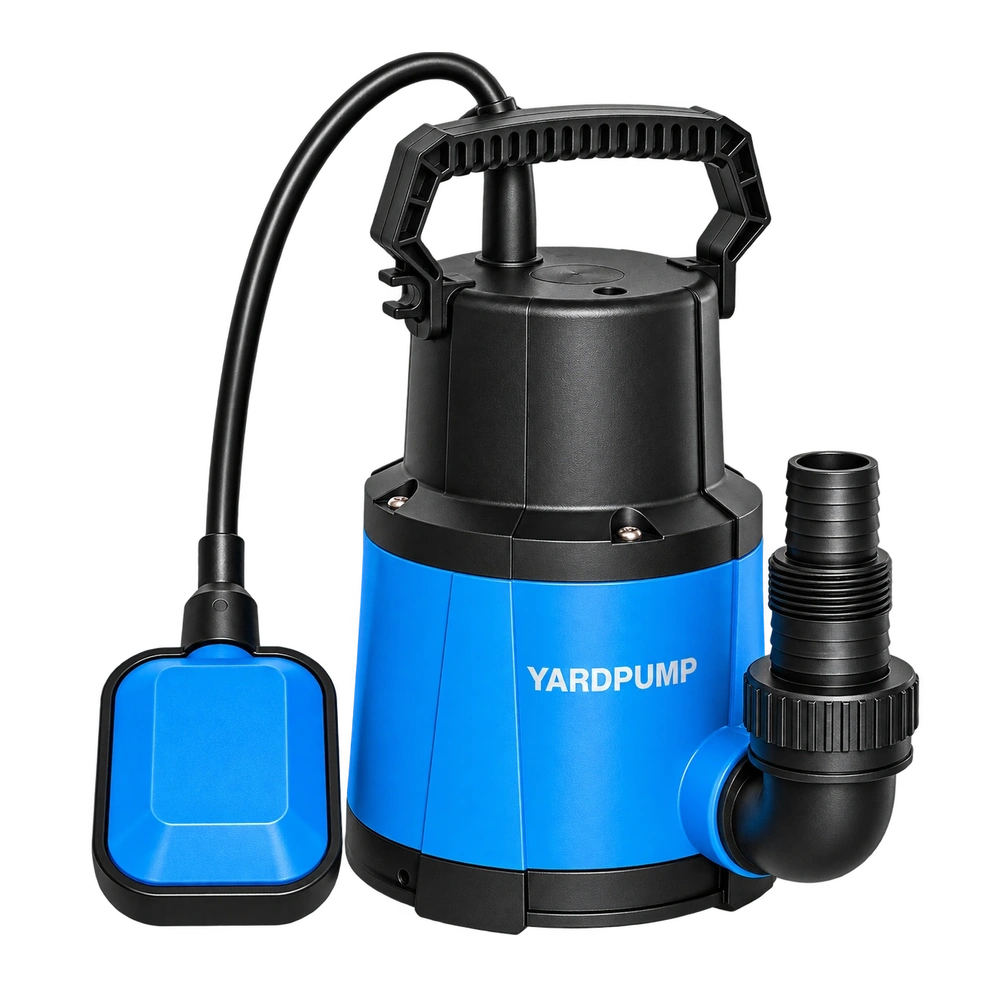
A replacement bearing turns smoothly on its own, but the pump shaft becomes tight once the bearing is installed and the housing is assembled. Buying another bearing may not solve the problem. An out-of-round or tapered seat, local burrs, or housing distortion during tightening can apply uneven loading to the outer ring.
Investigate the geometry and assembly conditions before blaming the bearing. One diameter measurement with a calliper does not establish that the complete seat is suitable.
Size and shape are different questions
A housing bore can have different dimensions in different directions and at different depths. One reading close to nominal says little about the remaining circumference. Wall thickness, ribs, mounting support and fastening sequence can also influence the shape after assembly.
Local outer-ring deformation can affect rolling contact and internal clearance, contributing to resistance, noise or heat. Those symptoms are not unique to bore distortion. Incorrect installation force, poor shoulder alignment, misaligned bearing seats, rotor contact and seal drag can produce overlapping symptoms.
The investigation should therefore follow the point at which resistance appears rather than starting with a predetermined cause.
Compare successive assembly states
Qualified personnel should electrically isolate the pump, manage stored energy and document its original condition before dismantling. Never reach into an energised unit or attempt to overcome binding through repeated starts or an oversized capacitor.
| Assembly state | What to record | What it helps distinguish |
|---|---|---|
| Bearing outside the housing | Identity, condition and rotation | An issue with the bearing itself |
| Installed before final fastening | Seating and change in resistance | Fit or installation damage |
| Fastened to the specified condition | Changes through the tightening sequence | Housing or support distortion |
| Complete rotating assembly | Seals, rotor and both bearing positions | Other sources of mechanical drag |
If loosening a cover makes rotation easier, that is a useful diagnostic observation. It is not permission to operate the pump with loose fasteners. Structural support, sealing and safety may depend on the specified assembly condition.
Measure the relevant geometry
Use the drawing’s dimensional and geometrical requirements and suitable verified measuring equipment. Readings in several directions and sections can reveal possible ovality, taper or local irregularities. Where necessary, a capable measurement team should use an appropriate roundness or coordinate measurement method.
A few two-point measurements cannot characterise every possible form error. State what the method can establish rather than describing a limited check as a complete roundness assessment.
As a hypothetical example, two perpendicular readings at the entrance differ by 0.03 mm, while deeper measurements show another pattern. This warrants investigation, but it cannot establish acceptance without the applicable tolerance and measurement uncertainty. The figure is not a universal allowable error for pump housings.
Record whether the housing was constrained as specified, whether temperature was stable and whether surfaces were clean. Plastic and metal seats can respond differently to temperature and assembly loads. A fit copied from another material is not automatically appropriate.
Correct the design or process, then verify it
If the bore is confirmed as the cause, evaluate tooling, machining, material, support and fastening conditions. Hand-grinding the seat larger may reduce binding while introducing inadequate retention or outer-ring creep. It is not a controlled correction without engineering approval.
Validate the chosen change with dimensional records linked to the assembled pump. Check rotation and the specified operating measurements, such as current, vibration, noise and temperature, while confirming that sealing and hydraulic performance remain acceptable.
Keep the bearing version, lubrication, fit and operating point controlled during comparison. Changing several parts simultaneously and attributing the result entirely to the housing leaves the cause uncertain.
For procurement, ask for linked dimensional, assembly and operating evidence. A bearing certificate does not establish a suitable housing fit. A smooth demonstration unit also does not prove consistency across every cavity or production lot.
Frequently asked questions
Can a bearing with greater internal clearance compensate for an oval housing?
Do not use a clearance-group change as a default remedy. Local distortion and misalignment may remain. The responsible designer should approve the complete fit.
Are plastic housings unsuitable for bearings?
That conclusion is too broad. Suitability depends on material, structure, dimensional stability, temperature and support. Material category alone does not decide it.
If tightening the cover causes binding, is the bore definitely out of round?
No. Cover alignment, shoulders, axial location and rotor contact may also change with fastening. Inspect the assembly in stages to establish the actual cause.