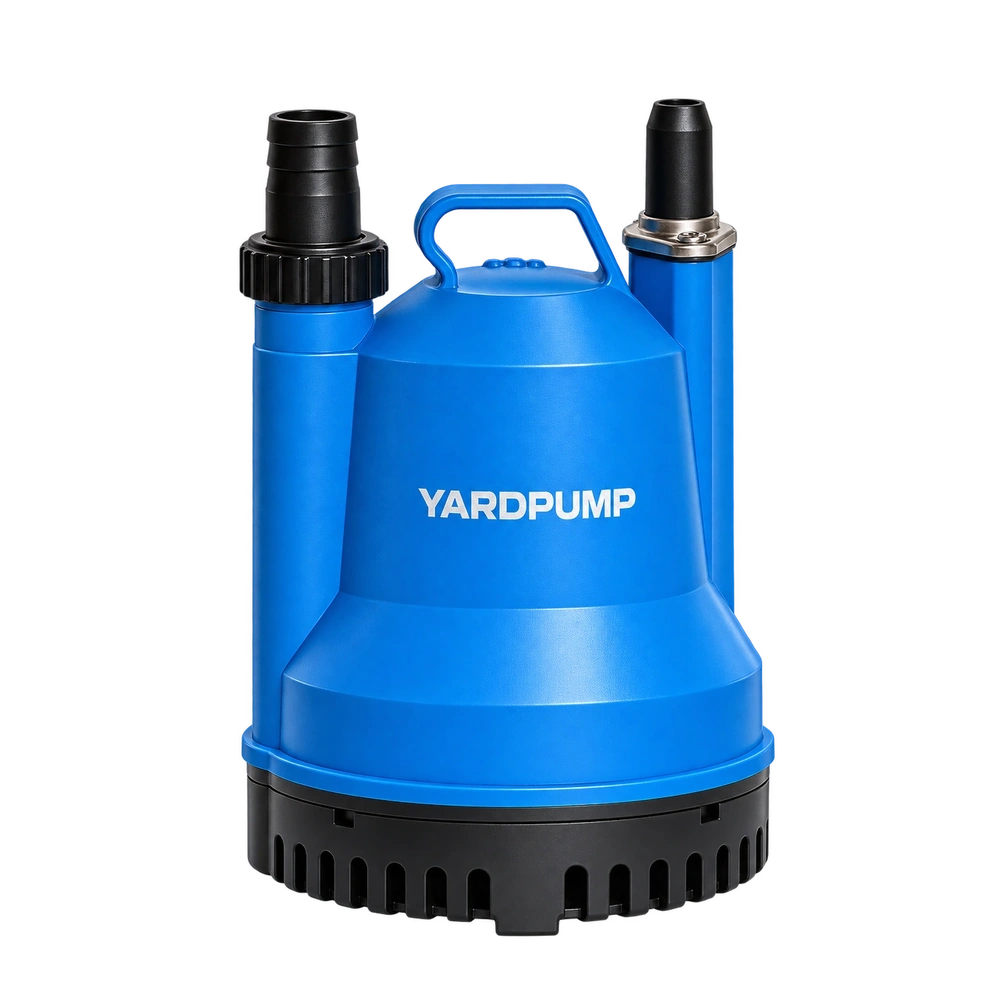
Consider a low resistance measurement on the shop bench. A pump terminal is already being measured with four leads, yet the resistance readings differ with test polarity. Before failing an aluminium winding connection, check the method. A four-wire arrangement largely excludes voltage drop in the test leads. Dissimilar-metal connections at different temperatures can still contribute a small voltage. That offset can matter when the signal from the resistance is already very small. Separate the measurement from the quality decision first.
Four wires and reversal solve different problems
In a typical four-wire test, one pair supplies the test current and another senses voltage across defined points. The sensing pair carries very little current, so its lead resistance does not enter the result as it would in a two-wire measurement. Junctions of different materials at unequal temperatures can generate thermal EMF. When that voltage stays approximately constant between readings, opposite test currents of equal magnitude separate it from the resistive drop. The resistive voltage changes sign; the steady thermal offset does not. Retain the signed voltages rather than making both values positive before calculating the difference.
For an illustration, suppose the instrument applies opposite currents of one ampere and reports plus 80 microvolts and minus 60 microvolts. The difference is 140 microvolts. Dividing by twice the current gives 70 microohms. The mean of the signed voltages is 10 microvolts, the constant offset in this example. These values are not a test current or tolerance for any pump terminal. If the temperature gradient drifts between readings, cancellation is incomplete. A moving probe can also change the reading independently of temperature.
Control the connection and temperature before judging a lot
This is an isolated bench test, not reversal of mains power to a running pump. Qualified personnel must isolate, verify the safe state and deal with stored energy under the product and laboratory procedure. Do not ask someone to strip conductors, bridge terminals or test live equipment in a wet area. Select the method for the particular connection, allowed current, duration and instrument. Define whether the sense points include the crimp only, the adjoining conductor or a second interface. Moving those points changes what is measured. Retain temperature, connection materials, range, settling time and raw readings, and check the fixture and probe repeatability.
An approved known low resistance item, a retest at stable temperature or the instrument's offset compensation can support the comparison. Check what an instrument reports: signed voltage, single polarity resistance or a value already corrected. Do not compensate twice. A higher current can improve signal but can also heat the joint or exceed the limits of the setup. Do not increase it arbitrarily. Near a contractual limit, consider measurement uncertainty and follow the agreed decision or retest procedure.
Decide when the result points back to the terminal
If independent measurements at the same locations and temperature still show reproducibly high resistance, investigate the crimp section, material and assembly lot, then run the prescribed mechanical and thermal checks. A small initial reading does not prove durability. Changes with age, heating under load and retention are separate evidence. Report whether the discrepancy persisted after the measurement was corrected. Do not turn one microohm reading into an efficiency or safety verdict on the complete pump.
Keep the signed voltage and current readings in the record. Absolute values alone may prevent a reviewer from distinguishing a voltage offset from a reversed connection.
If a fixture cannot hold the same contact points in both directions, resolve the fixture problem before using the arithmetic to release a part.
Frequently asked questions
Does four-wire measurement remove every voltage error?
No. It chiefly reduces lead resistance error. Thermal EMF and other offsets still need attention.
Does a polarity difference prove the terminal failed?
No. Check temperature drift, thermal EMF, probe position and how the instrument reports results before judging the joint.
Can the mains connections be reversed to do this?
No. This is a controlled instrument test of isolated equipment by qualified personnel. It is unrelated to reversing the pump supply.