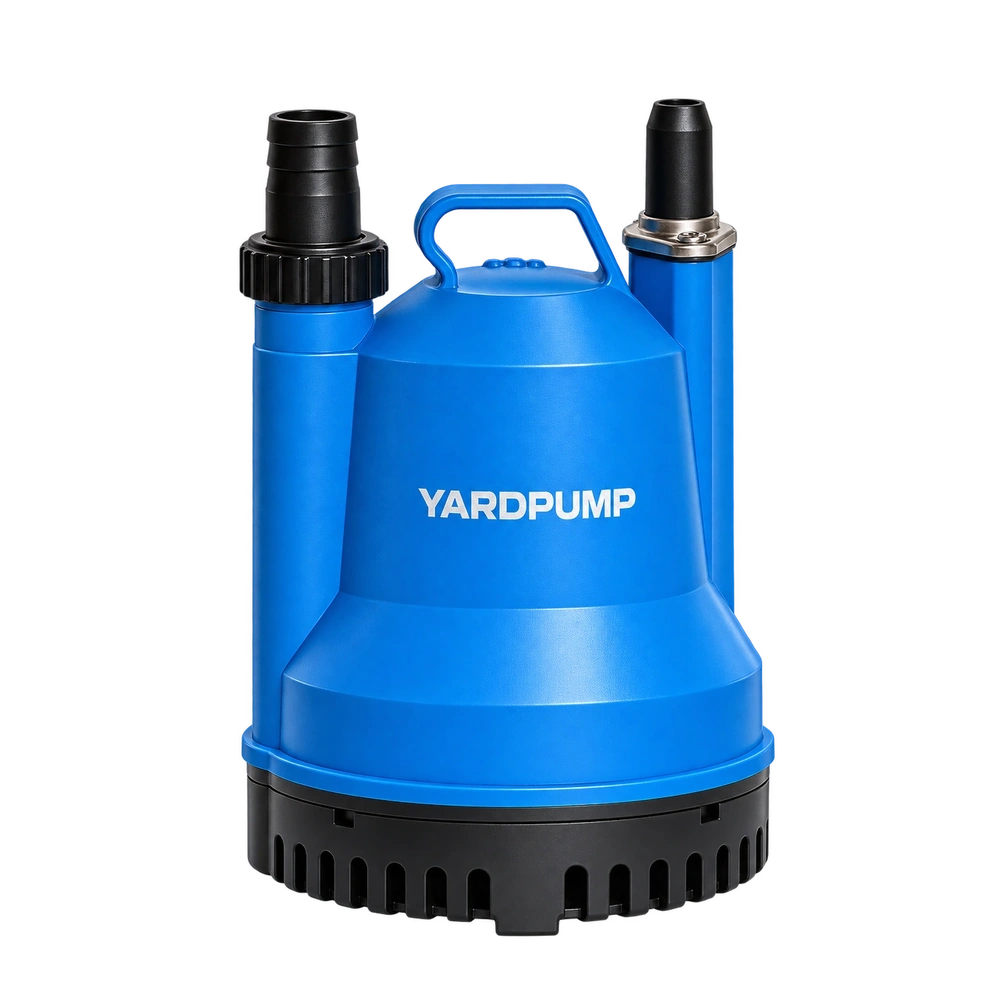
Suppose a clear-water submersible pump test shows 70 litres per minute, eight metres of head and 260 watts of electrical input, yet the spreadsheet reports more than 100 percent efficiency. Check the units, measurement boundaries and timing before interpreting the result. At a steady condition a pump with electrical input as its only energy source cannot deliver more power to the water than it takes in. An impossible result is a data warning, not evidence of an exceptionally efficient motor or a reason to change the default efficiency until the sheet looks right.
Use three readings from one duty point
Hydraulic power is density times gravitational acceleration, volume flow and total head. Convert volume flow to cubic metres per second. Use the total energy added to the water expressed as head, not any convenient number from a discharge gauge. The denominator for water-to-wire efficiency is measured real electrical input at the same condition. Shaft power is a separate boundary. Without a reliable shaft measurement or a validated method, water-to-wire efficiency does not give exact shaft power. Voltage times current is also not necessarily real input watts.
Check the suction and discharge conditions, height difference between measuring points and any velocity-head difference. For a pump submerged in an open tank, keep the free surface, gauge location and discharge arrangement in a consistent reference. If using pressure times flow, ensure the pressure difference represents the intended hydraulic boundary and account for elevation and velocity terms as applicable. An appropriate water density is adequate for a water example; other liquids need their actual conditions.
Trace the number eight back to the instrument
In the illustrative case, 70 litres per minute is about 0.001167 cubic metres per second. Eight metres of water head gives approximately 91.6 watts of hydraulic power. Dividing by 260 watts gives roughly 35.2 percent water-to-wire efficiency. If eight metres is mistakenly entered as eight bar, multiplying that pressure difference by the same flow gives about 933 watts and an apparent efficiency near 359 percent. This is a hypothetical unit error, not data for a particular pump. Check the instrument units, conversion formula and decimal point before assigning a motor efficiency.
Even correct instruments can be read at incompatible times. Flow may come from the open-valve stage, pressure from a later restriction and power from another row. Each reading can be real without describing the same energy balance. Record a common steady interval, then investigate gauge zero, range, pressure direction and flow indication. Electrical measurements belong with qualified staff using suitable instruments. Do not open a plug or test wet live connections.
A second conversion makes a useful cross-check. Seventy litres per minute is 4.2 cubic metres per hour, so the number 70 does not carry over unchanged to that column. Treat a result just above 100 percent as a reason to review instrument range, zero, uncertainty and stability. Clipping it to 100 percent conceals the problem. A much larger error calls for a check of units and channel assignments before repeating the run.
Decide what the report can support
Keep the original readings, converted units, duty conditions, instrument setup and timing. If real input power is unresolved, report checked flow and head without a water-to-wire efficiency. Leave shaft efficiency unresolved when shaft power is not known. For purchase acceptance, also check the actual duty against the agreed curve and tolerances. A report that leaves a value blank and explains why is more useful than one that hides an impossible calculation behind a default.
Frequently asked questions
The gauge says eight. Can I enter eight metres?
Check the units and the other terms needed for total head. Eight metres and eight bar are very different.
Can voltage times current replace real input power?
Not necessarily. AC power factor and other conditions affect real input. Measure it at the same duty.
Can good flow and head readings give exact shaft power?
They give hydraulic power. Shaft power also depends on losses inside the pump.